
The prerequisite for establishing Islam: Becoming a true believer (Mu’min)
-Zobayer Hasan
Although there are many classes, divisions, and inequalities among people in the world, in the sight of Allah humanity is of only two types. In the Holy Qur’an, Allah states that mankind is divided into two groups: believers (Mu’min) and disbelievers (Kafir) (Surah At-Taghabun 2).
Today, among nearly 2 billion Muslims, almost everyone believes themselves to be a believer and a Muslim. Based on common societal assumptions, we think that someone who prays more, gives charity, or wears Arab-style clothing is a strong believer. On the other hand, someone who denies Islam or insults the Prophet is considered a disbeliever.
However, Allah has clearly defined who is a believer and who is a disbeliever in the Qur’an.
Who are believers (Mu’min)?
The word Mu’min comes from Iman (faith), which literally means belief. Commonly, belief in Allah, His Prophets, angels, divine books, destiny, the Day of Judgment, and the Hereafter is considered faith, and those who believe in these are called believers.
But is that truly sufficient? No.
A person may believe in all these and still be a disbeliever, just like the Arabs of the pre-Islamic era (Jahiliyyah). Before the Prophet came, the Arabs believed in Allah, named their children Abdullah (servant of Allah), performed Hajj, sacrificed animals in the name of Prophet Ibrahim, and said phrases like “Bismika Allahumma.” In terms of belief, they were not lacking.
Yet, they were not believers. Why? Because being a believer is not just about inner belief—it requires implementing that belief in practice.
The declaration of faith itself contains the recognition of true belief: La ilaha illallah Muhammadur Rasulullah. We are taught that it means “There is no god but Allah.” However, the word used is not ma‘bud (object of worship), but ilāh.
The Arabic word ilāh means lawgiver, authority, or sovereign. It refers to the one whose commands must be followed in all aspects of life—personal, family, social, political, economic, and judicial.
Thus, the true meaning of La ilaha illallah is:
“There is no authority or lawgiver except Allah.”
Believing in one Creator is not enough for Tawheed; accepting His authority and obeying Him is essential. A true believer accepts Allah’s laws as the only system and rejects all others.
Allah defines believers as:
“Indeed, the believers are only those who believe in Allah and His Messenger, then doubt not, and strive with their wealth and lives in the cause of Allah.” (Surah Al-Hujurat 49:15)
So, to be a true believer, two conditions must be fulfilled:
- Accept no authority except Allah.
- Strive with life and wealth to establish Allah’s system.
Looking at today’s Muslim world, we see that governance is based on democracy, socialism, monarchy, or dictatorship—not divine law. Economies are interest-based, education systems follow colonial models, and legal systems derive from non-Islamic laws.
Thus, although Muslims may believe inwardly, collectively they are not functioning as true believers.
Who are disbelievers (Kafir)?
Simply put, those who do not meet the definition of a believer are disbelievers. Many think disbelievers are only those who deny Allah or Islam, but that is not entirely correct.
A person or group may believe in Allah yet still be considered a disbeliever if they reject His commands—just like the people of pre-Islamic Mecca.
Allah’s commands are not limited to prayer and fasting; they encompass all aspects of life—personal, social, political, and economic. If someone follows Allah’s commands in personal life but rejects them in societal or state matters, they fall into disbelief.
Allah says:
“Whoever does not judge by what Allah has revealed—then they are disbelievers.” (Surah Al-Ma’idah 5:44)
Rejecting Allah’s laws and adopting man-made systems is considered disbelief. Thus, despite having belief, the Muslim world is practically in a state of disbelief due to not implementing Allah’s system.
Who are polytheists (Mushrik)?
The term Mushrik comes from Shirk, meaning associating partners with Allah.
Commonly, it is understood as worshipping others alongside Allah. But it is not limited to that. If someone follows Allah’s commands in some matters but follows human-made laws in others, they are also committing shirk.
Allah says:
“Do you believe in part of the Book and reject the rest?” (Surah Al-Baqarah 2:85)
Such people will face humiliation in this world and severe punishment in the Hereafter.
Reflection on current reality
Today, in most aspects of life—society, state, economy, law, education—we follow human-made systems instead of Allah’s guidance. We have effectively replaced Allah as the ultimate authority with human authority.
This raises important questions:
- Whom have we accepted as the ultimate authority—Allah or humans?
- If not Allah alone, are we true to the declaration of faith?
- If not, can we still be considered believers?
- Or have we fallen into disbelief and shirk?
Conclusion
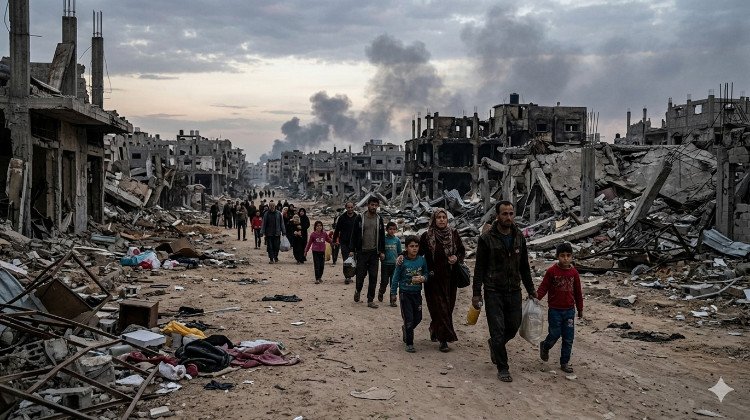
The world today is filled with injustice, oppression, war, corruption, poverty, and moral decline. Bangladesh, too, faces severe challenges—corruption, inequality, unemployment, and social breakdown.
According to the author, the root cause of this suffering is rejecting Allah’s system and adopting man-made systems. While people believe in Allah personally, they do not implement His guidance collectively—this is considered shirk.
The call is to return to Allah’s system in all aspects of life—society, economy, law, and governance. Only then can true faith be achieved, justice established, and peace restored.
Allah has promised authority on earth to true believers. Therefore, the solution lies in becoming true believers and striving collectively to establish justice and peace according to divine guidance.
Images Related to this Post











Leave a Comment