
Roots of the Panni Family: The Glory of the Karrani Dynasty
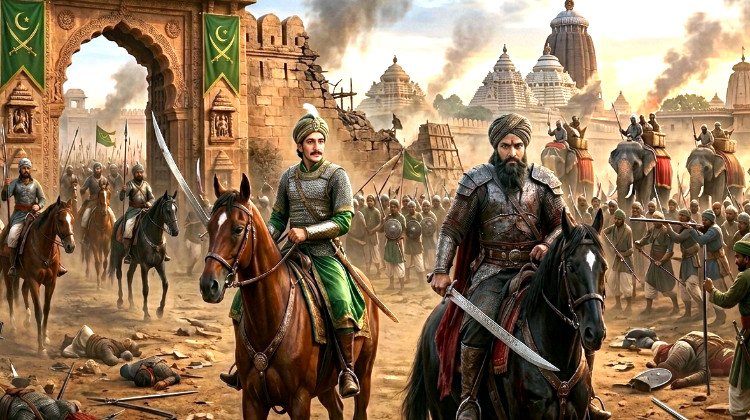
Afghans have always been fiercely independent and proud. Once, a group from Afghanistan visited the court of the Prophet Muhammad and accepted Islam. The Prophet reportedly told them, “You are Fatahan (victorious).” This word later evolved into “Pathan” in the Pashto language. The tribal groups living in the mountainous regions along the Afghanistan–Pakistan border became known as Pathans in the Indian subcontinent. During the Sultanate period, Muslims entered India through Afghanistan, and many Afghan-origin dynasties ruled various regions, including Delhi. Later, the Mughals replaced them.
After the defeat of Ibrahim Lodi in the First Battle of Panipat in 1526, Afghans continued trying to regain power in Delhi. The Afghan general Sher Shah Suri invaded Bengal in 1537, defeated Sultan Nasiruddin Nasrat Shah of the Hussain Shahi dynasty, and ascended the throne of Gaur. In 1540, he defeated Emperor Humayun at the Battle of Kannauj and established the Sur dynasty in Delhi. During this time, the Panni family became connected to governance in Bengal and India.
Jamal Khan Karrani, grandson of Panni Karrani and descendant of the renowned Chishti Sufi Khwaja Gesu Daraz Bande Nawaz, rose to prominence. According to the Akbarnama, the Karranis came to India as horsemen or horse traders. Their father had advised them: if fortune did not favor them in the Mughal court, they should sell horses and return home. However, their fate elevated them from traders to independent rulers of Bengal. Jamal Khan became a high-ranking revenue officer under Sher Shah, holding the title Sahib-i-Jama. His four sons—Taj Khan, Sulaiman Khan, Imad Khan, and Ismail Khan—became military commanders. Taj and Sulaiman played key roles in Sher Shah’s victory over Humayun at Kannauj and were rewarded with the governorship of Bihar.
After Sher Shah’s death, his son Islam Shah Suri ruled Delhi (1545–1554), during which the Karranis governed Bengal and Bihar. Taj Khan remained at the central court, while Sulaiman administered Bihar from Khawaspur. Around 1545, Dewan Sulaiman Khan of Sarail (Bhati region) rebelled against central authority. Islam Shah sent Taj Khan Karrani and Darya Khan to suppress the revolt. Dewan Sulaiman Khan resisted strongly but was eventually defeated and killed. His young sons, Isa Khan and Ismail Khan, were captured and sold into slavery.
Later, with the help of their uncle Qutb Khan, they were freed and brought back to Bengal. Isa Khan regained his father’s estate in Sarail and later became the leader of the Baro-Bhuiyans, resisting Mughal expansion in Bengal.
Taj Khan Karrani (1564–1565)
Amid chaos in the Sur Empire, Taj Khan established his power in the Gangetic Doab and in 1564 seized Gaur, killing Sultan Ghiyasuddin Bahadur Shah. He founded Karrani rule in Bengal. He later died in 1565 while suppressing a rebellion. Ruins of “Kella Tajpur” in Mymensingh are believed to be linked to him.
Sulaiman Khan Karrani (1565–1572)
The most powerful ruler of the Karrani dynasty, Sulaiman shifted the capital from Gaur to Tanda due to disease and instability. He built a strong army, reportedly consisting of thousands of war elephants, cavalry, infantry, artillery, and naval vessels. Though nominally acknowledging Mughal Emperor Akbar, he ruled Bengal independently, adopting the title Hazrat-i-Ala.
His army included the famous general Kalapahar (formerly Rajiv Lochan Ray), who converted to Islam and became a prominent military leader. Under Sulaiman, Bengal expanded into Odisha, Koch Bihar, and Kamrup. His reign is considered the golden age of the Bengal Sultanate before Mughal conquest.
He promoted Islam extensively, built mosques, madrasas, and inns, and maintained close relations with scholars. Foreign travelers noted the prosperity of Bengal and shipbuilding in Chittagong.
Bayazid Khan Karrani (1572–1573)
After Sulaiman’s death, his son Bayazid briefly ruled but was assassinated within six months by his brother-in-law. Shortly after, Daud Khan Karrani, the youngest son, was placed on the throne. He became the last independent Sultan of Bengal and died resisting Mughal expansion at Rajmahal.
Bayazid’s descendants settled in Tangail. His son Said Khan Panni received land grants from Emperor Akbar, establishing the Panni zamindari. The historic Atia Mosque, built in 1609, still stands as a testament to the Karrani-Panni legacy.
Images Related to this Post

Related Post














Leave a Comment