
The worst massacre in living memory: Double murder in Sonaimuri, Noakhali
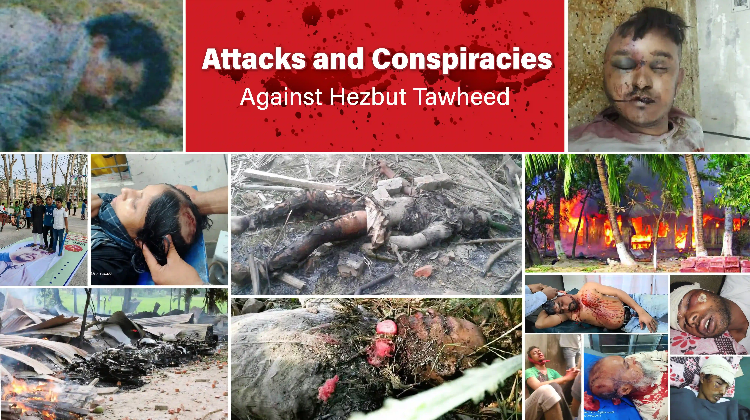
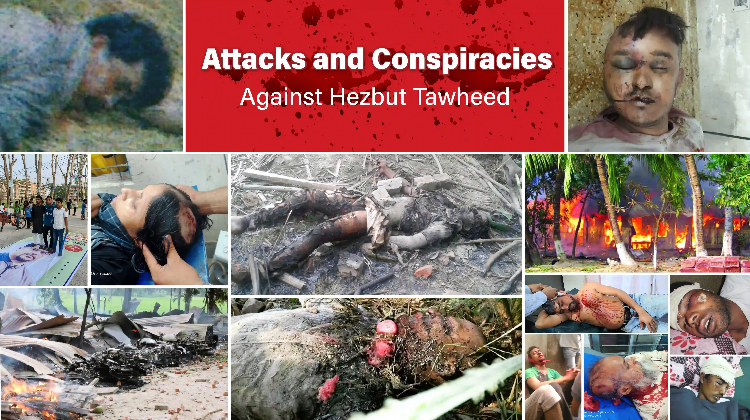
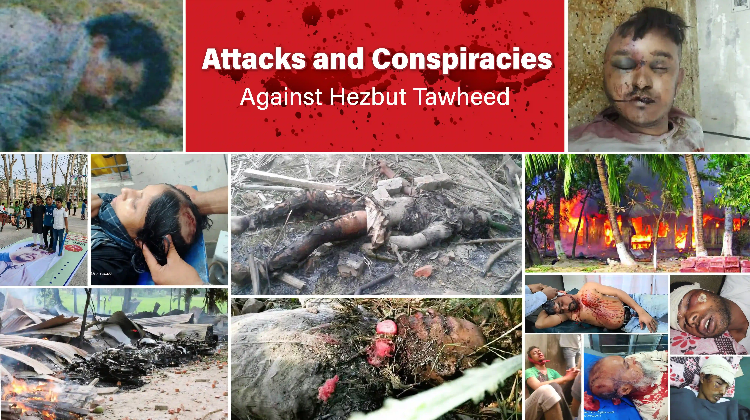
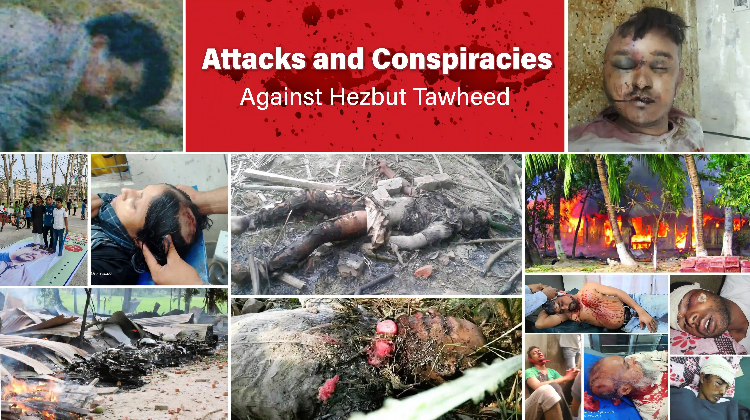
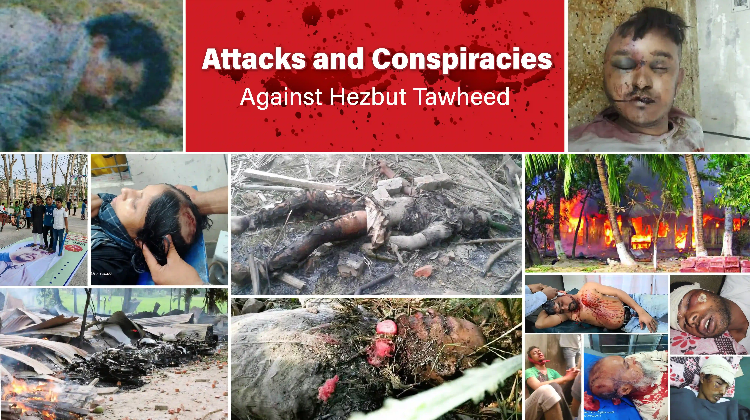
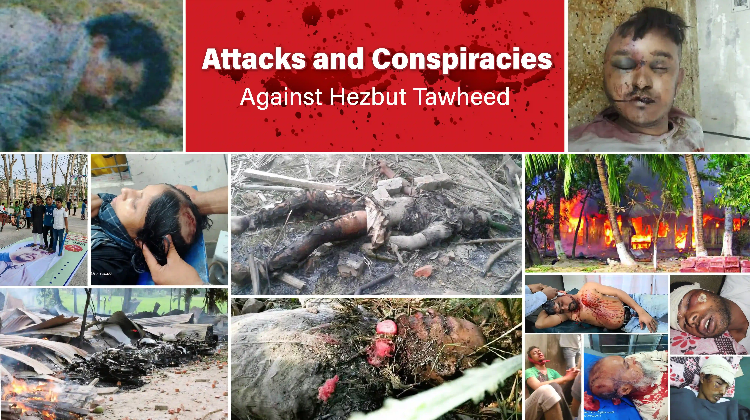
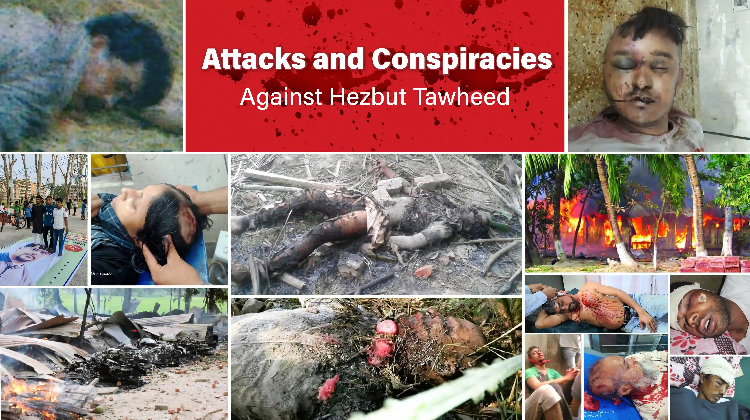
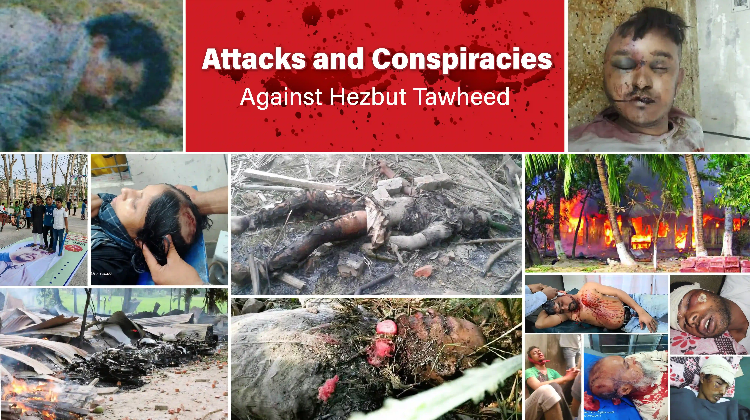
On March 14, 2016, Porkora village of Sonaimuri Upazila, Noakhali, A riot spread across the entire area over the construction of an ordinary mosque. The mosque was being built in the courtyard of the residence of Hossain Mohammad Selim, Imam (Leader) of Hezbut Tawheed. From that morning, rumors were broadcast over the loudspeakers of a local mosque claiming that members of Hezbut Tawheed had converted to Christianity and were constructing a church in Porkora village. Within moments, the presence of several thousand hired attackers arriving from surrounding villages turned Porkora village into a battlefield. The nearby Comilla–Chattogram Highway was shut down. In an attempt to control the situation, members of the Bangladesh Police, Rapid Action Battalion (RAB), and Border Guard Bangladesh (BGB) were deployed. Even then, the situation could not be brought under control. Extremist attackers cut down large trees and placed them across the highway to prevent the authorities from entering the area. Within moments, the incident flooded online platforms. Throughout the day, media outlets broadcast continuous news updates and live coverage to report the latest situation. Hired attackers incited by Islami Chhatra Shibir, Hefazat-e-Islam Bangladesh, Islami Andolan Bangladesh, and local religious agitators jointly launched an attack and demolished the under-construction mosque, reducing it to the ground. At one stage of the intense clashes, two members of Hezbut Tawheed — Solaiman Khokon and Ibrahim Rube l— who had come to provide voluntary labor for the mosque construction, were isolated and brutally killed. The savagery of the killings was so extreme that it is difficult to describe in words. Using knives, machetes, kirichs, ramdas, and sharp instruments used for cattle slaughter, the hired attackers slit the throats of both members, gouged out both eyes, and severed the tendons of their hands and legs. Even then, the attackers did not stop; afterward, they poured petrol on the motionless bodies and set them on fire, burning the corpses. On that day, 114 injured and besieged individuals, including women, children, and the elderly, were present at the site and remained on the brink between life and death. The attackers’ intention was to kill all 114 of them and create a similar scene of mass brutality. The under-construction mosque was broken down, demolished, and reduced to ashes, and several houses were looted and set on fire. This unforgettable, barbaric massacre was carried out by workers of Jamaat-e-Islami Bangladesh and Hefazat-e-Islam Bangladesh. As a result of this extremism, two members of Hezbut Tawheed lost their lives.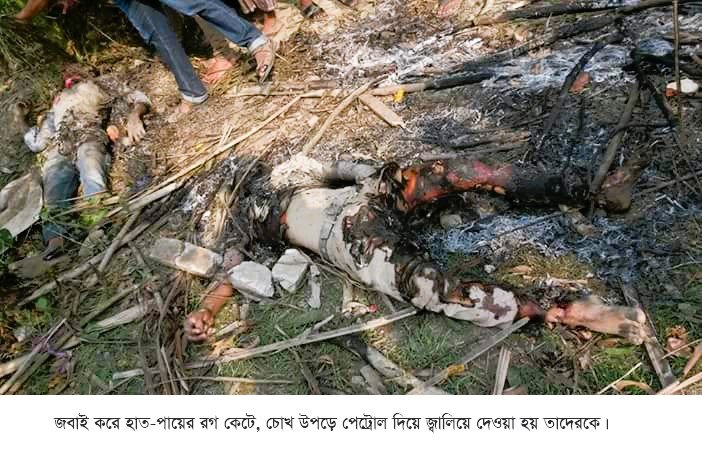 After isolating two members of Hezbut Tawheed, they were slaughtered,
the tendons of their hands and legs were severed, their eyes were gouged
out, and the bodies were burned with petrol
>>Evidence Archive of Attacks and Disinformation Against Hezbut Tawheed 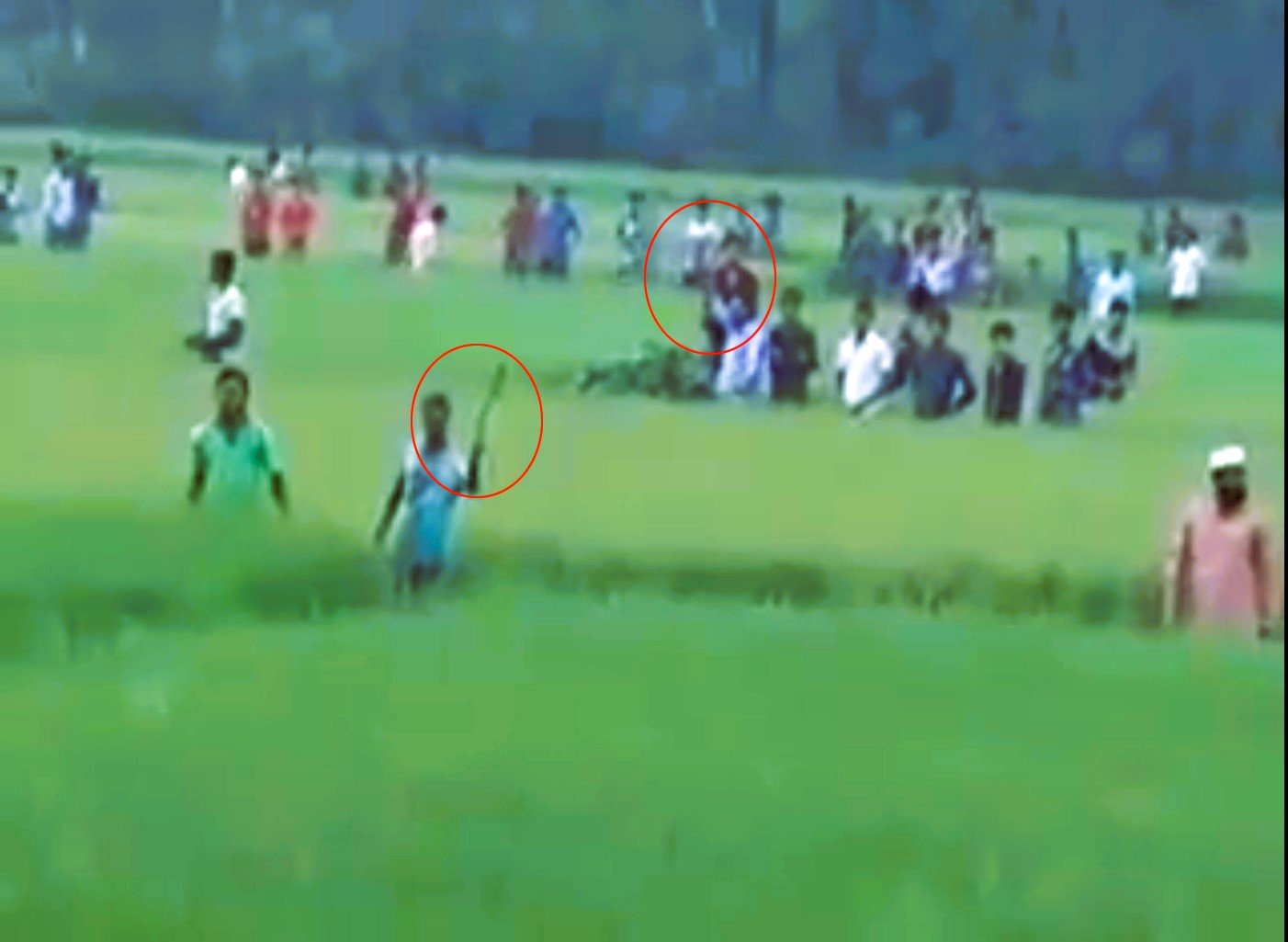
From the morning of the incident, the presence and movement of
external attackers were observed.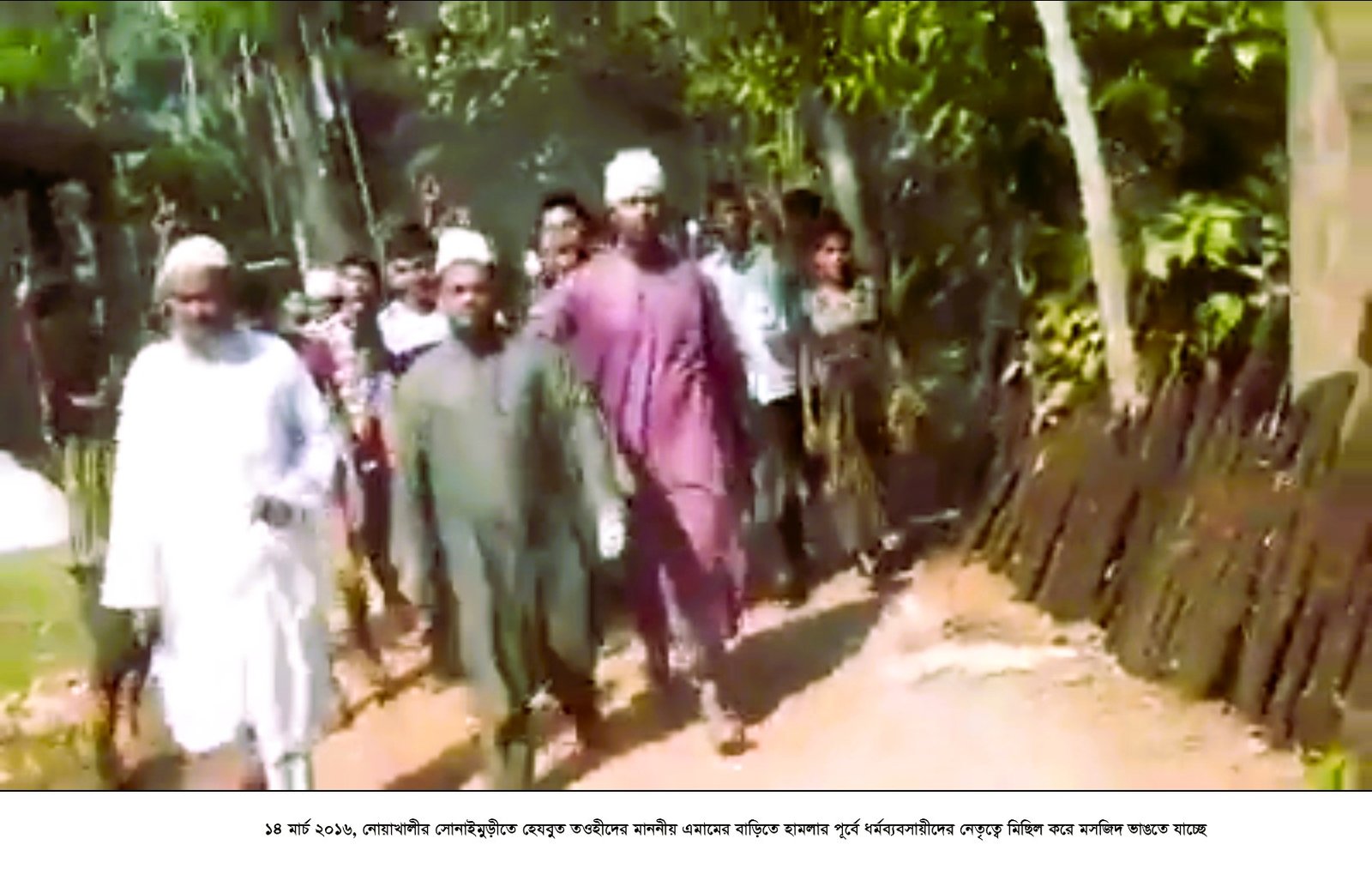
Using inciting slogans such as ‘Kill Christians, destroy churches,’
religious agitators marched through village roads, provoking local
residents.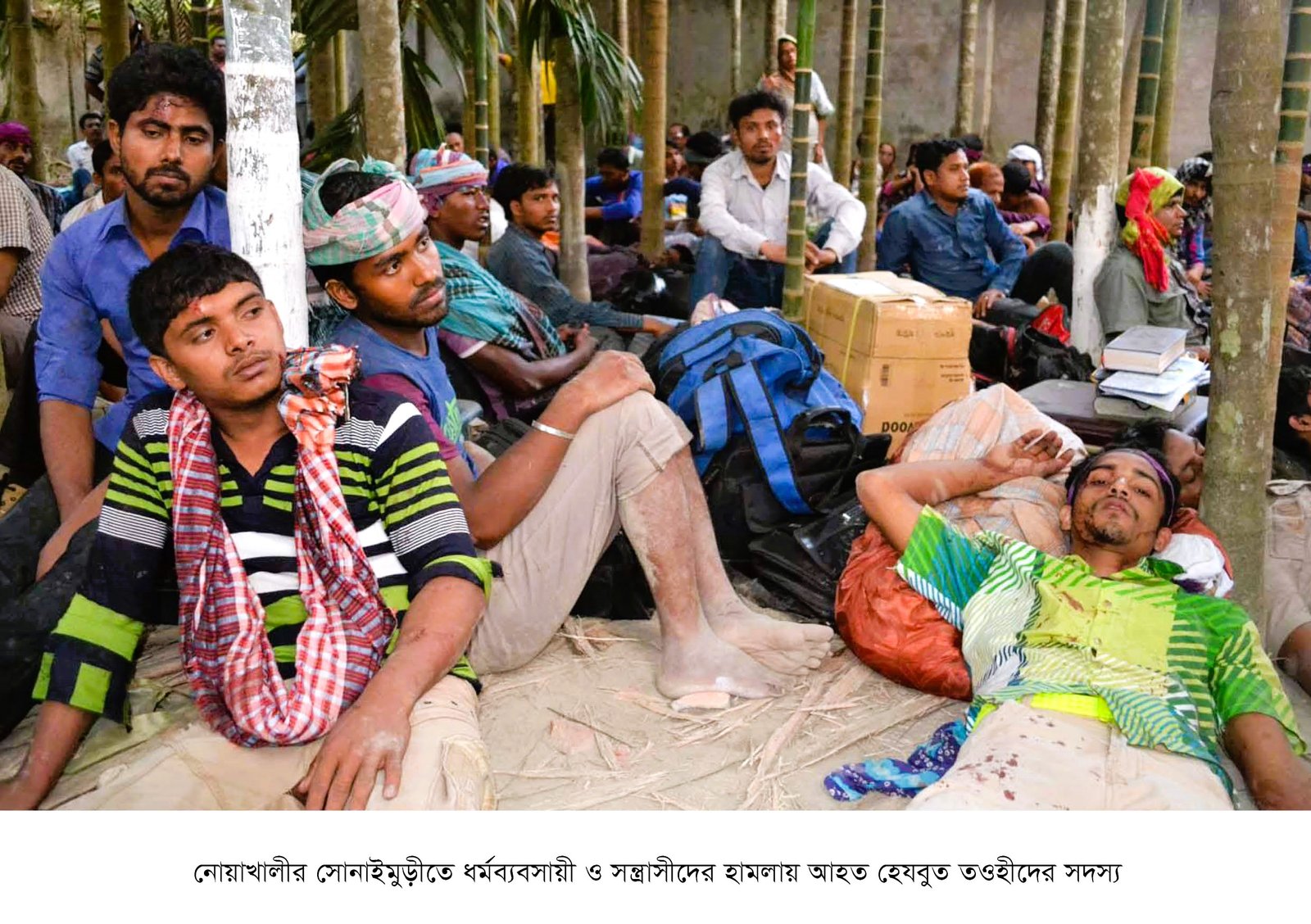
Members of Hezbut Tawheed staying in nearby houses, along with
construction workers who had come to build the mosque, were injured
during the attacks and, in a state of shock, moved to a safer distance.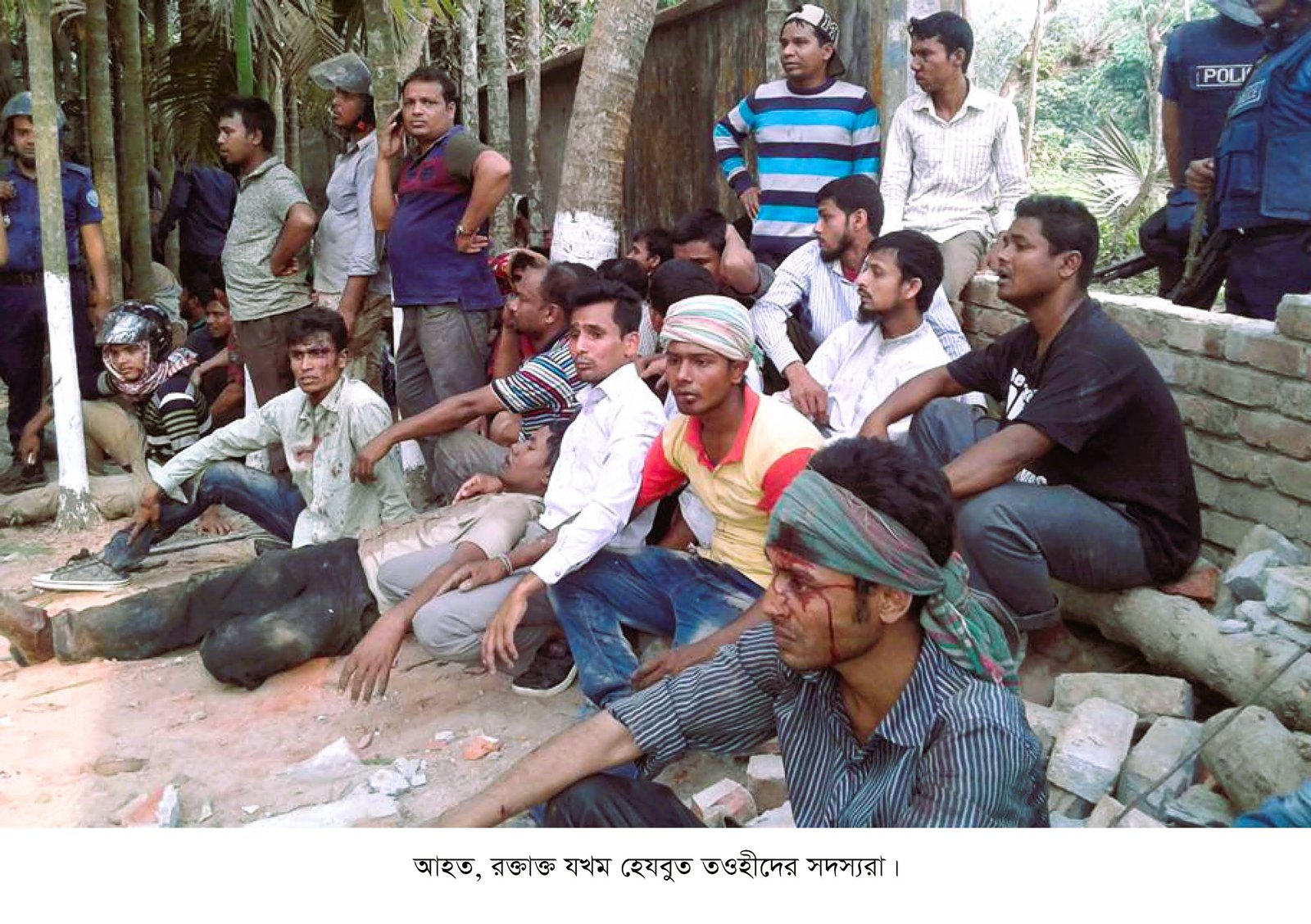
After the police arrived, the attacks temporarily subsided. By that time,
more than fifty individuals had already sustained severe injuries.
>>Evidence Archive of Attacks and Disinformation Against Hezbut Tawheed.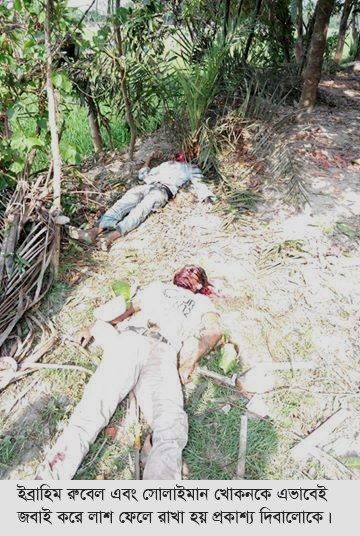
In broad daylight, Ibrahim Rubel and Solaiman Khokon, volunteers at
the mosque construction site, were killed and their bodies left there.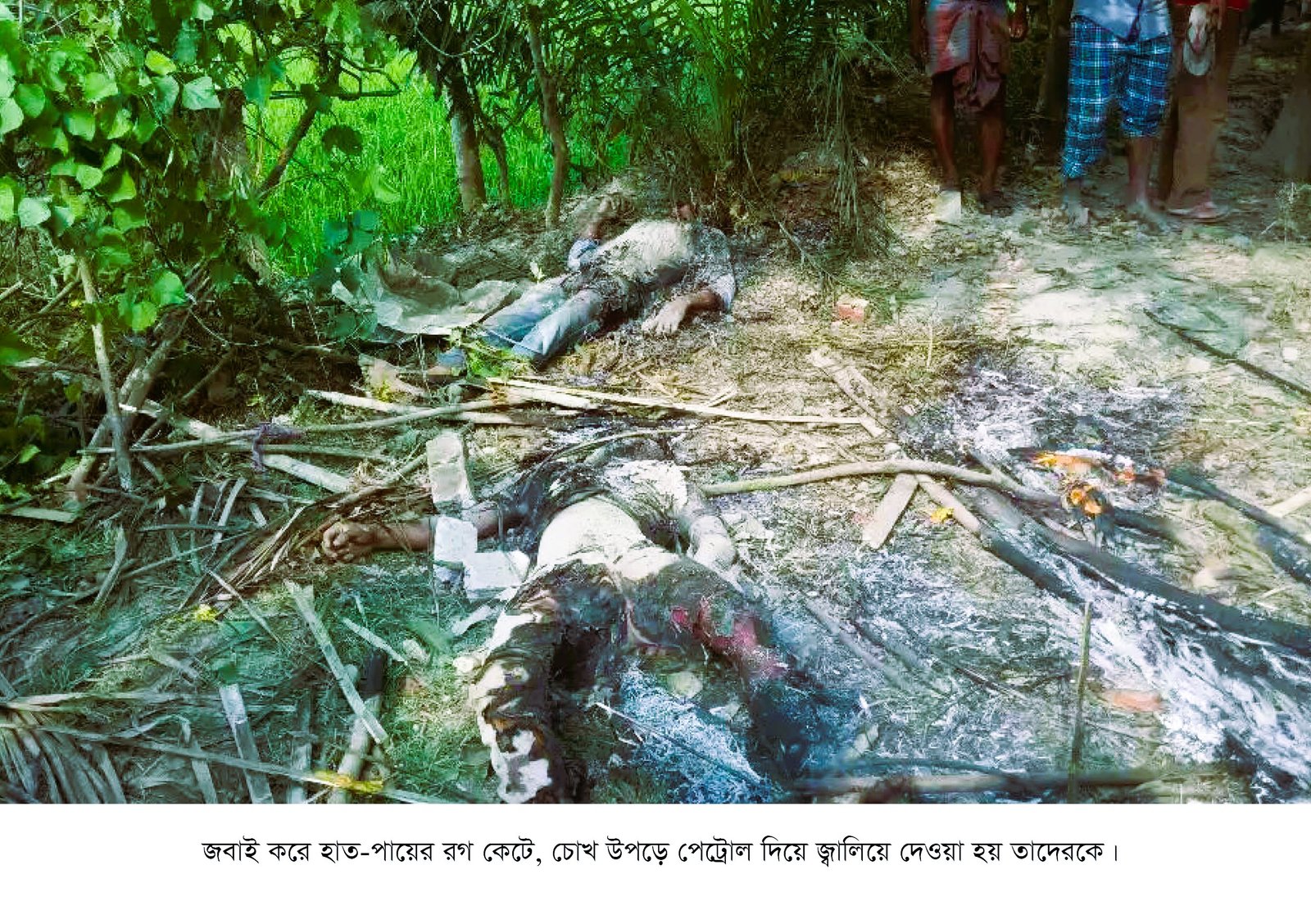
They were killed with extreme brutality, exceeding all bounds of
violence.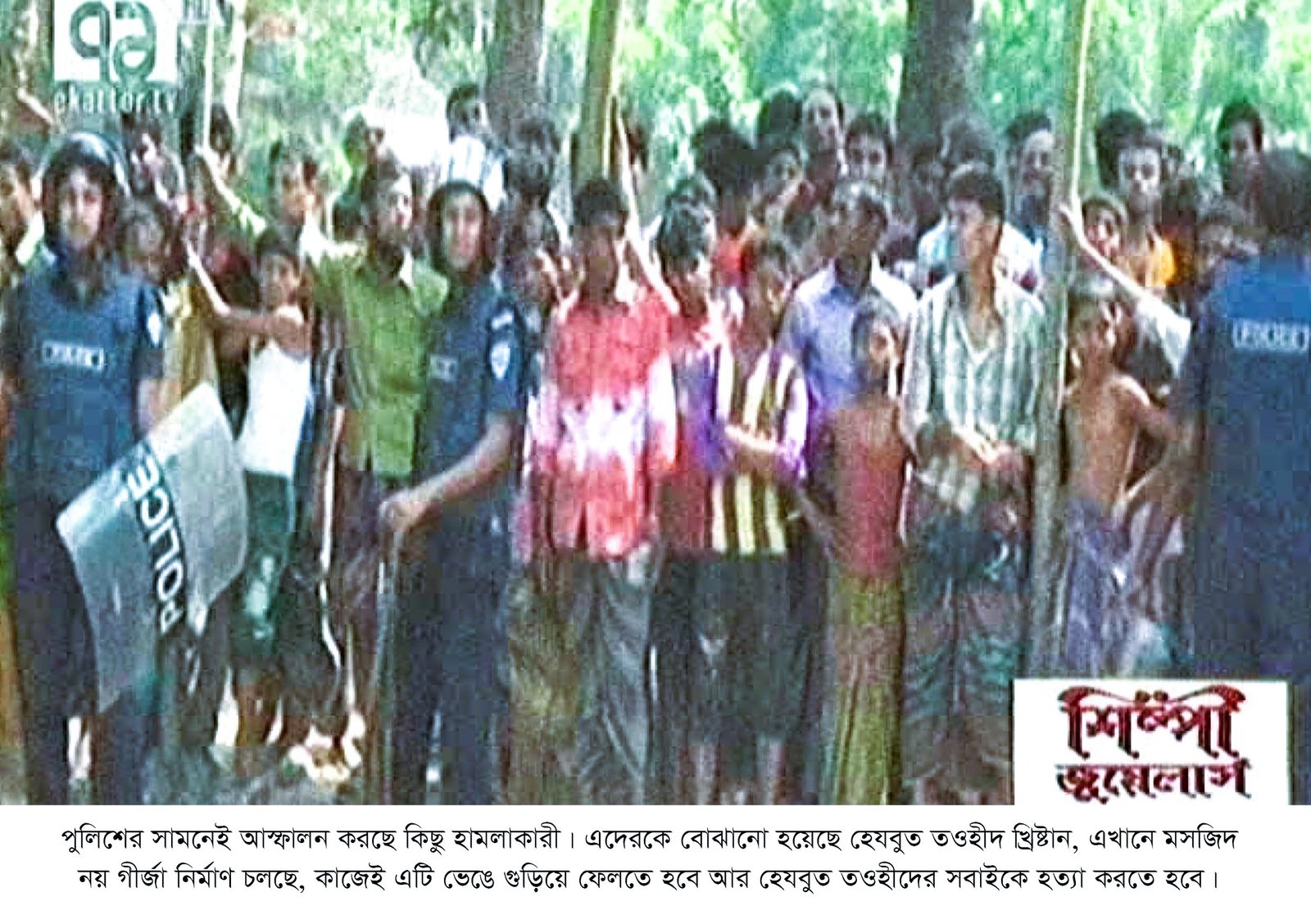
Some attackers continued aggressive behavior in front of police personnel, but
could not be immediately identified as they blended into the crowd.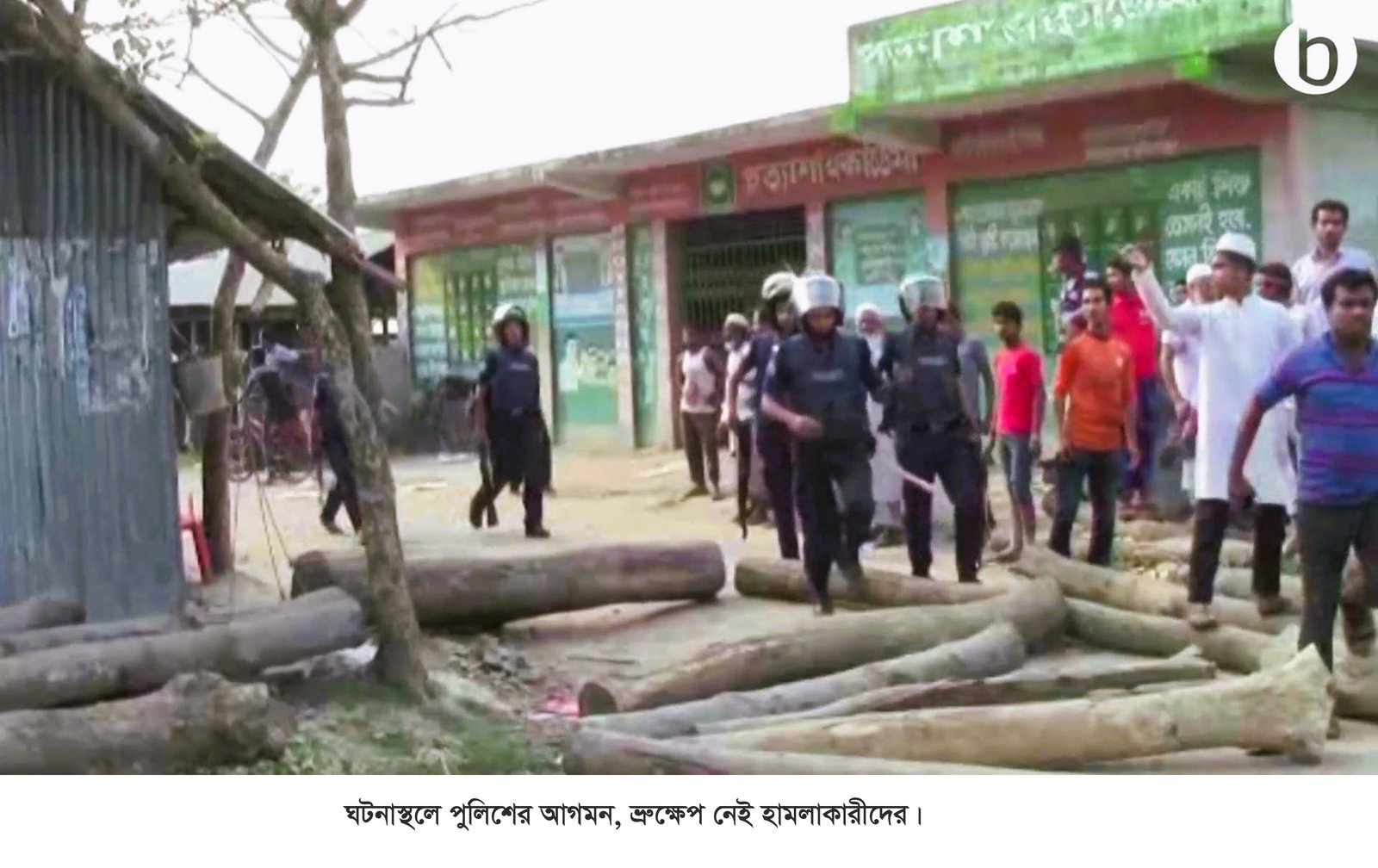
Large trees were cut and used to block road entry points, preventing
police, army, and other law-enforcement forces from entering the village.
>>Evidence Archive of Attacks and Disinformation Against Hezbut Tawheed.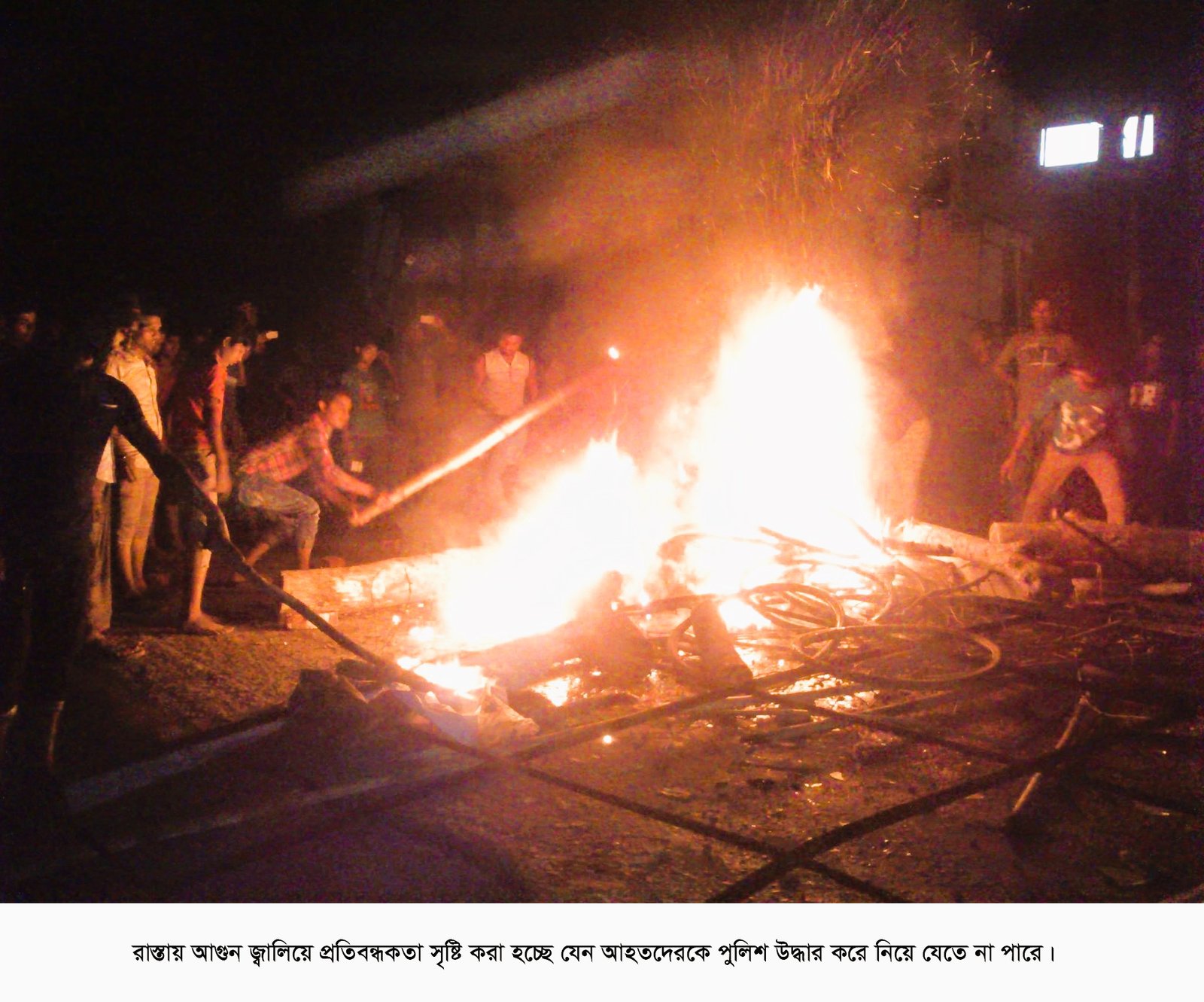
After a day of clashes, when police attempted to safely evacuate the
injured at night, the attackers had still not stopped and were setting fires
to create barricades on the roads.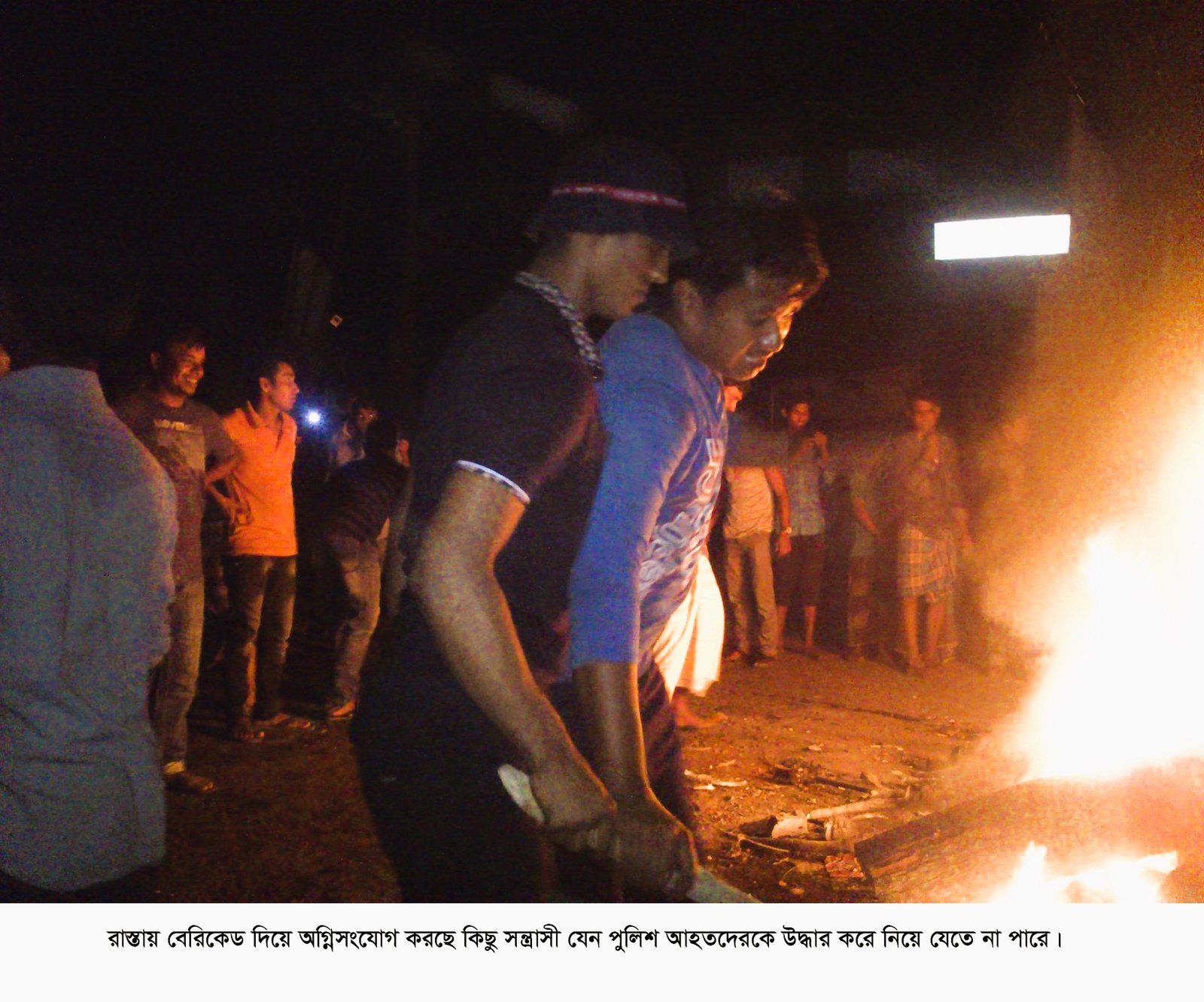
Fires were lit along the roads to create obstacles, with the aim of
preventing the Bangladesh Police from evacuating the injured.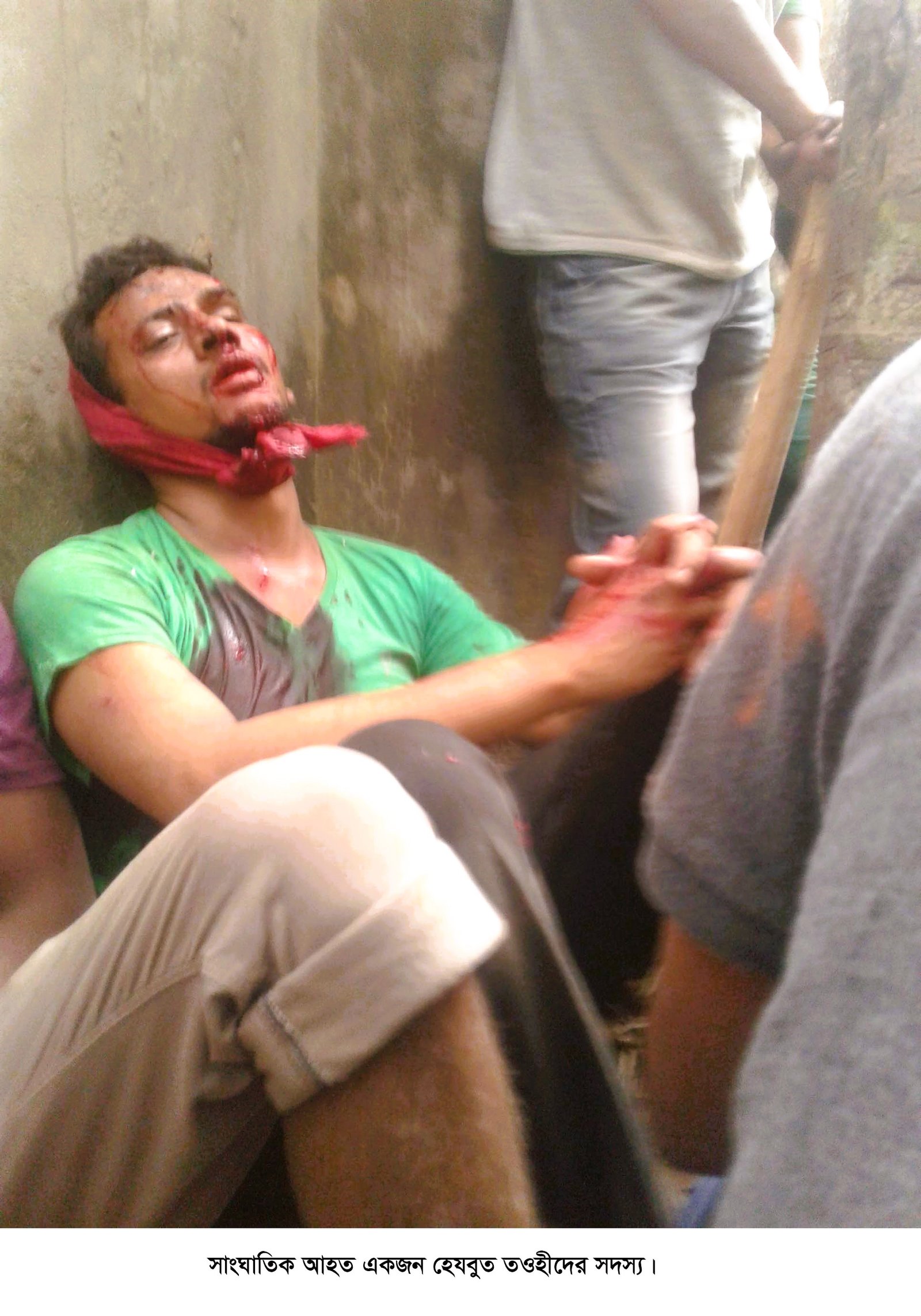
Since morning, members of Hezbut Tawheed have been lying injured and
bleeding as a result of stone-throwing attacks.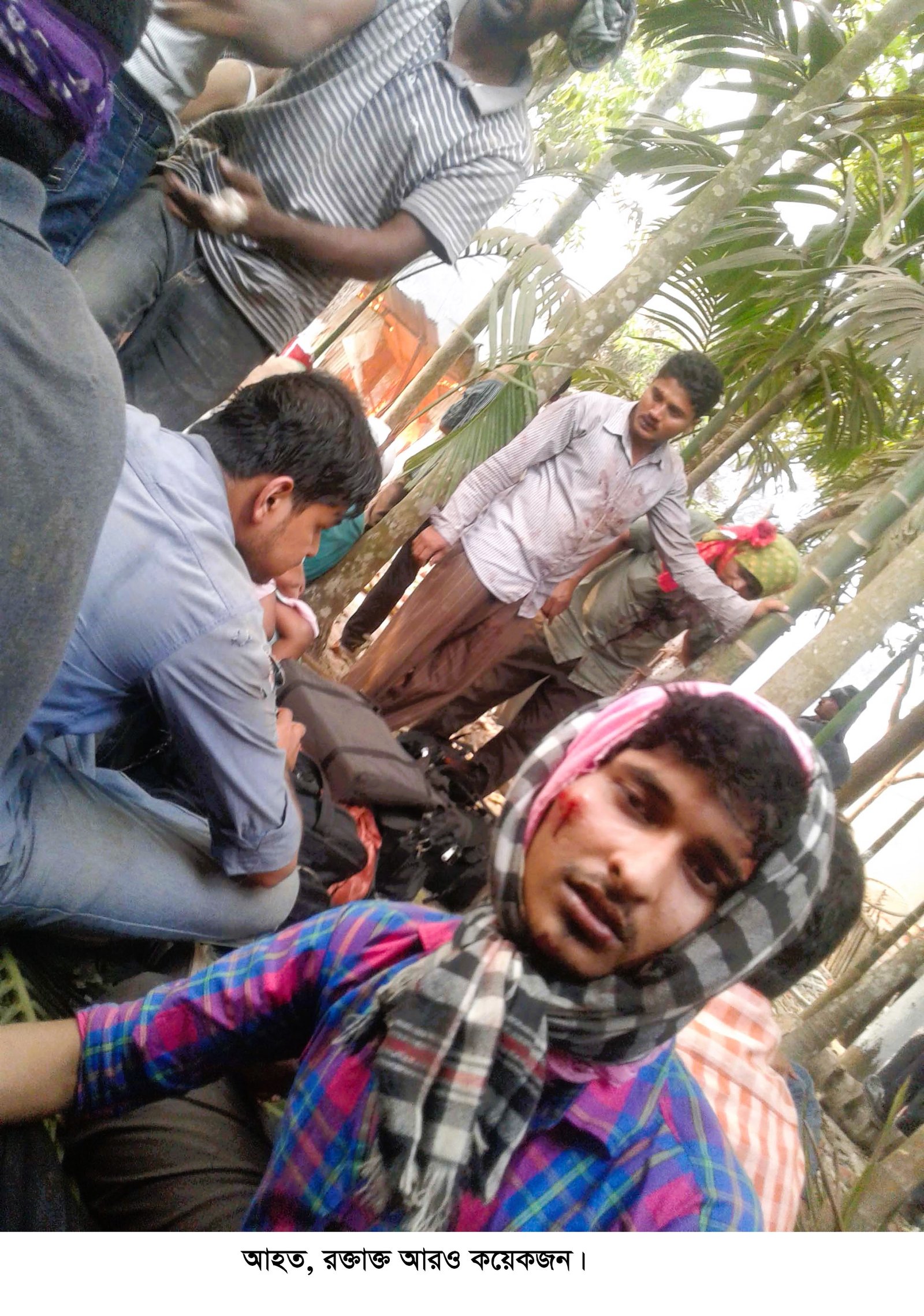
>>Evidence Archive of Attacks and Disinformation Against Hezbut Tawheed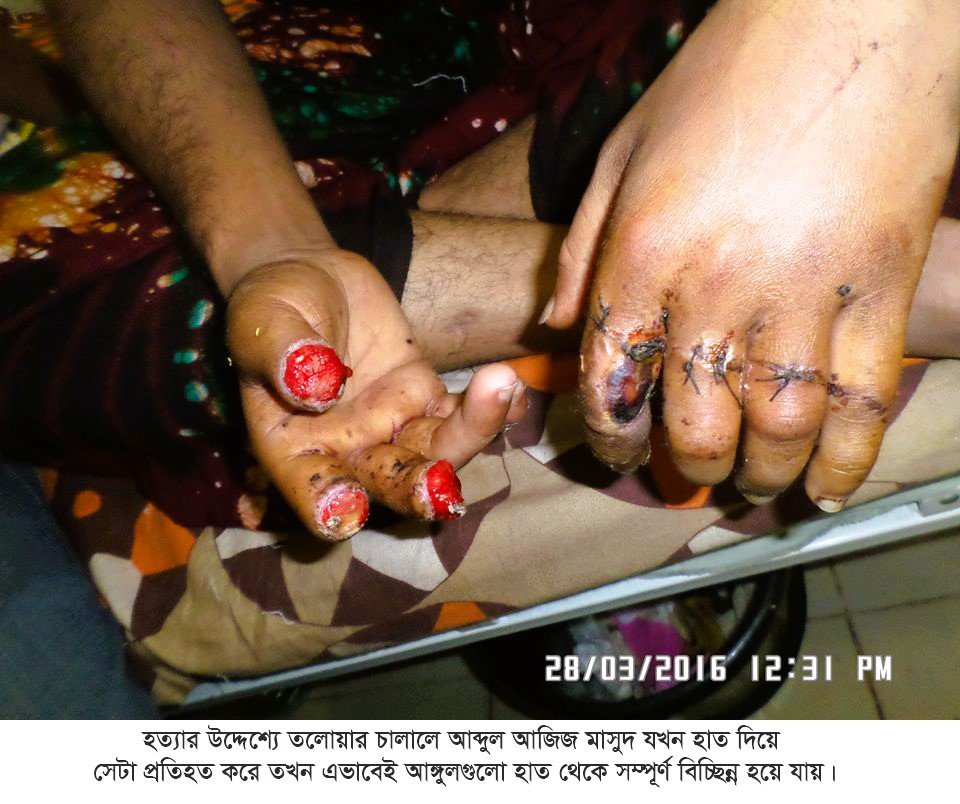
When a sword was swung with the intent to kill, Abdul Aziz Masud
attempted to block it with his hand and lost three fingers.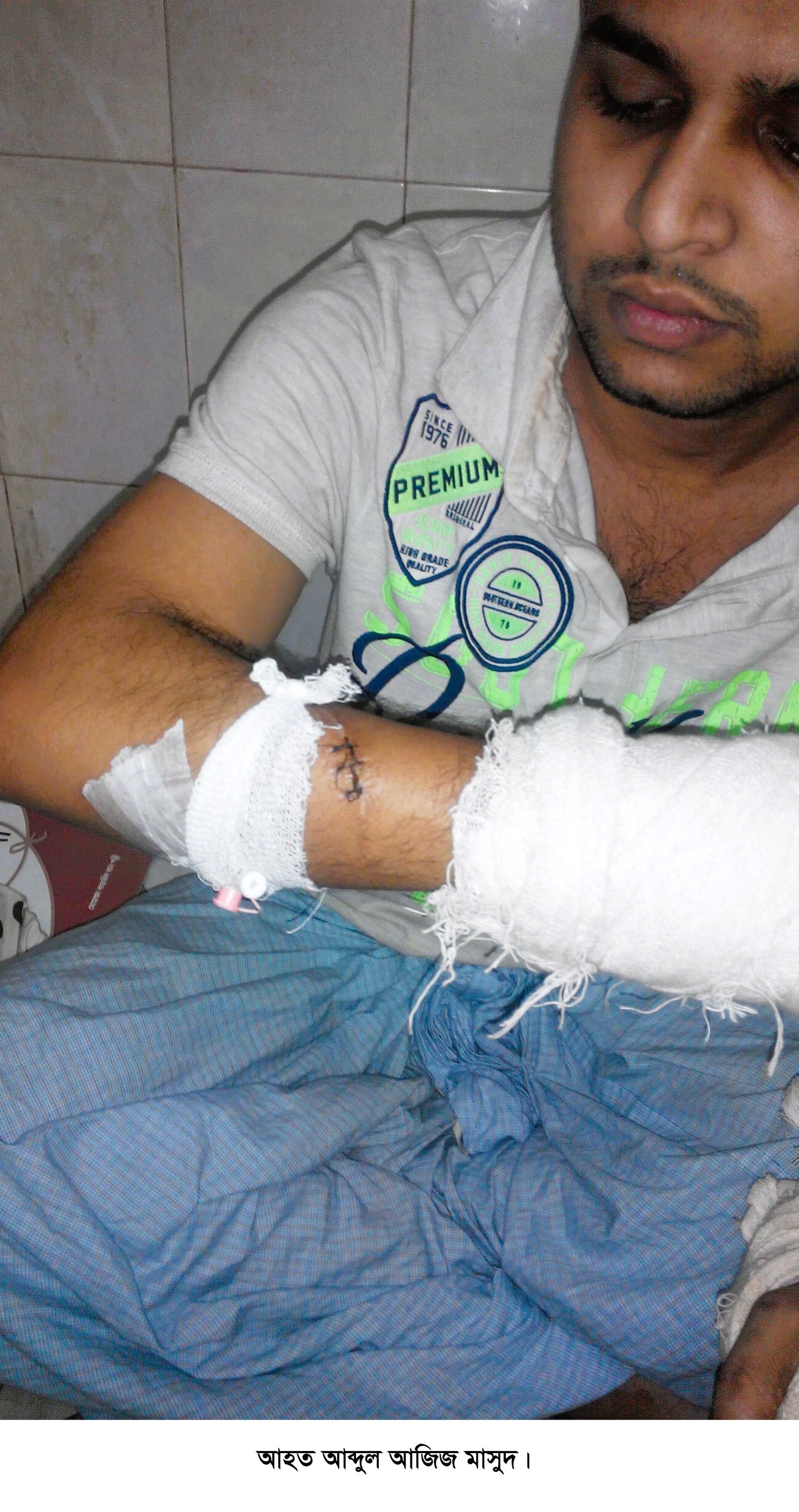
Abdul Aziz Masud was injured. He also sustained severe wounds to other
parts of his body.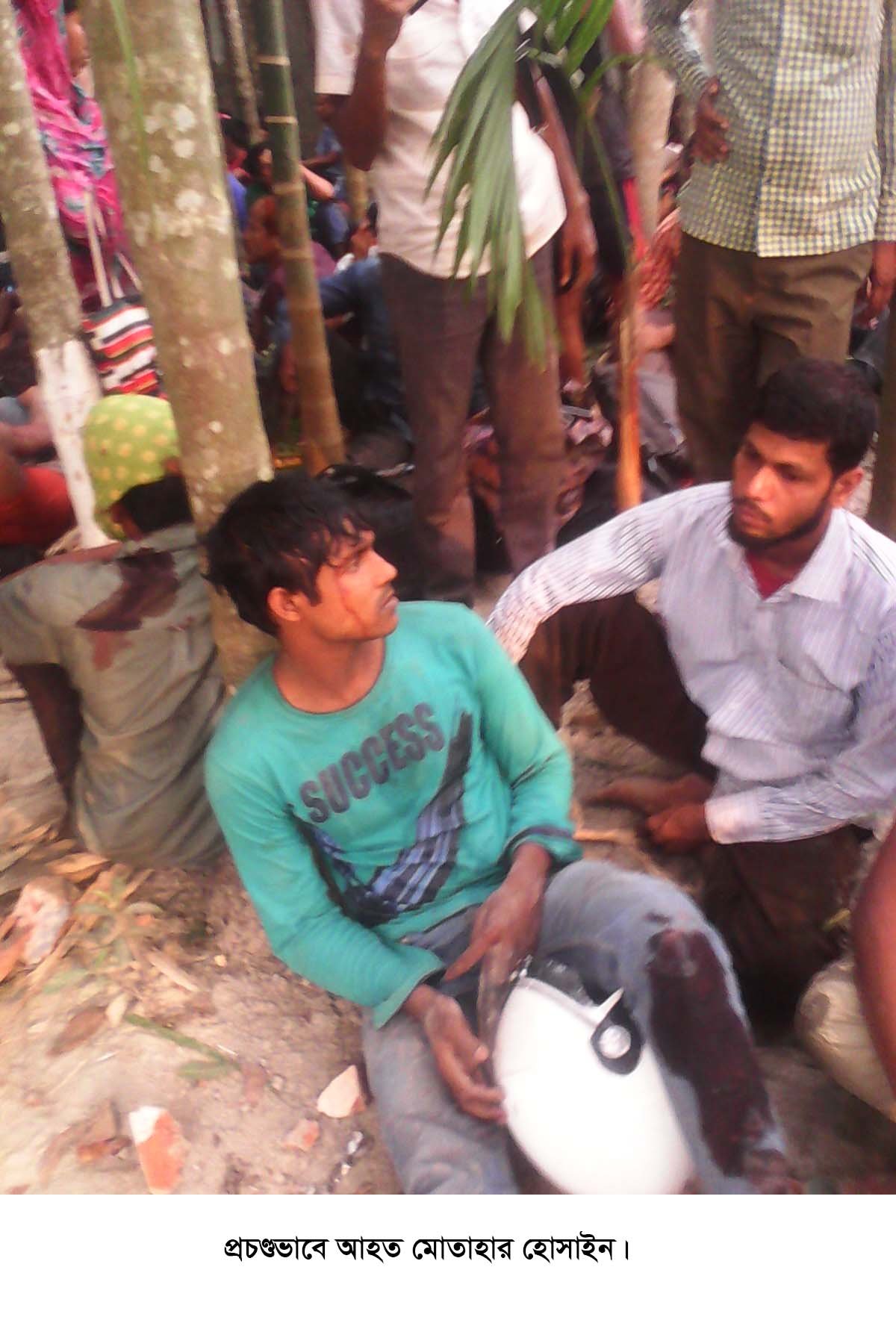
Hezbut Tawheed member Motahar Hossain was critically injured.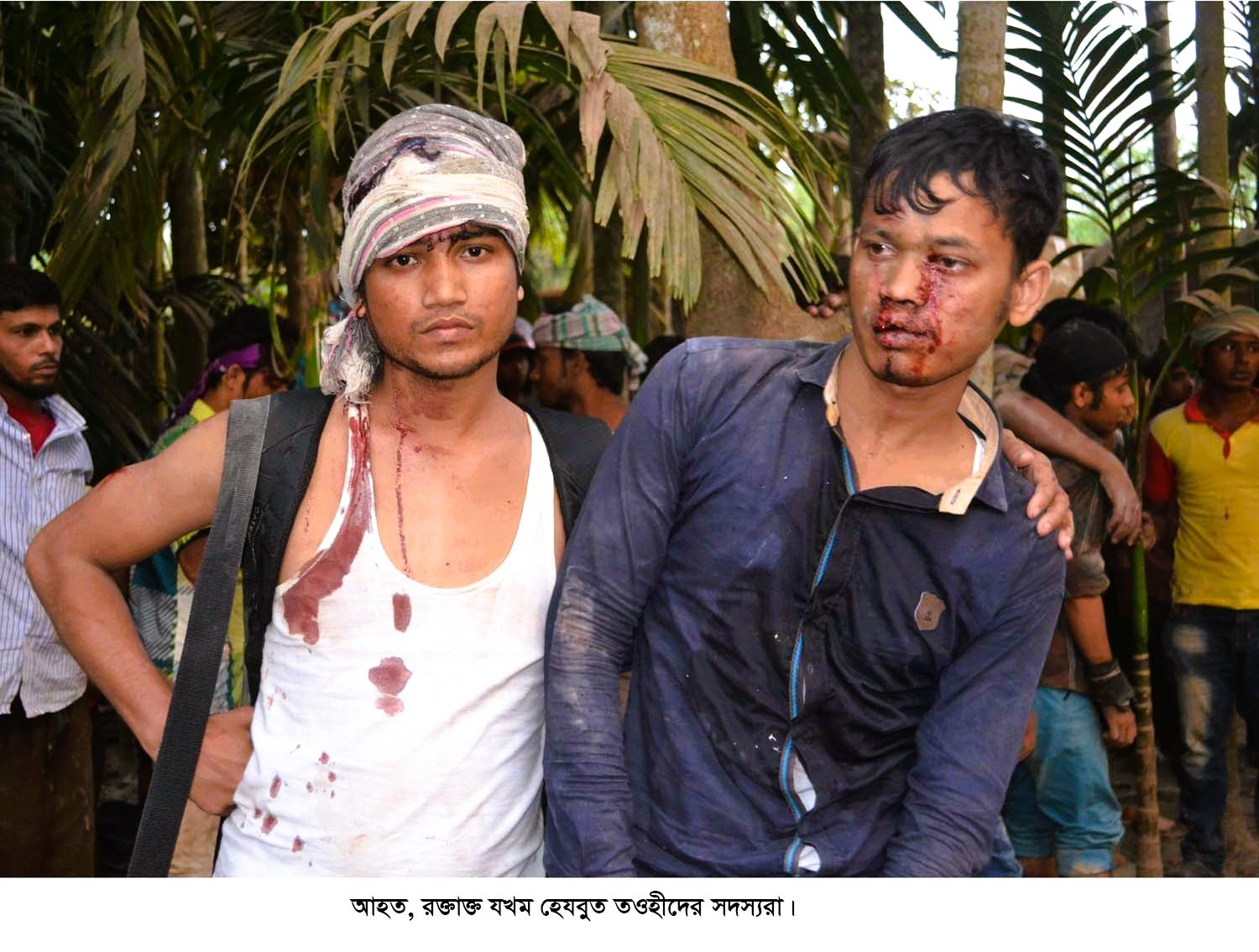
Injured and bleeding Hezbut Tawheed member Rabiul Haque and … .
>>Evidence Archive of Attacks and Disinformation Against Hezbut Tawheed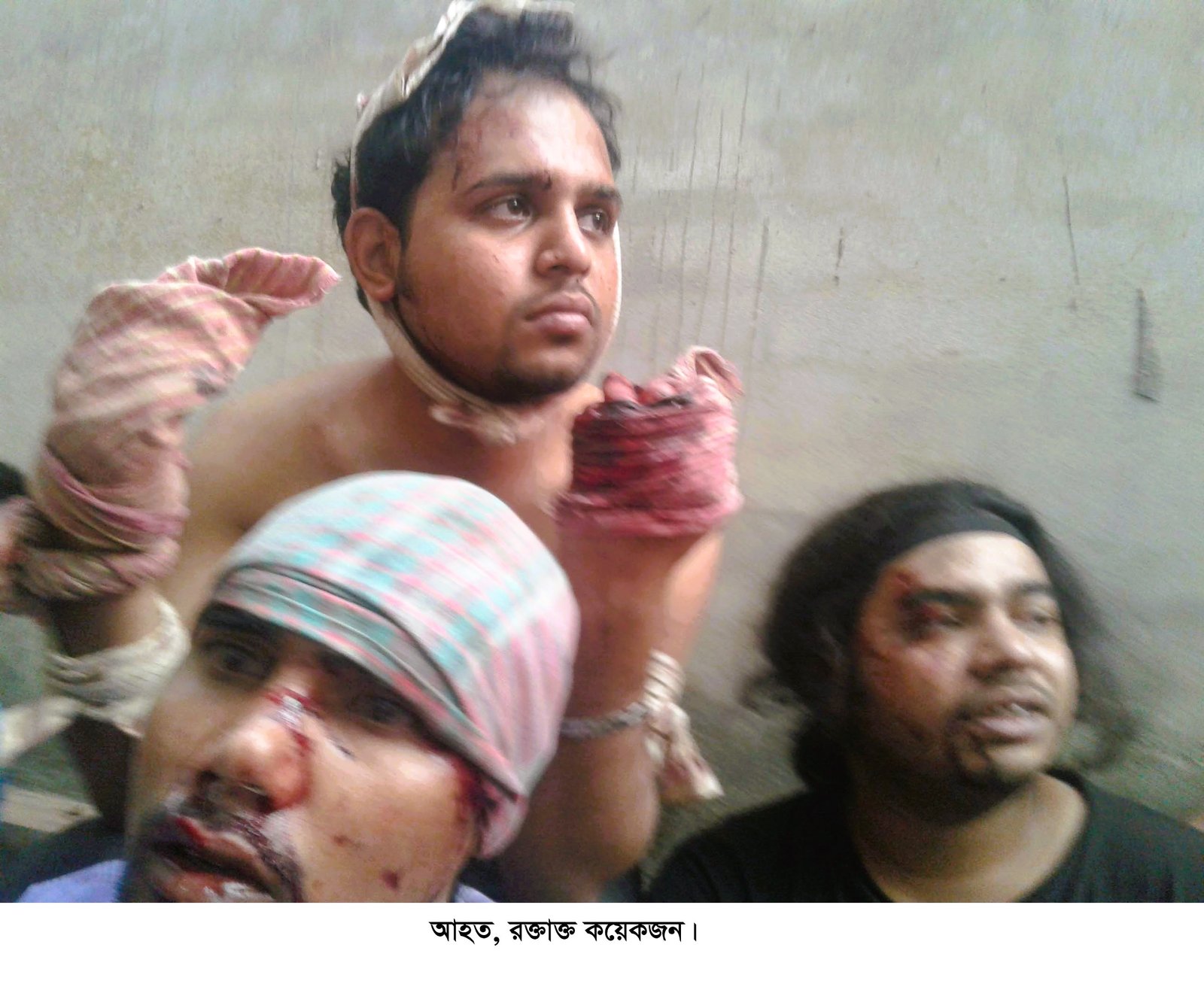
From the loss of limbs and the visible injury marks on the victims, the
severity of the incident can be readily understood.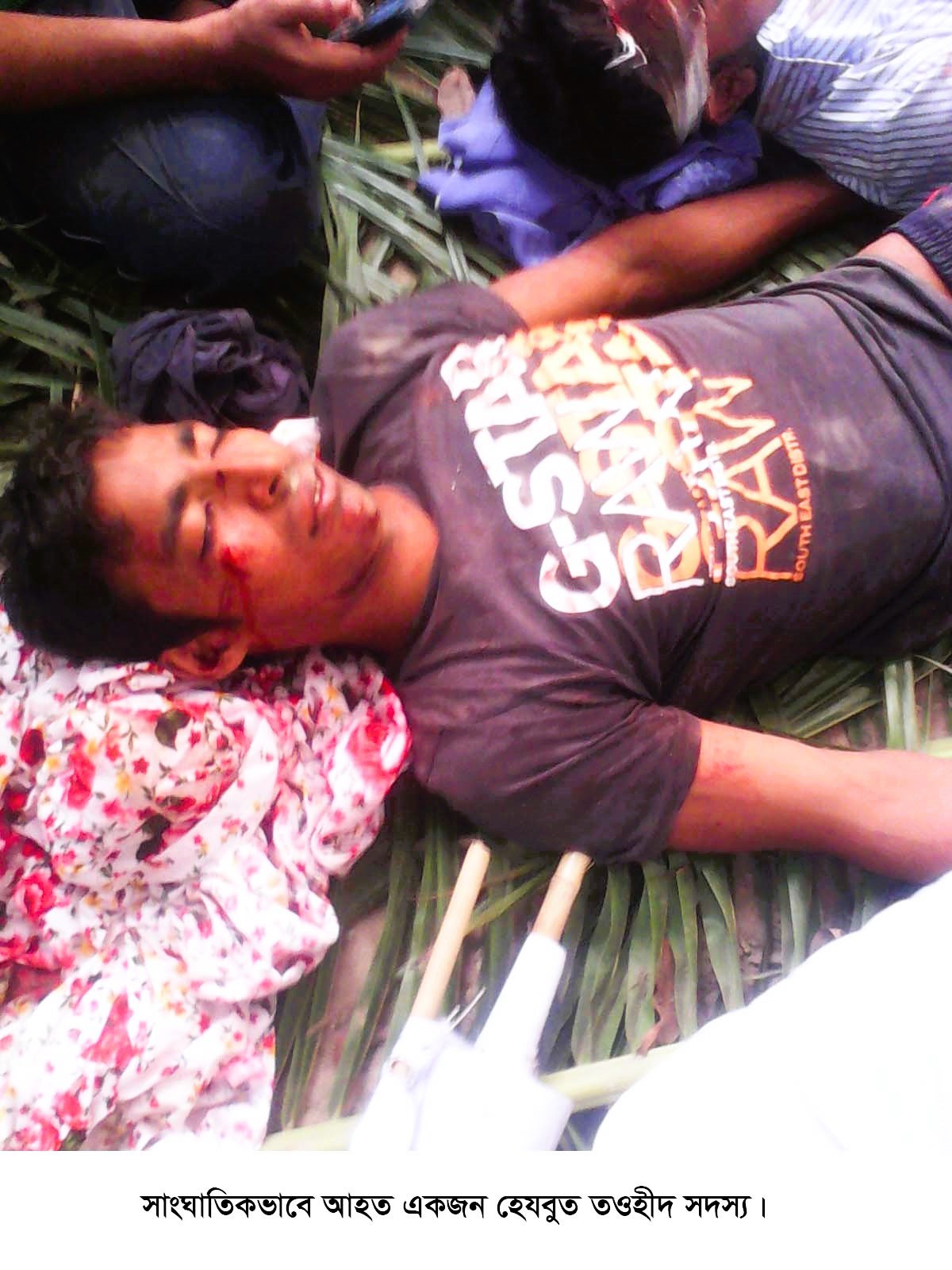
During the intense attack by the assailants, a construction worker lost
consciousness at one point.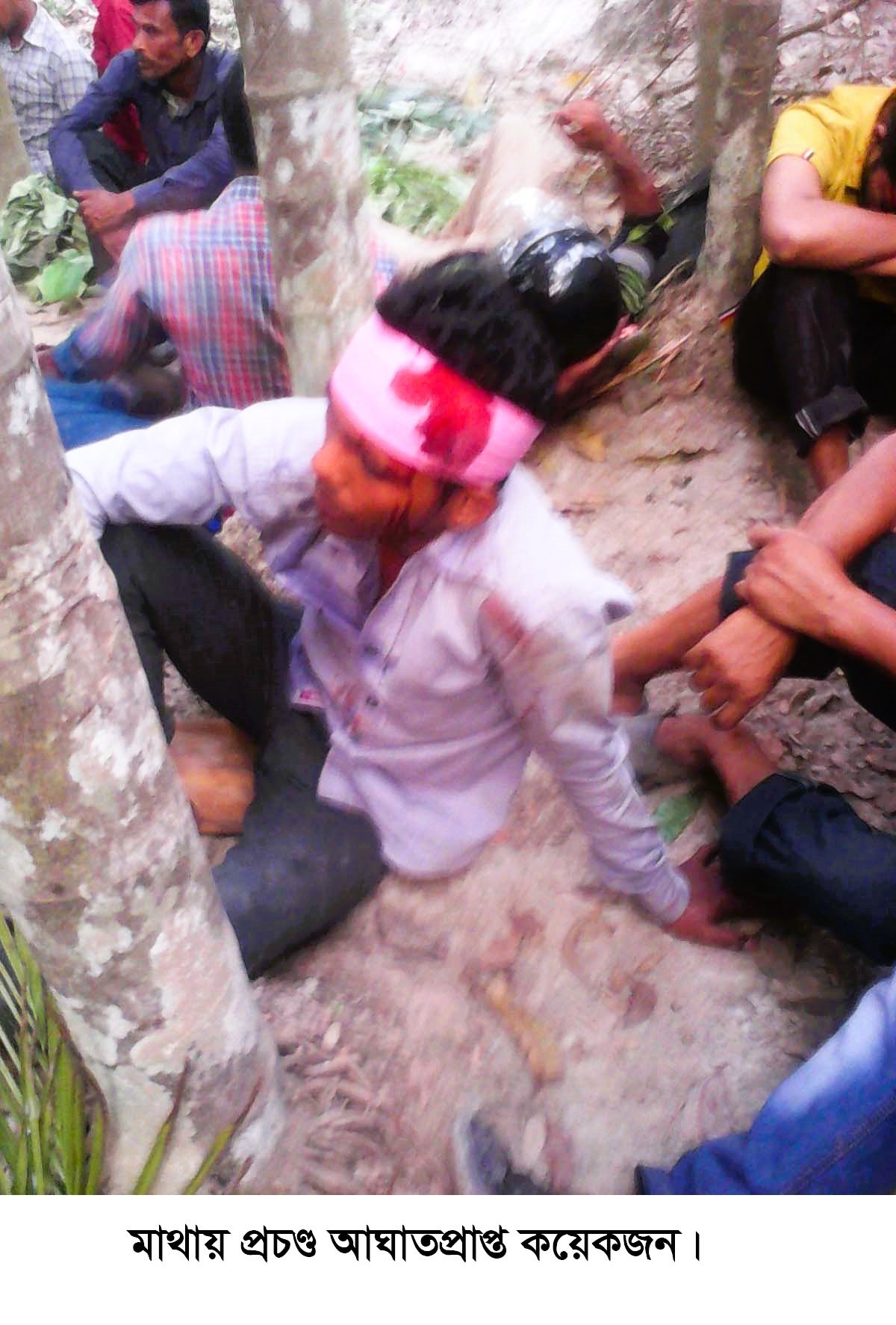
Image 1: A railway line was
nearby. Stones were collected
from there and thrown at Hezbut
Tawheed workers.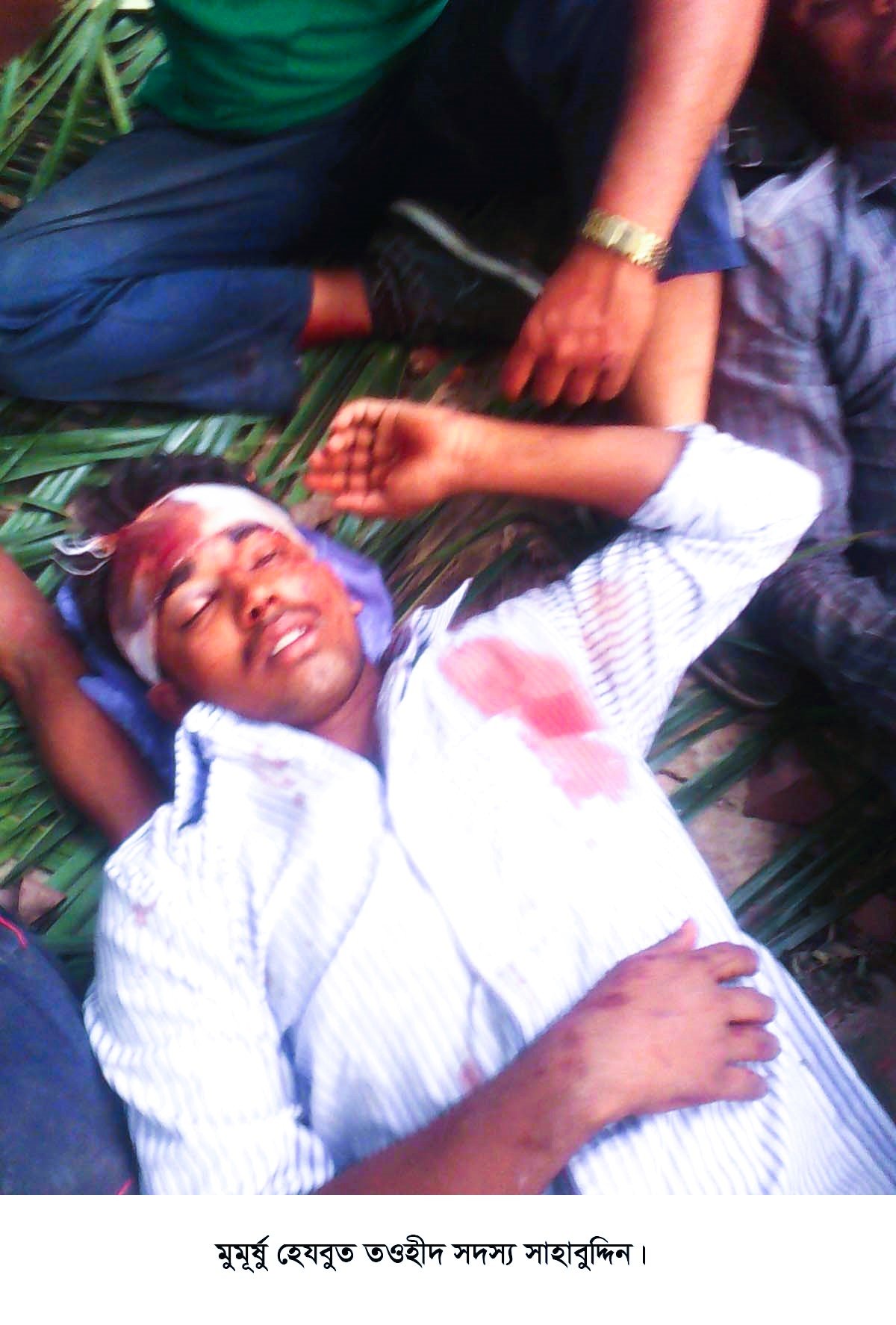
Image 2: Local Hezbut Tawheed
member Ashik Mia was lying
unconscious.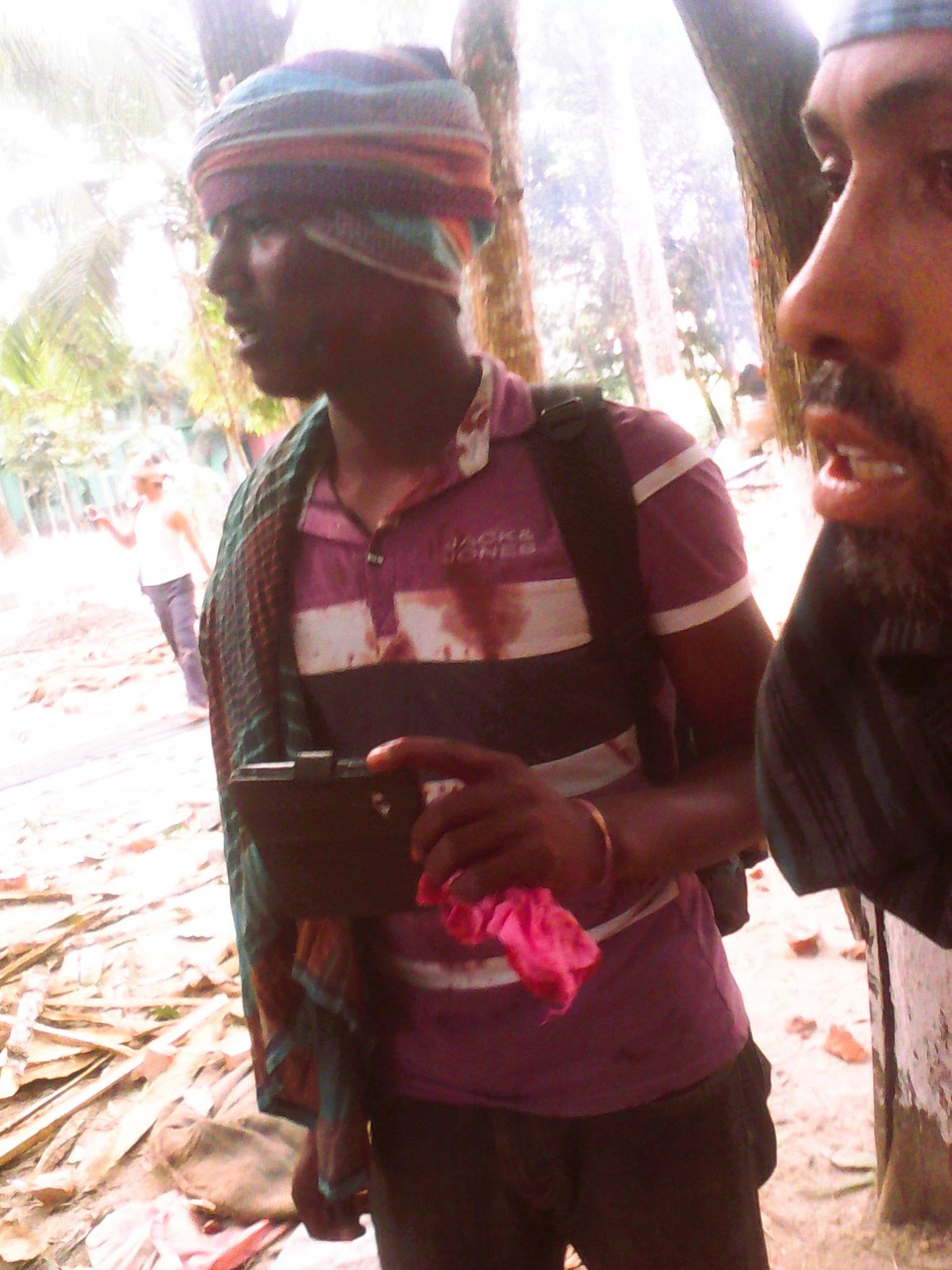
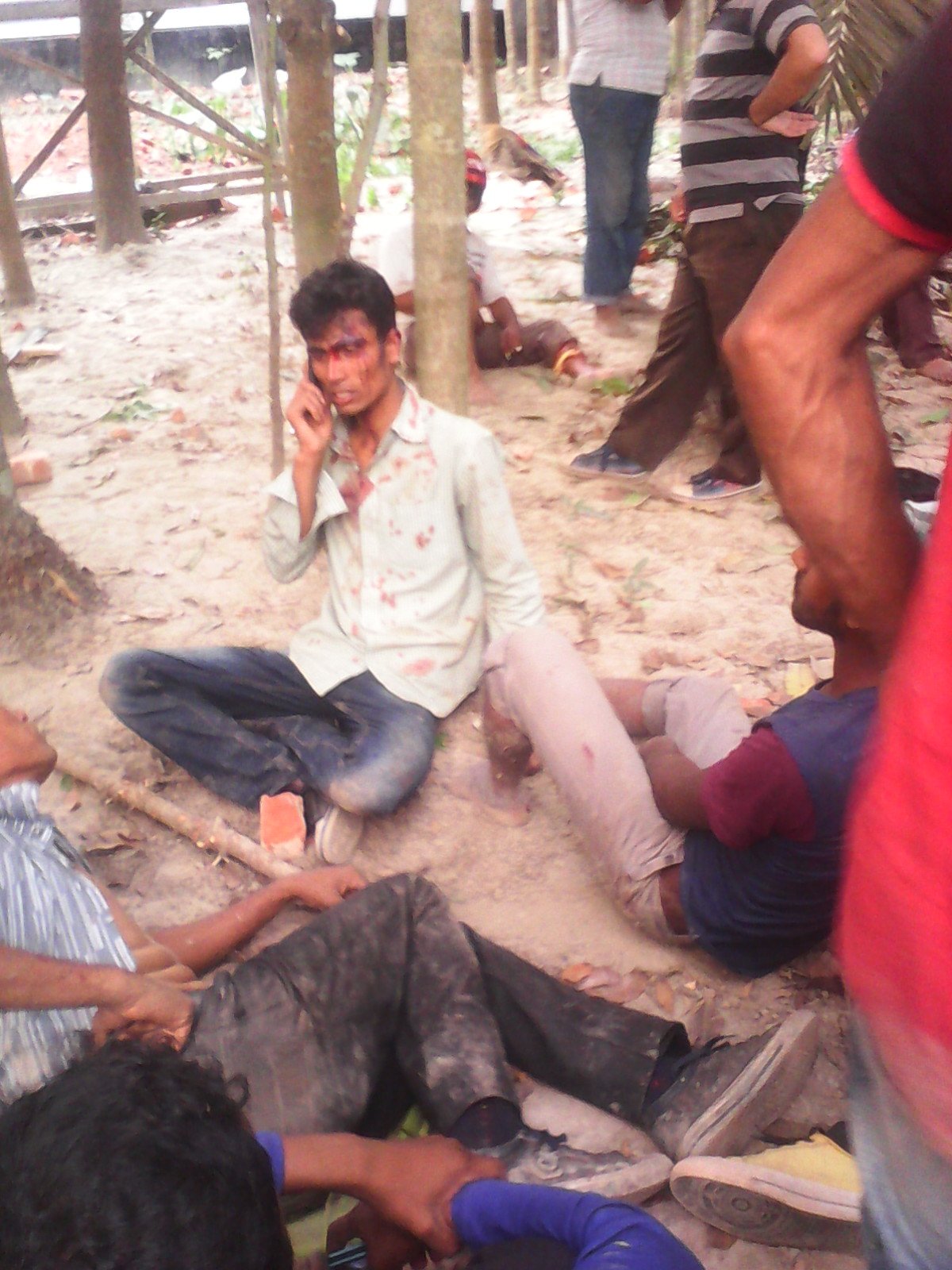
For several continuous hours, bricks and stones rained down on them.
They were surrounded from all sides, with no place to go.
>>Evidence Archive of Attacks and Disinformation Against Hezbut Tawheed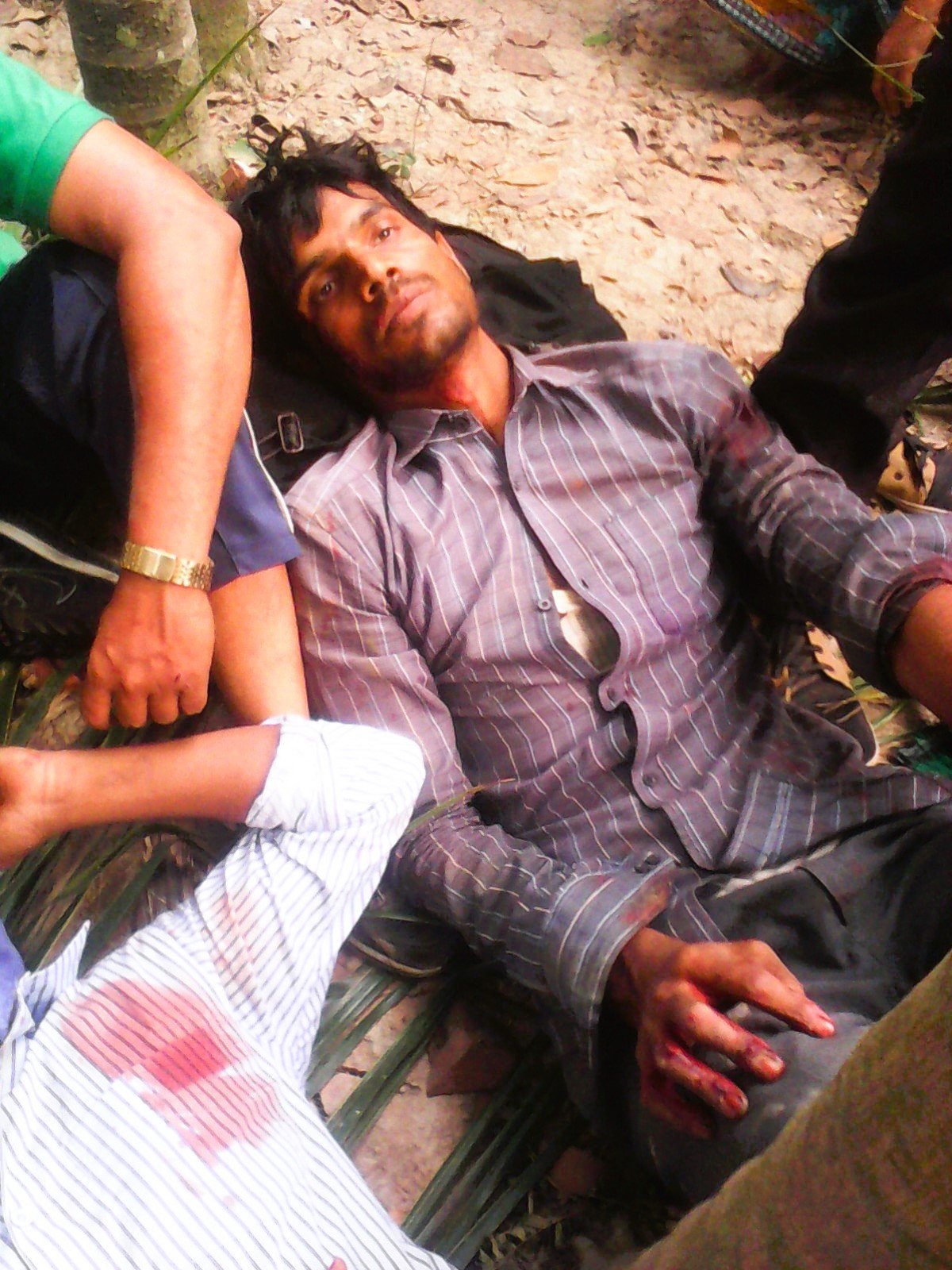
Image 1: Local member Kamal
Hossain was lying injured and
unconscious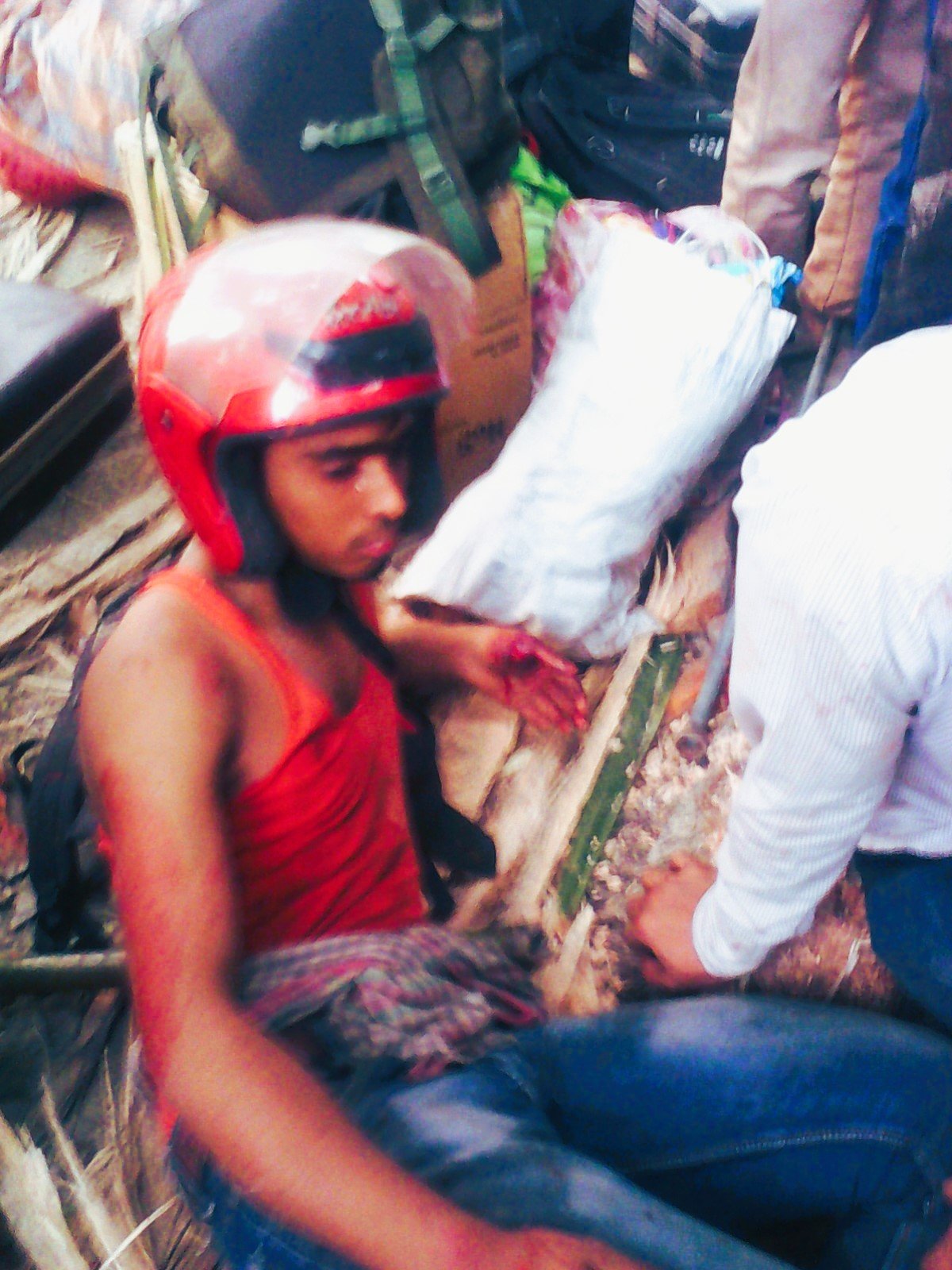
Image 2: Sonaimuri local
resident Ismail Hossain was
seriously injured.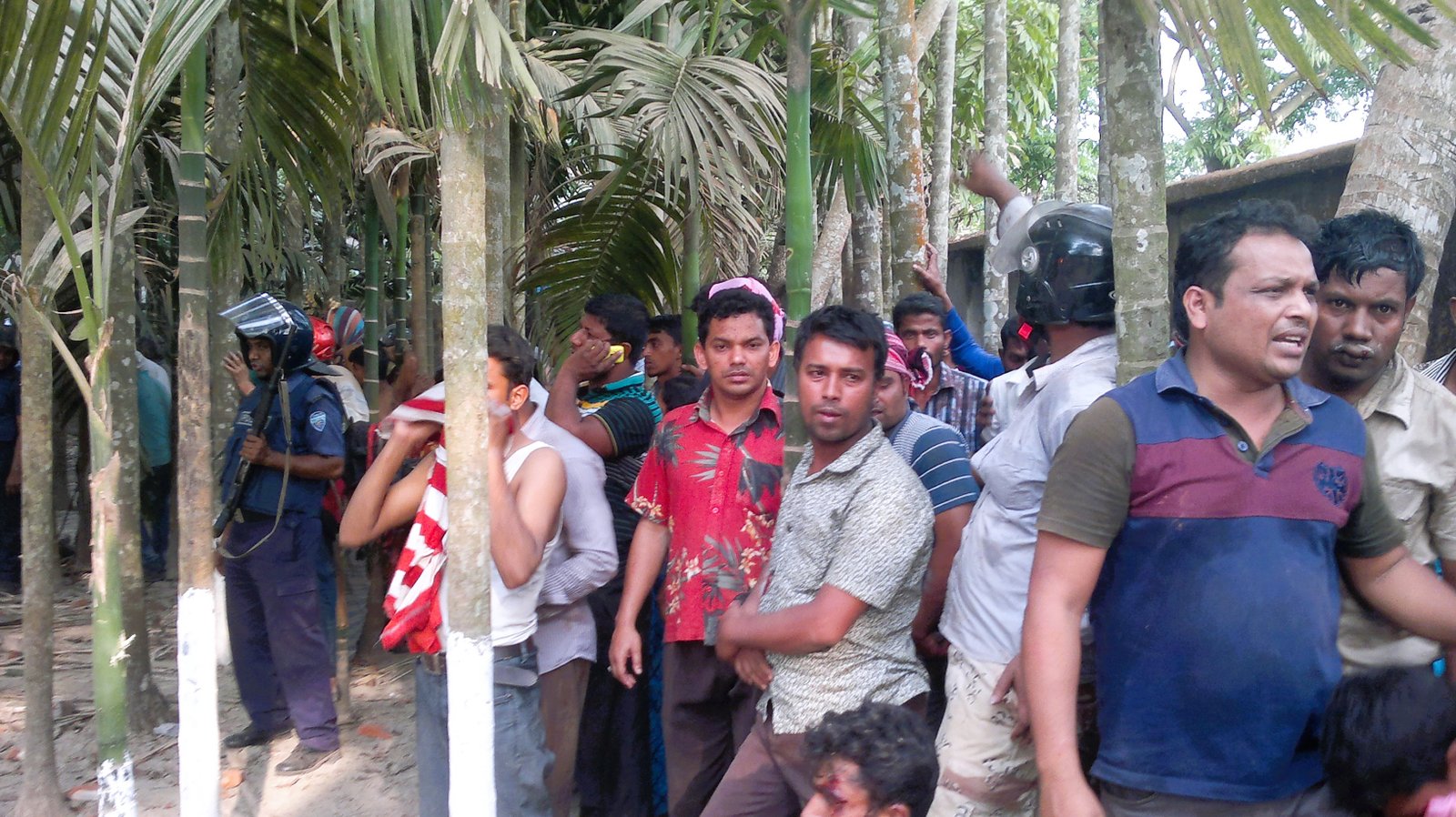
Although the attack temporarily subsided after the police arrived, they
were not allowed a safe opportunity to leave the village.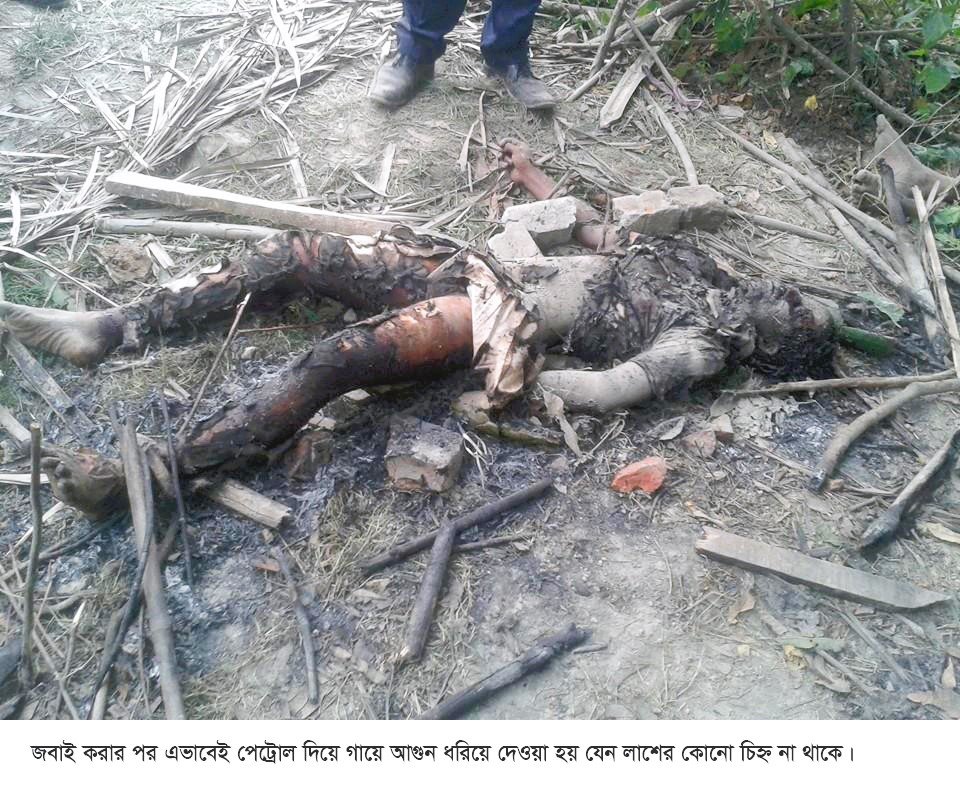
To satisfy their hostile intent, two members of Hezbut Tawheed were
killed, and their bodies were burned with petrol in an attempt to prevent
identification of evidence of the killings.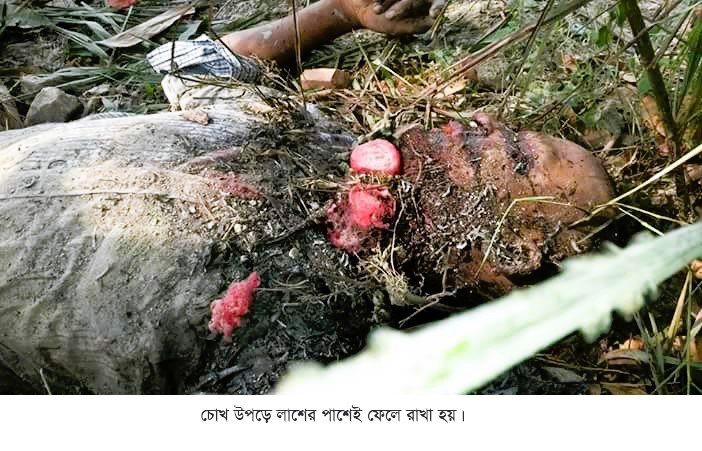
Eyes were gouged out, and the tendons of the hands and legs were
severed. Such acts of killing surpass even the brutality associated with
war.
>>Evidence Archive of Attacks and Disinformation Against Hezbut Tawheed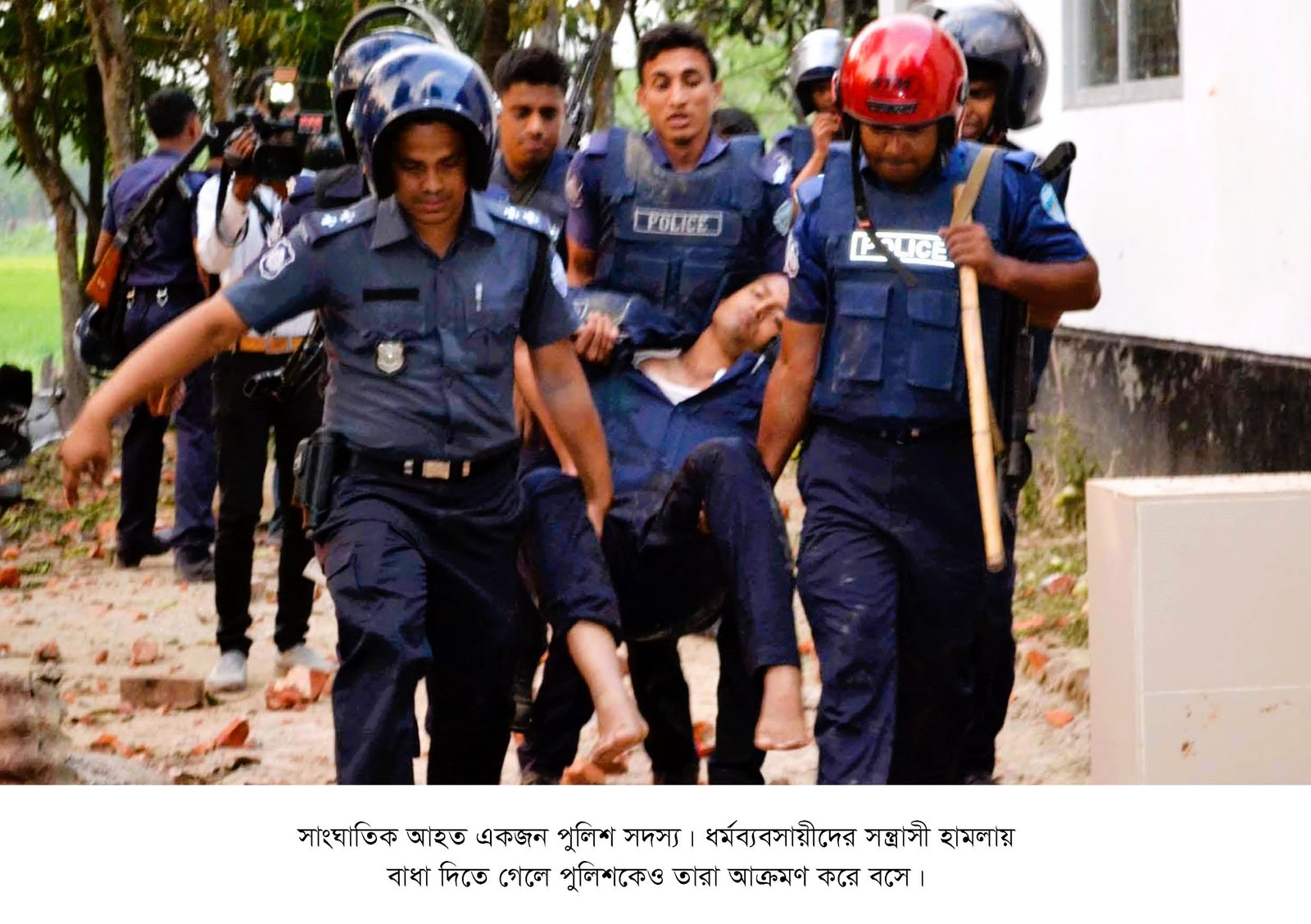
Several police officers were also seriously injured.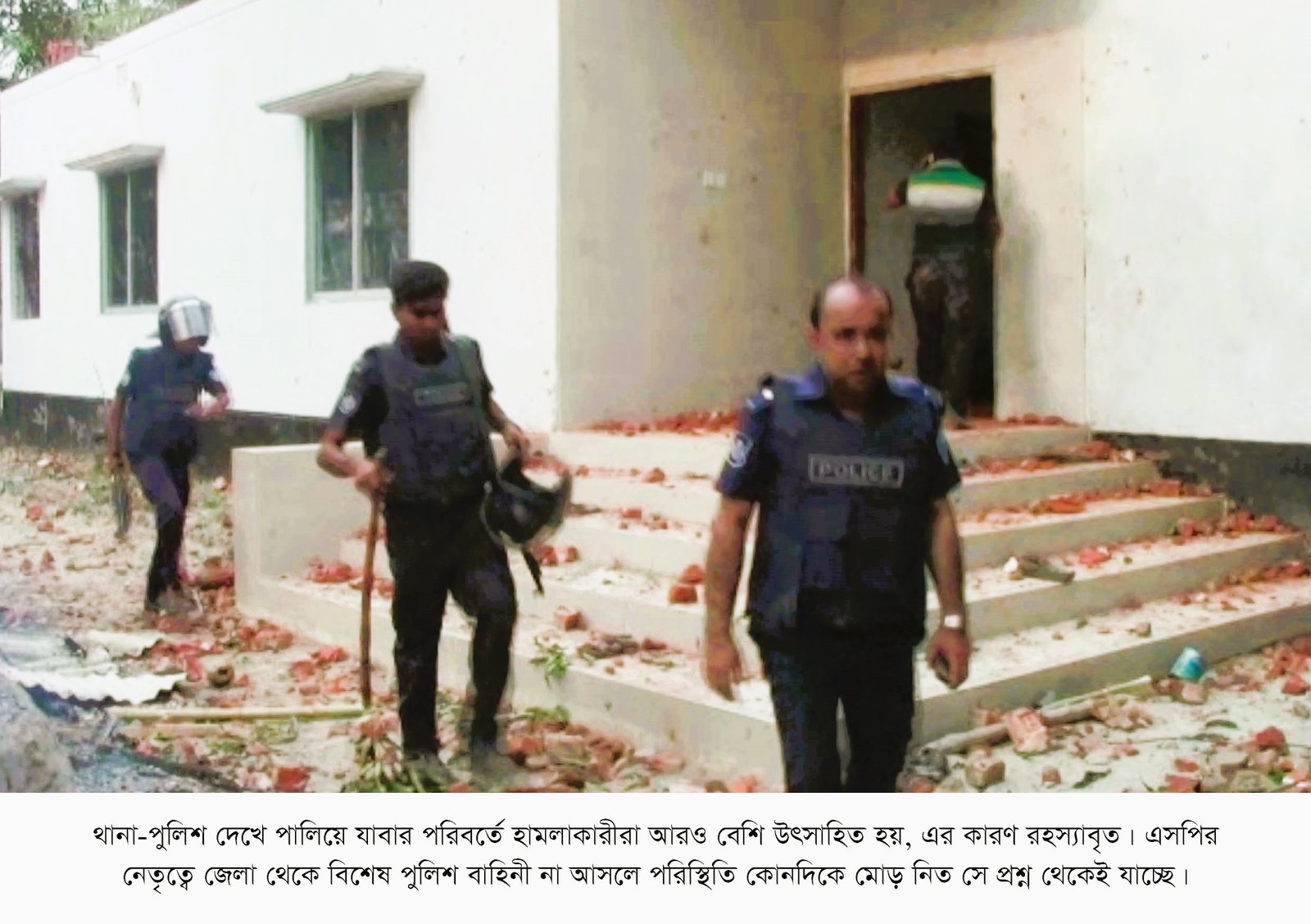
The image shows the residence of the imam of Hezbut Tawheed. The
entire courtyard is filled with bricks from sustained stone pelting. There,
114 people—men and women, children, and elderly individuals—were
trapped in a life-threatening situation.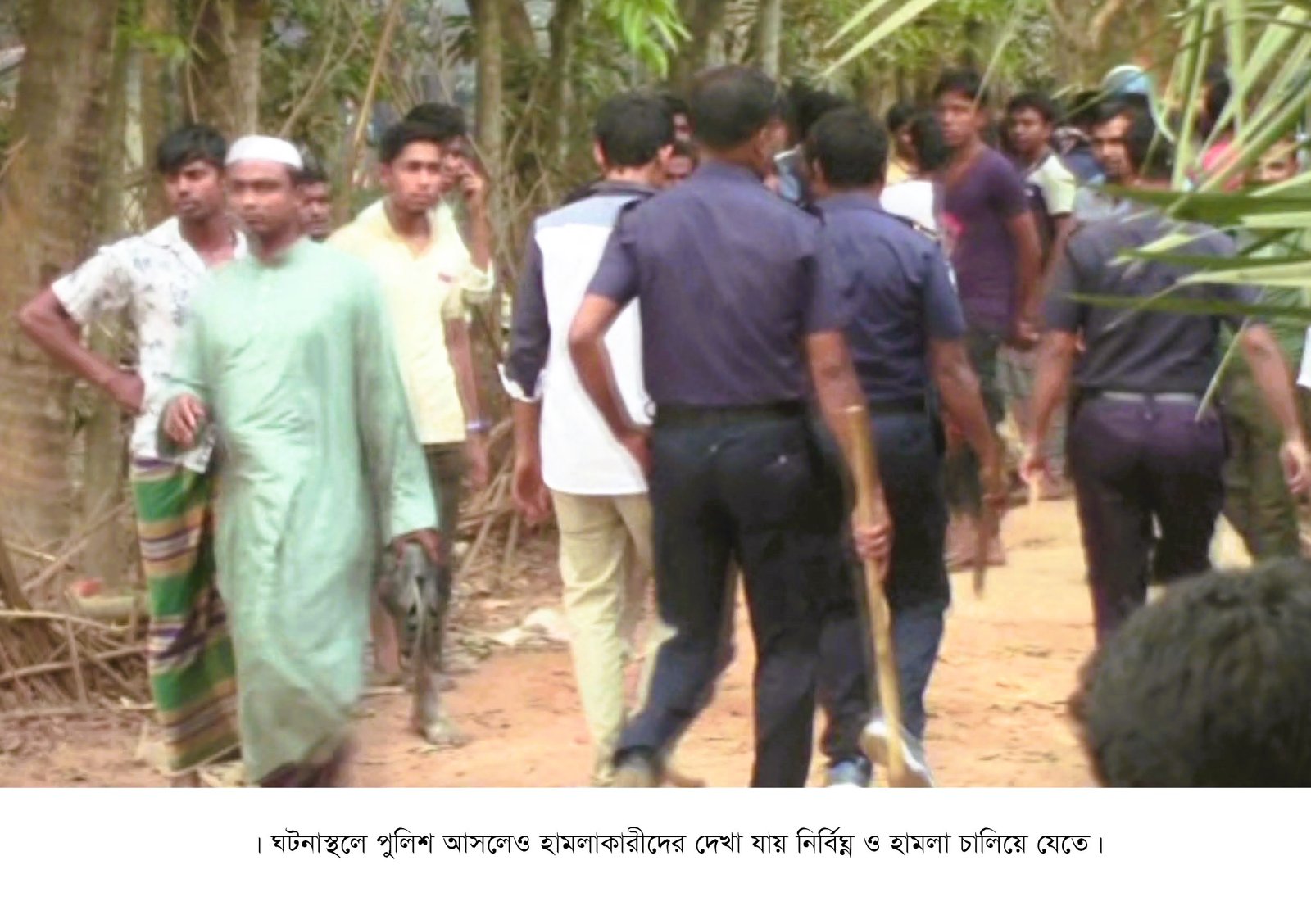
An extremist cleric is seen walking past police officers. Shortly before
this, they had incited local residents and stirred tensions in the area.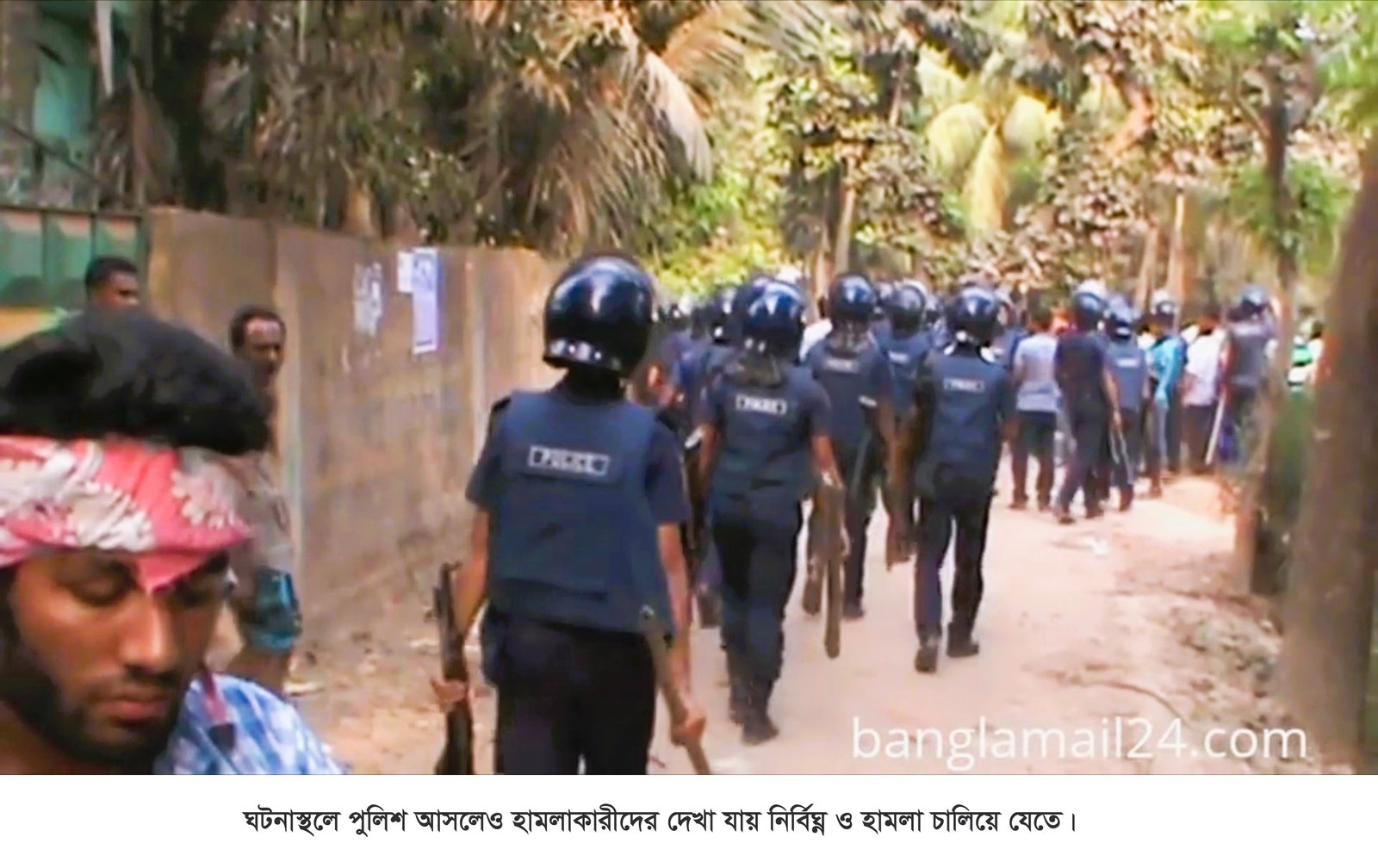
A militant with a cloth tied around his head is walking past
the police.
>>Evidence Archive of Attacks and Disinformation Against Hezbut Tawheed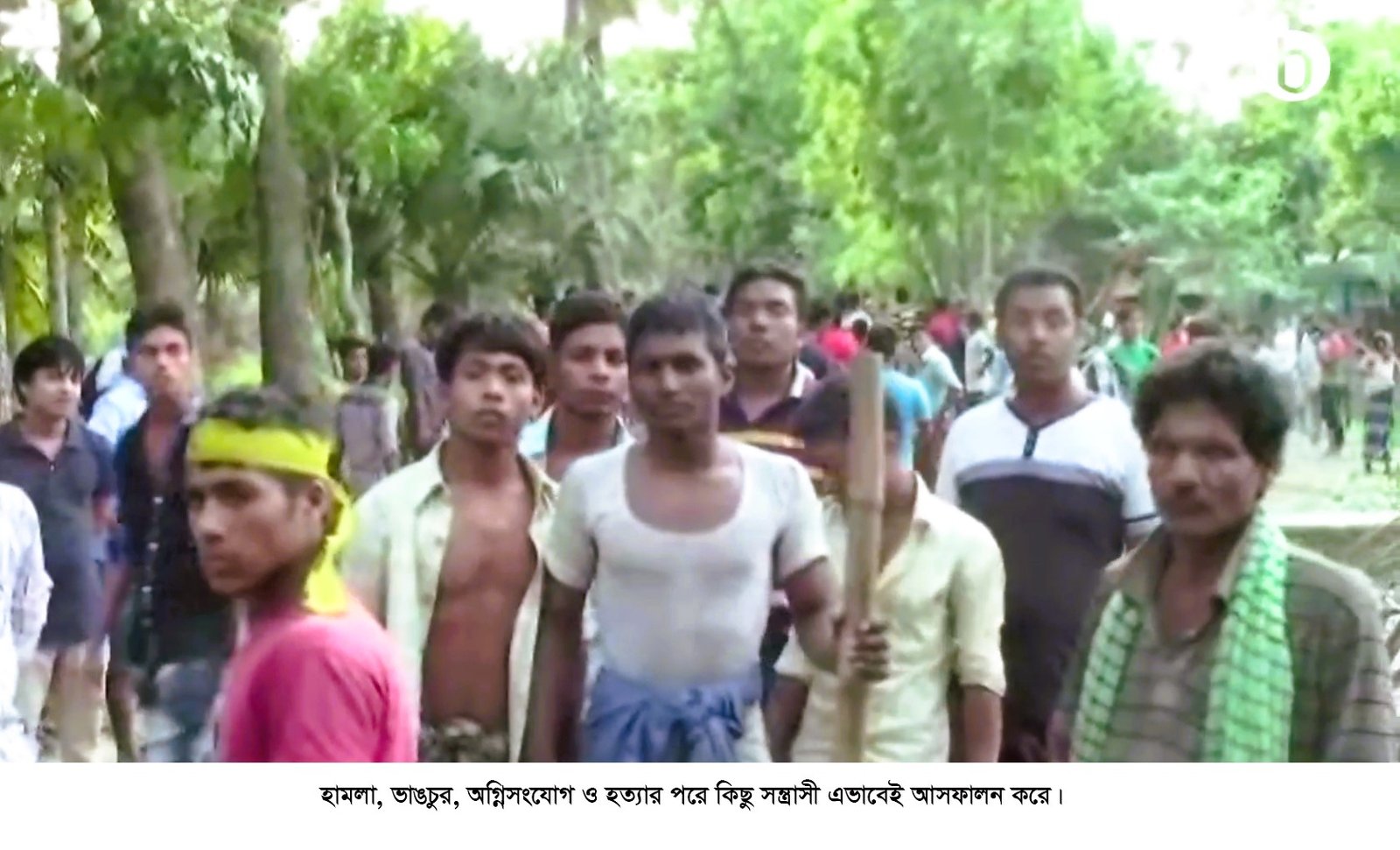
Those carrying weapons and sticks were not local residents of the
village. They appeared to be professional militants.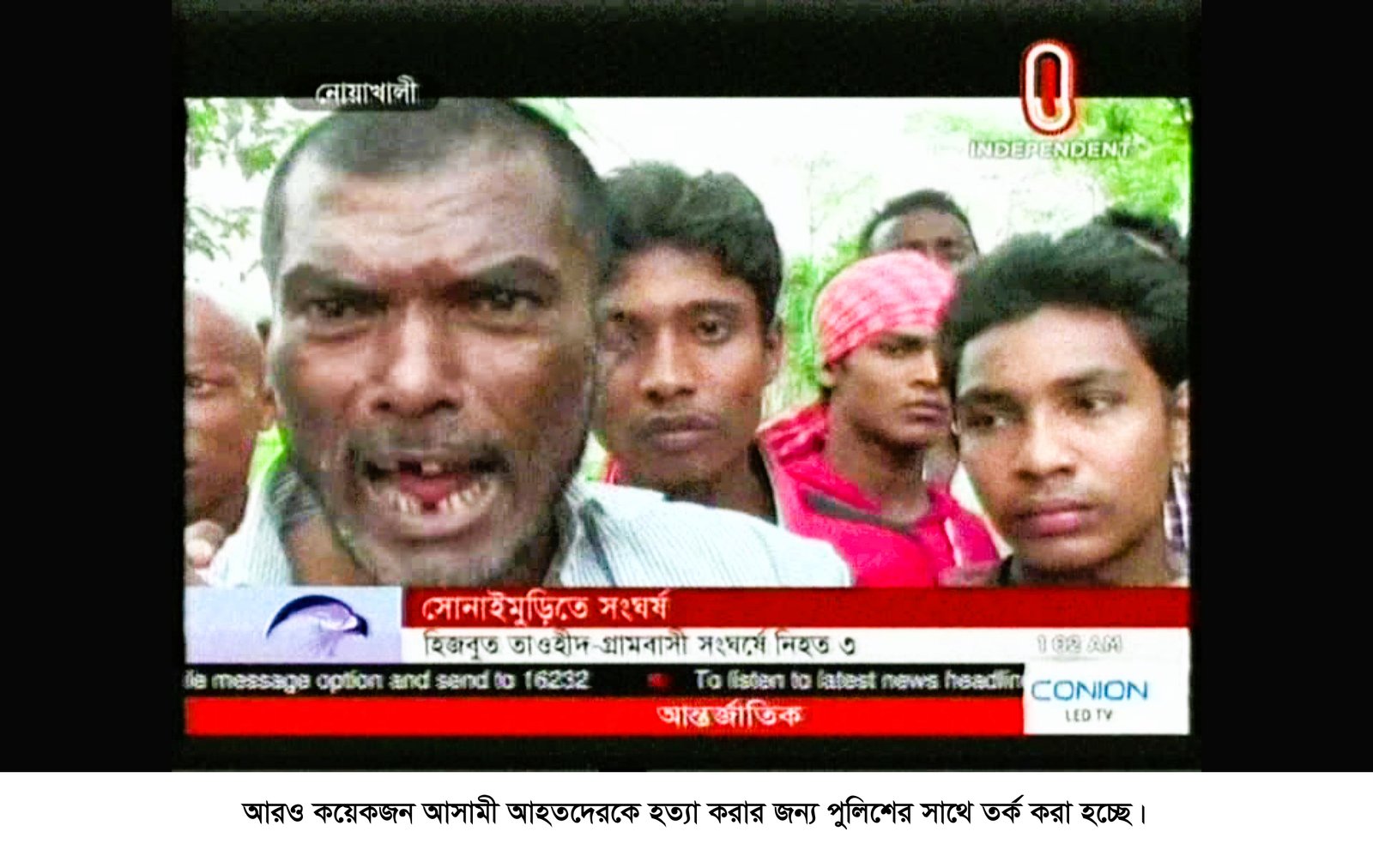
By providing false information in media interviews, public confusion
was created. As a result, incorrect news was published in most media
outlets under the headline “Clashes between villagers and Hezbut
Tawheed.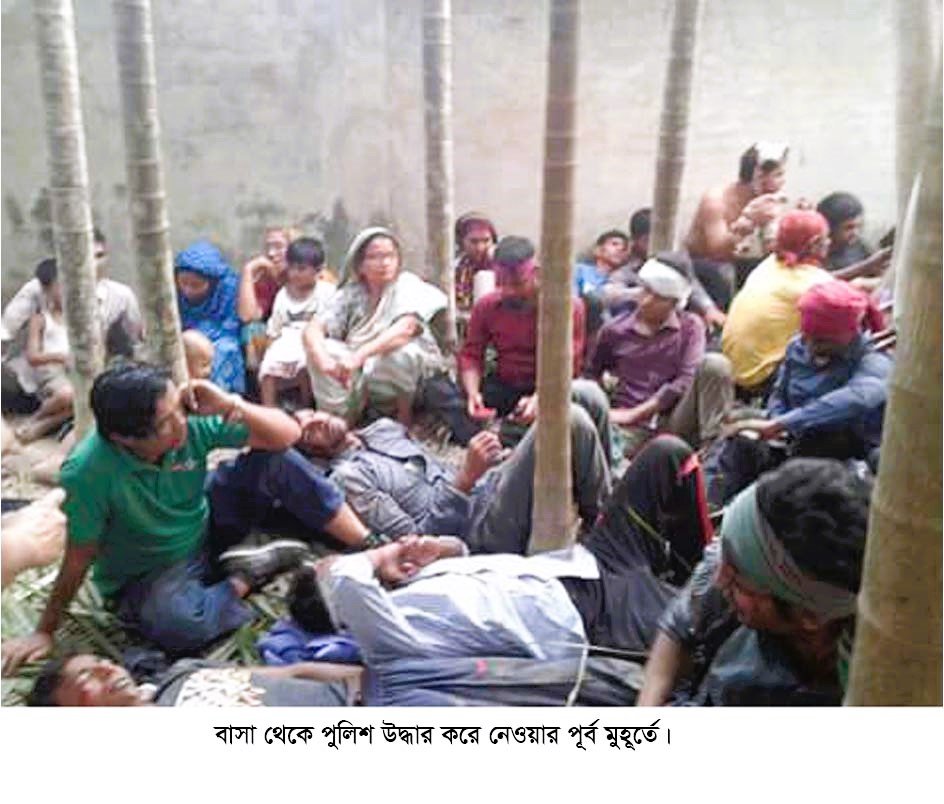
During the attack, Hezbut Tawheed workers were positioned at a safe
distance behind a wall in the courtyard of the house. Stone pelting was
continuing from all sides at that time.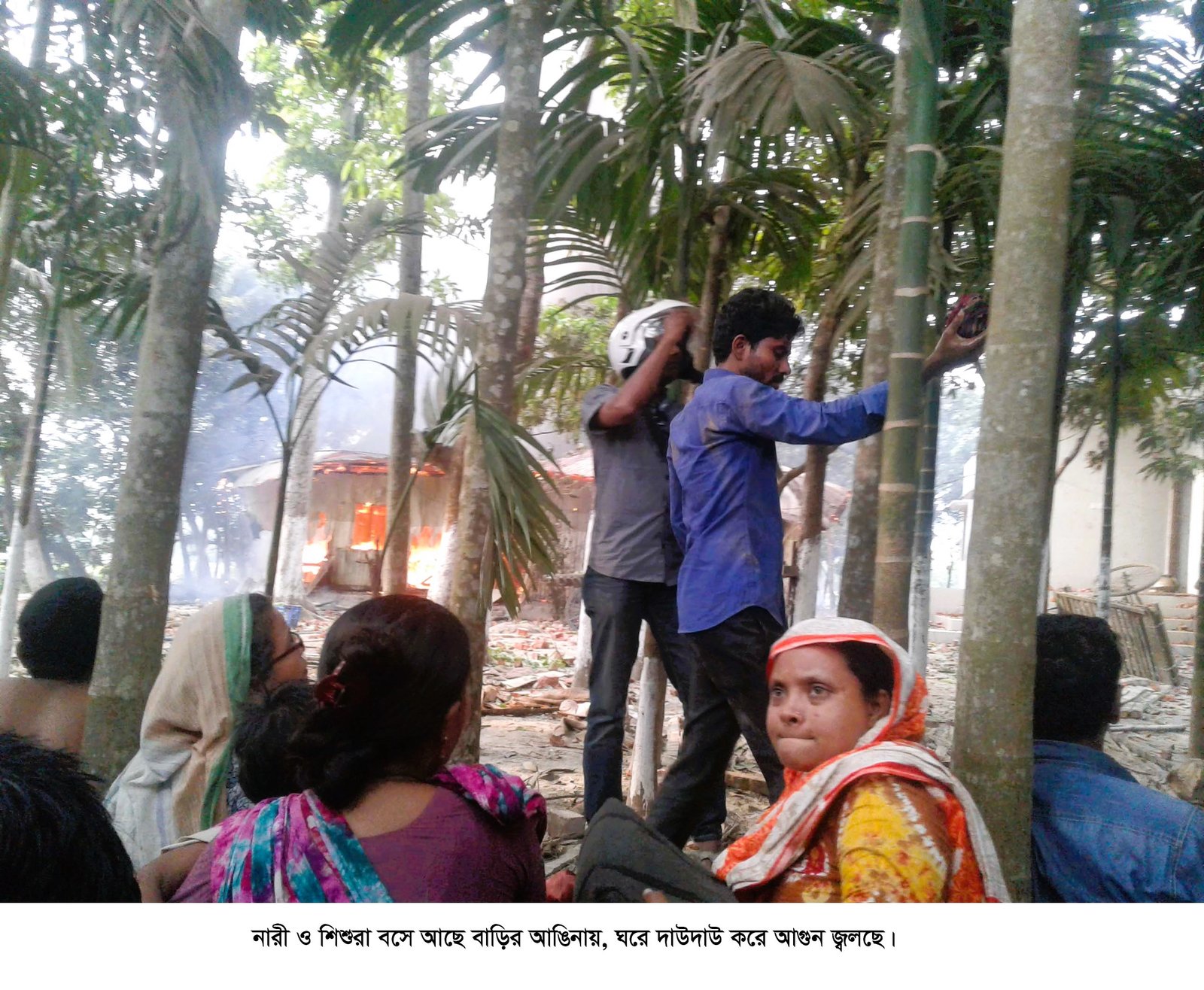
Eight houses were burned in plain sight. Furniture worth several crores
of taka was looted.
>>Evidence Archive of Attacks and Disinformation Against Hezbut Tawheed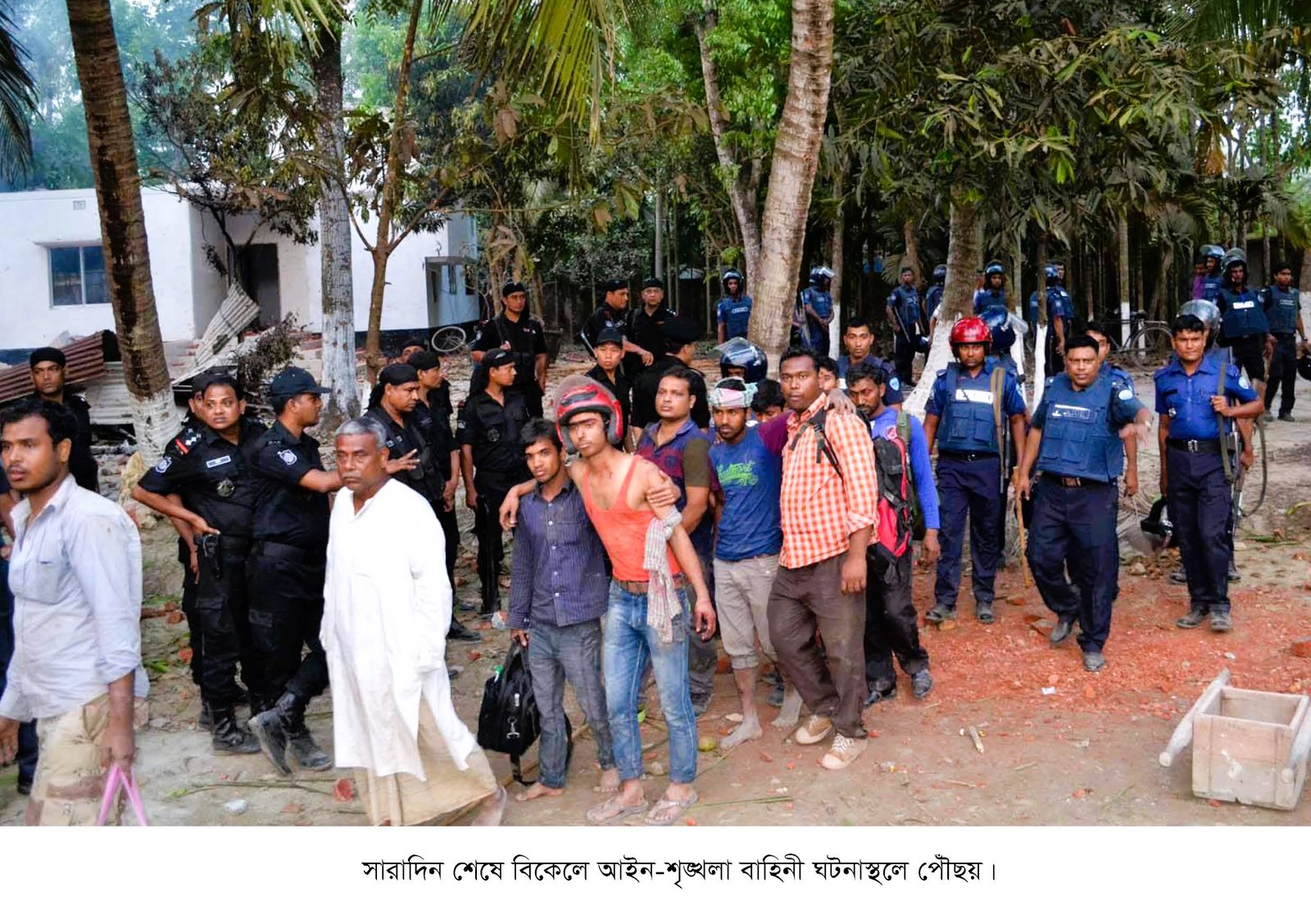
Some members who survived the life-threatening situation. After
conditions stabilized, police and the Rapid Action Battalion (RAB)
moved the injured to a safe location.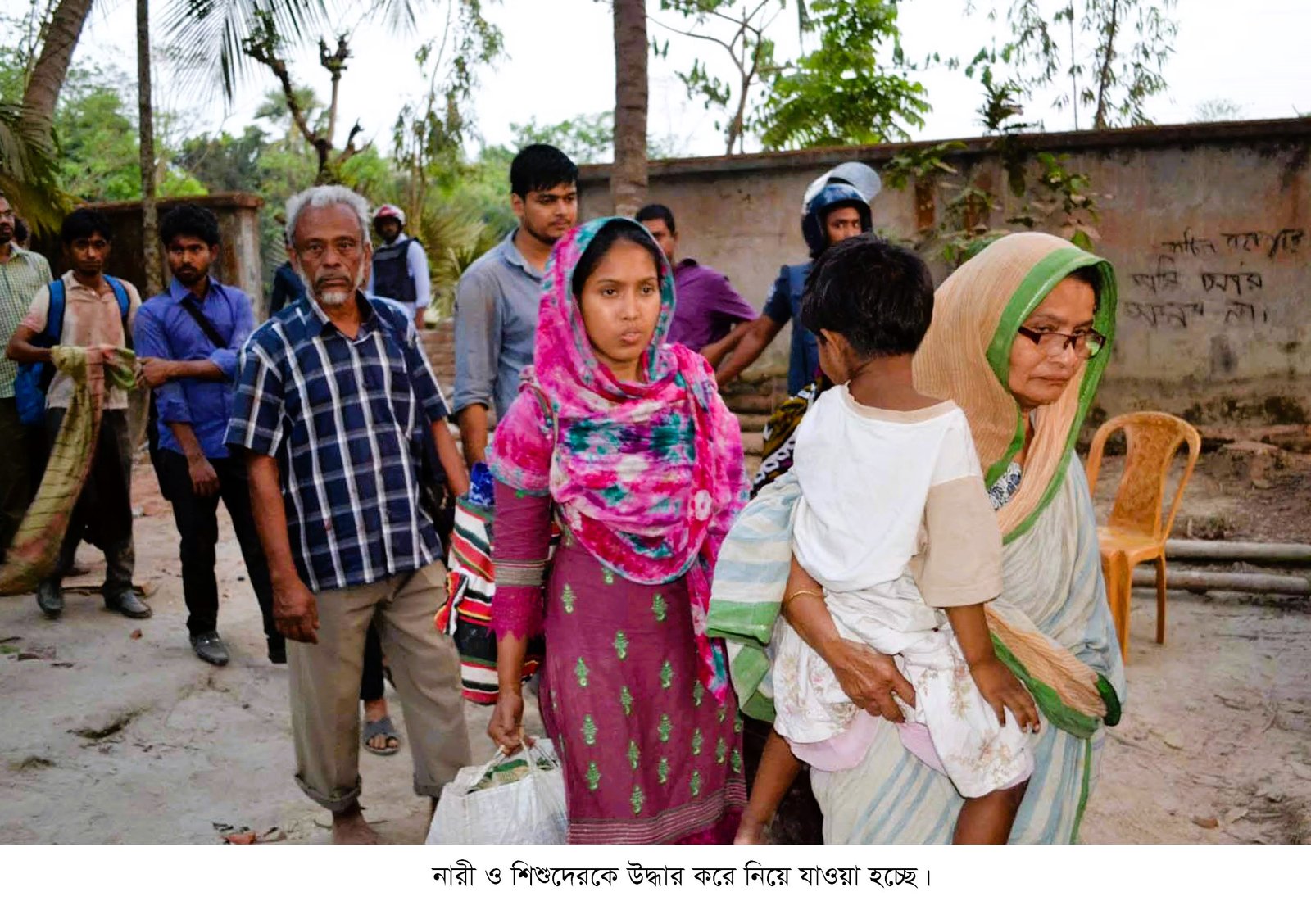
There is no justification for any attack on unarmed, innocent civilian
women, children, and elderly people.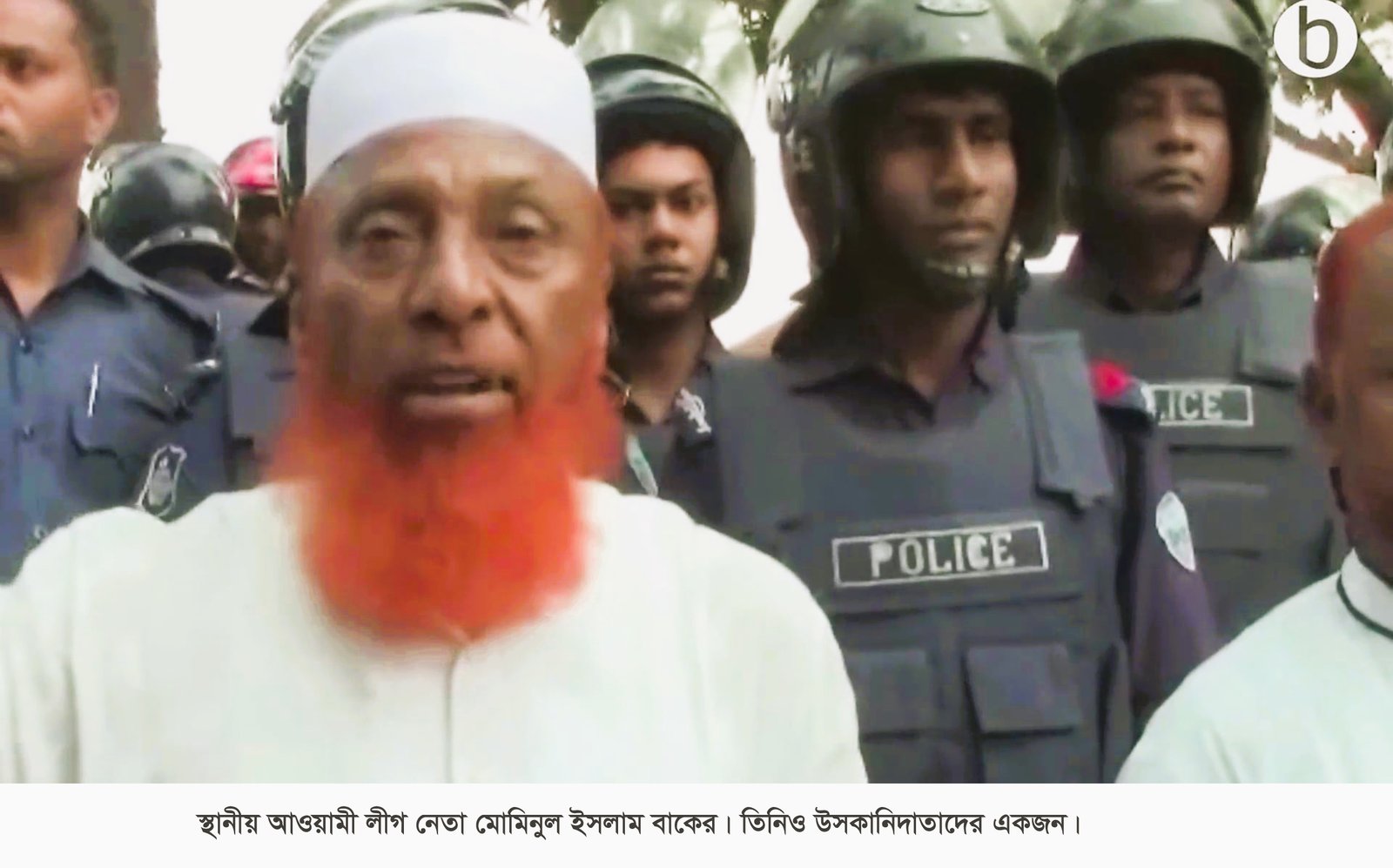
One of the instigators was Mominul Islam Bakar, a local leader of the
Awami League.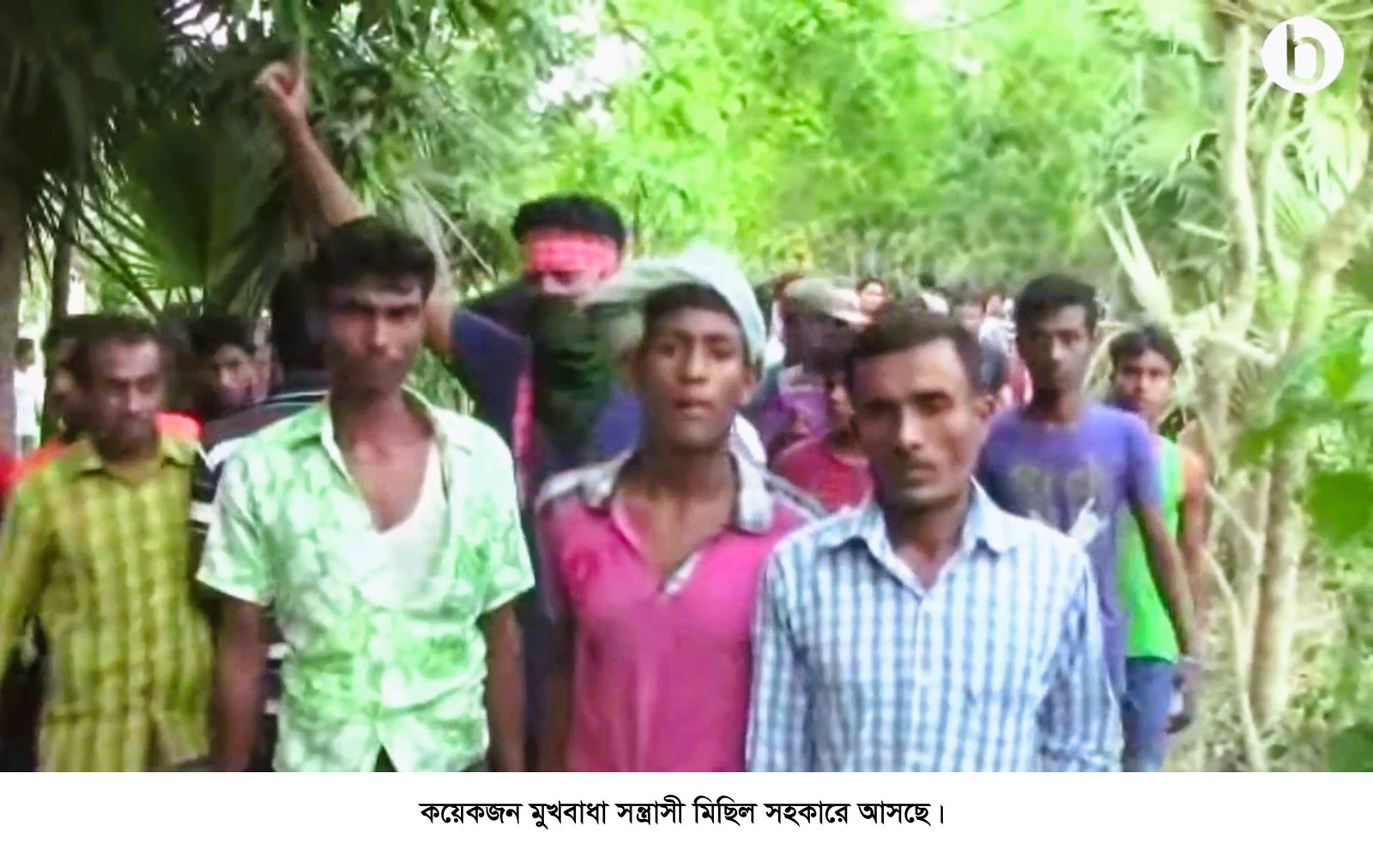
An external militant with his face covered in black cloth was present
among the general crowd. His identity and place of origin have not been
identified to this day.
>>Evidence Archive of Attacks and Disinformation Against Hezbut Tawheed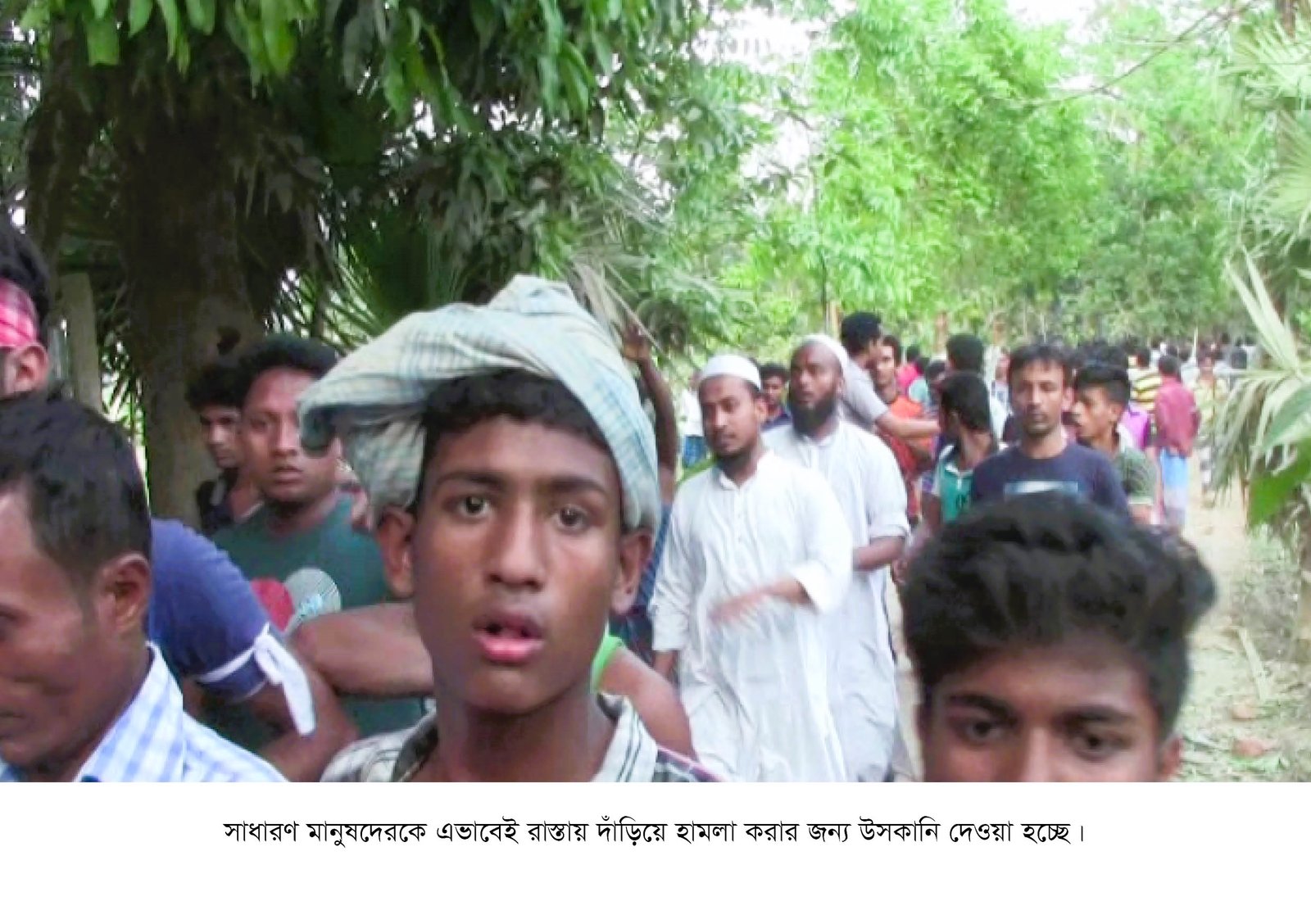
By blending in with the general public and chanting provocative
slogans, teachers and students from several local madrasas incited the
crowd into a state of agitation.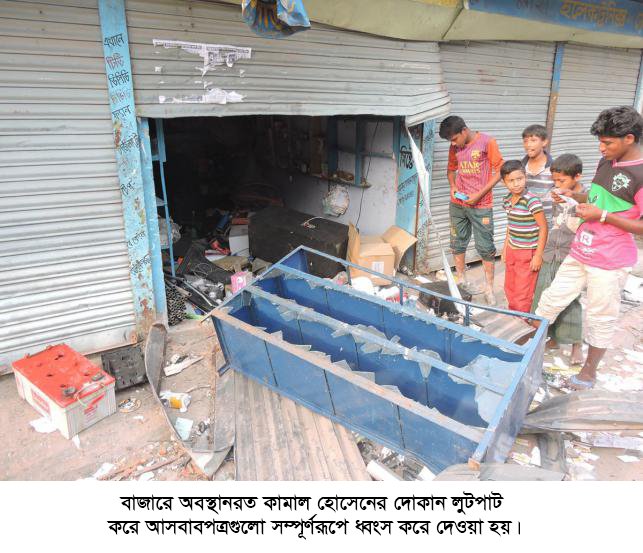
After being looted, the electronics shop of Hezbut Tawheed
member Kamal Hossain, located at Chashirhat Bazar, was
completely destroyed.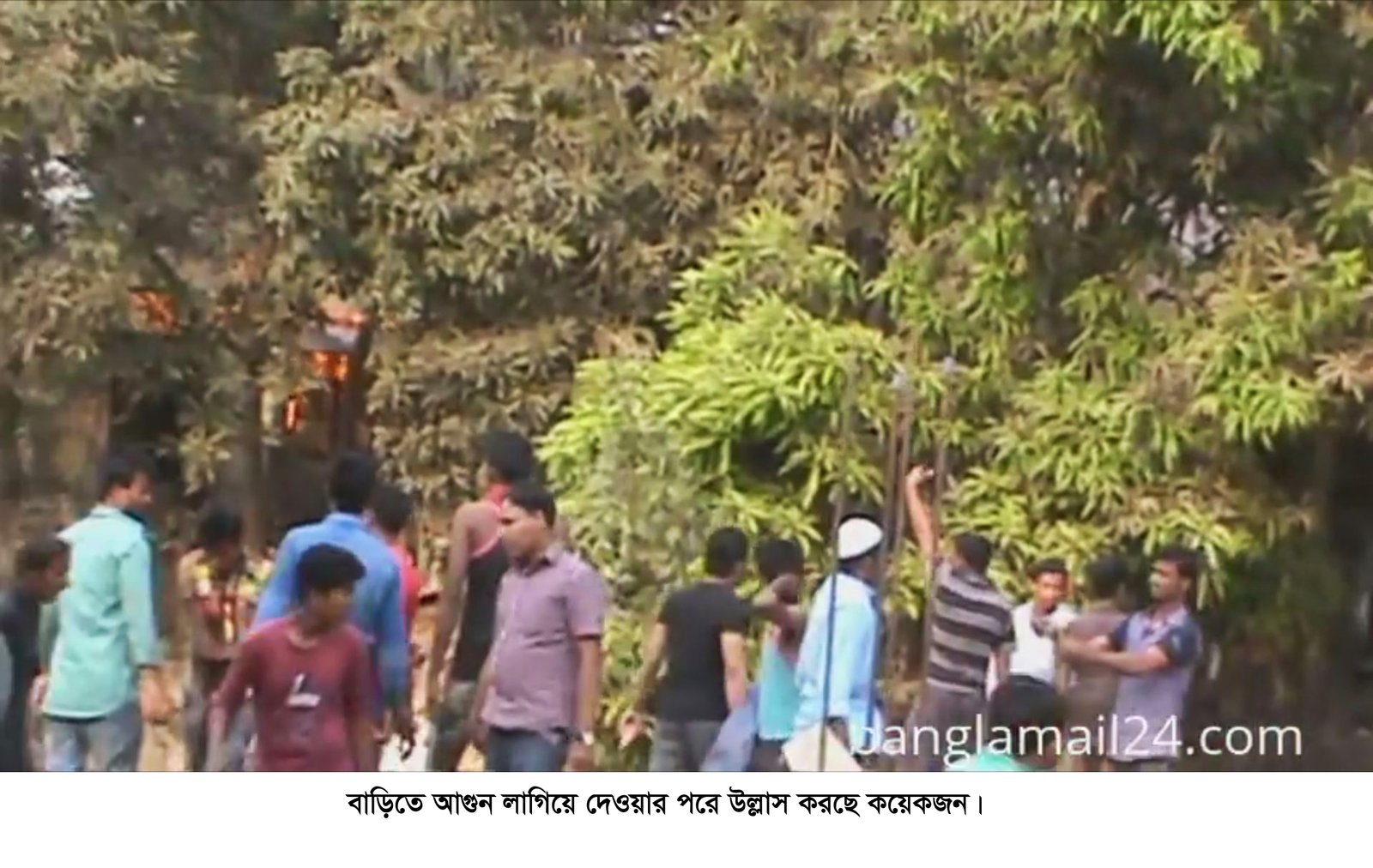
After setting the house on fire, the assailants were seen celebrating.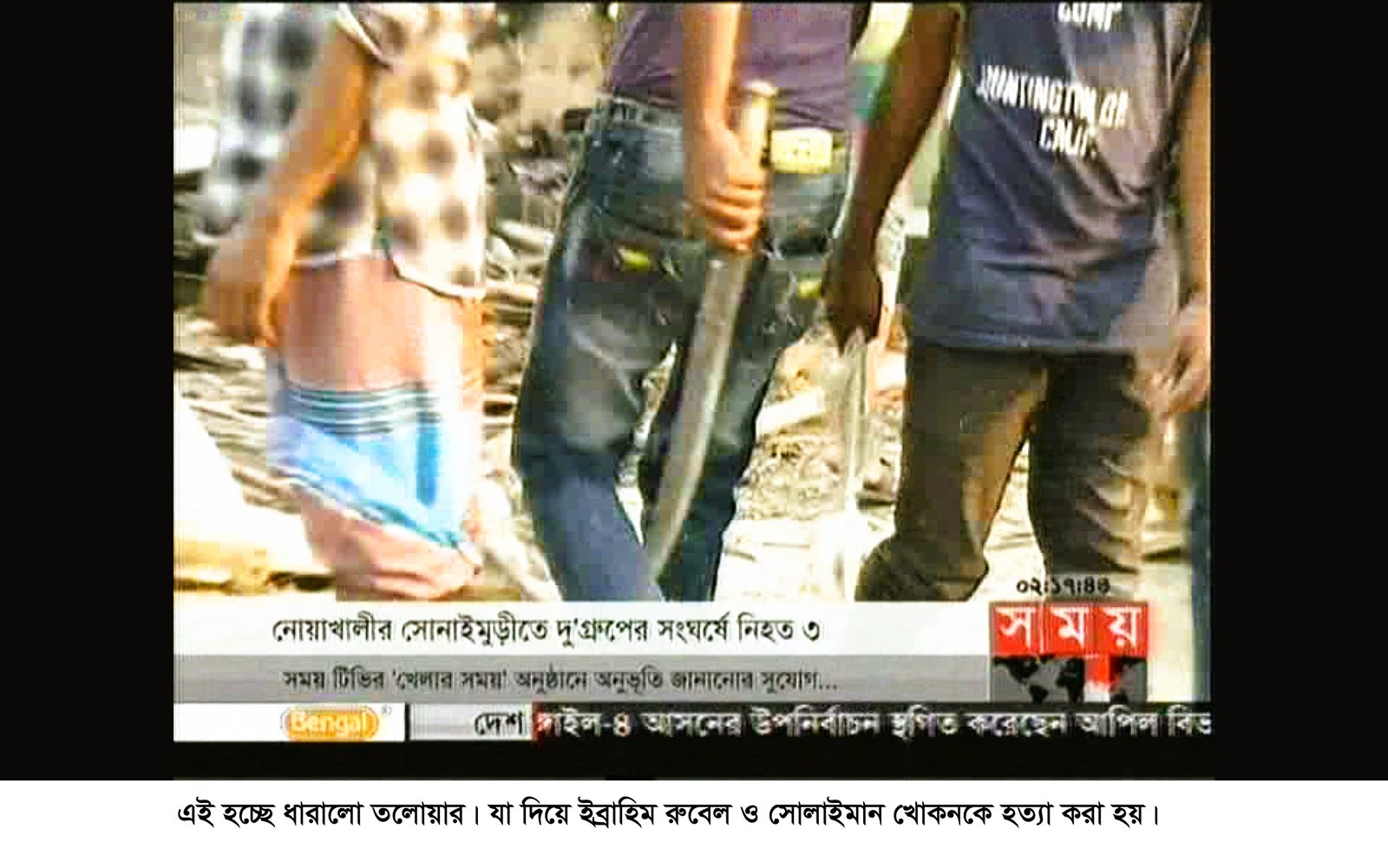
The assailants were armed with sharp long knives, cleavers,
swords, and knives used for cattle slaughter, among other
weapons. In the presence of the police, they carried out
acts of violence and killings. Many national media outlets
broadcast these scenes.
>>Evidence Archive of Attacks and Disinformation Against Hezbut Tawheed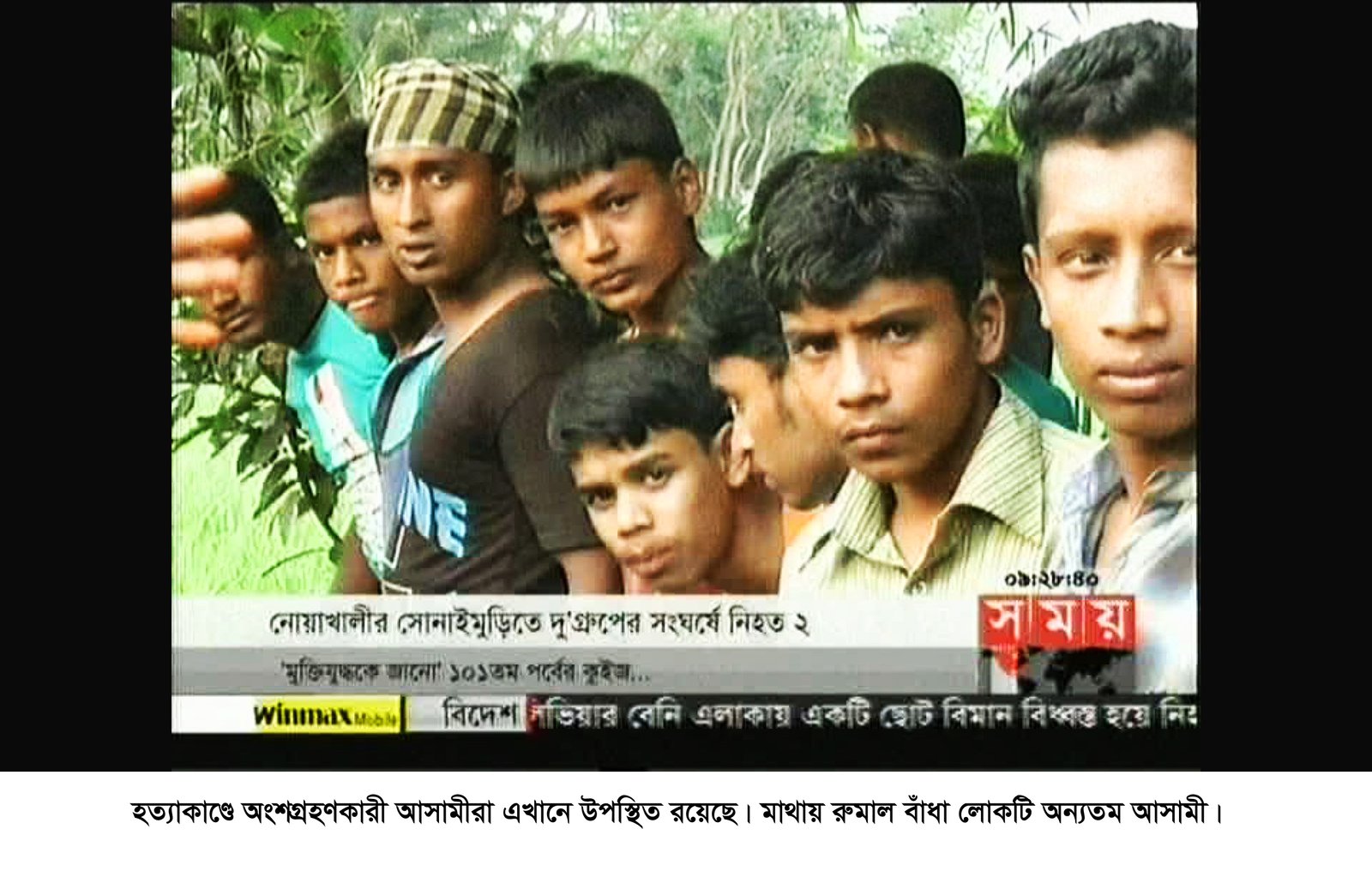
The man with a towel tied around his head was an external
militant. He openly participated in the killing and is one of
the accused in a murder case.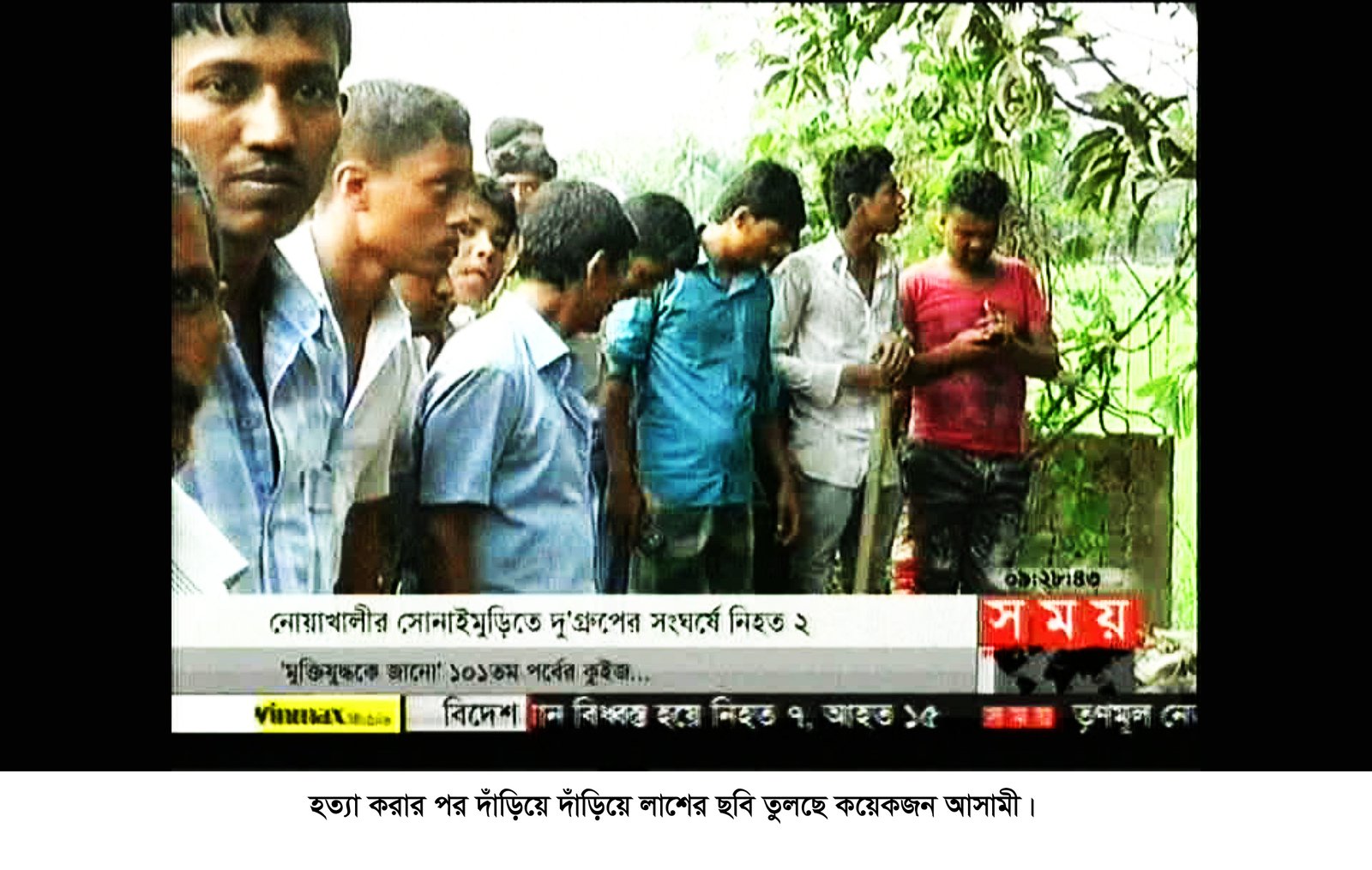
Extremist militants were seen standing in front of the bodies, celebrating,
taking photographs and videos, and posting them on social media.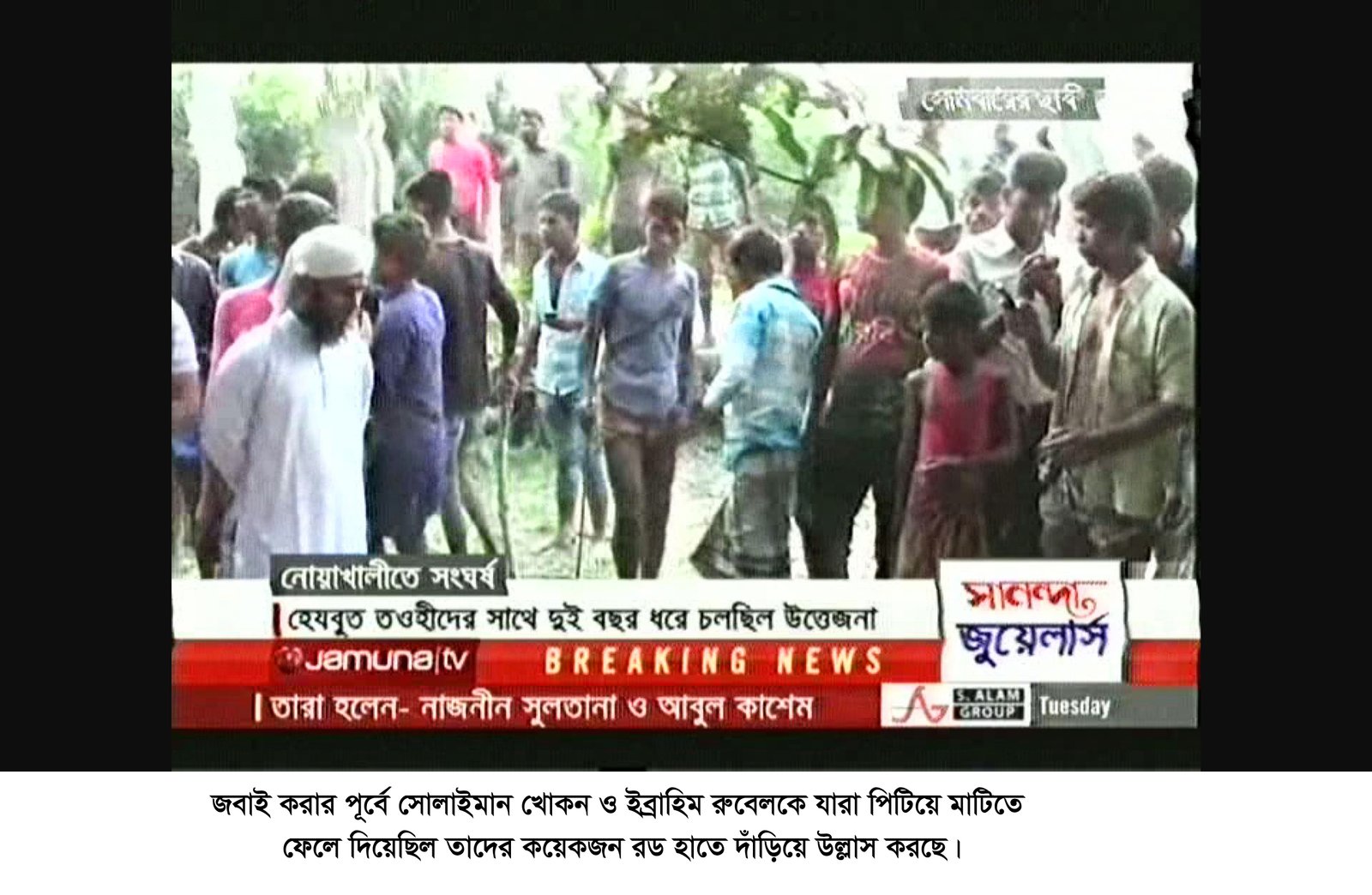
He is moving around carrying an iron rod and sharp weapons. Another
person (on the right) is making phone calls in an attempt to gather more
people.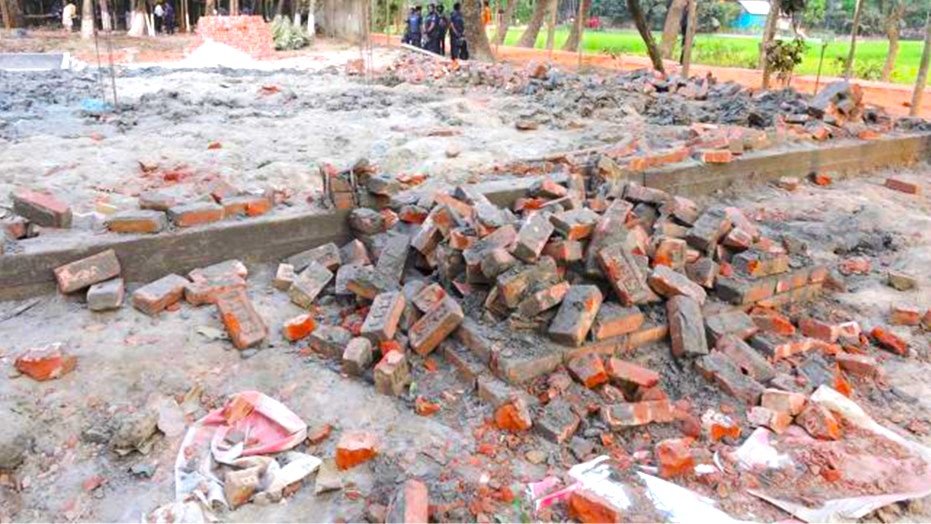
This is the under-construction mosque that was labeled as a church and
completely demolished. From the pile of bricks, it is clearly identifiable
as the mosque’s mimbar (pulpit).
>>Evidence Archive of Attacks and Disinformation Against Hezbut Tawheed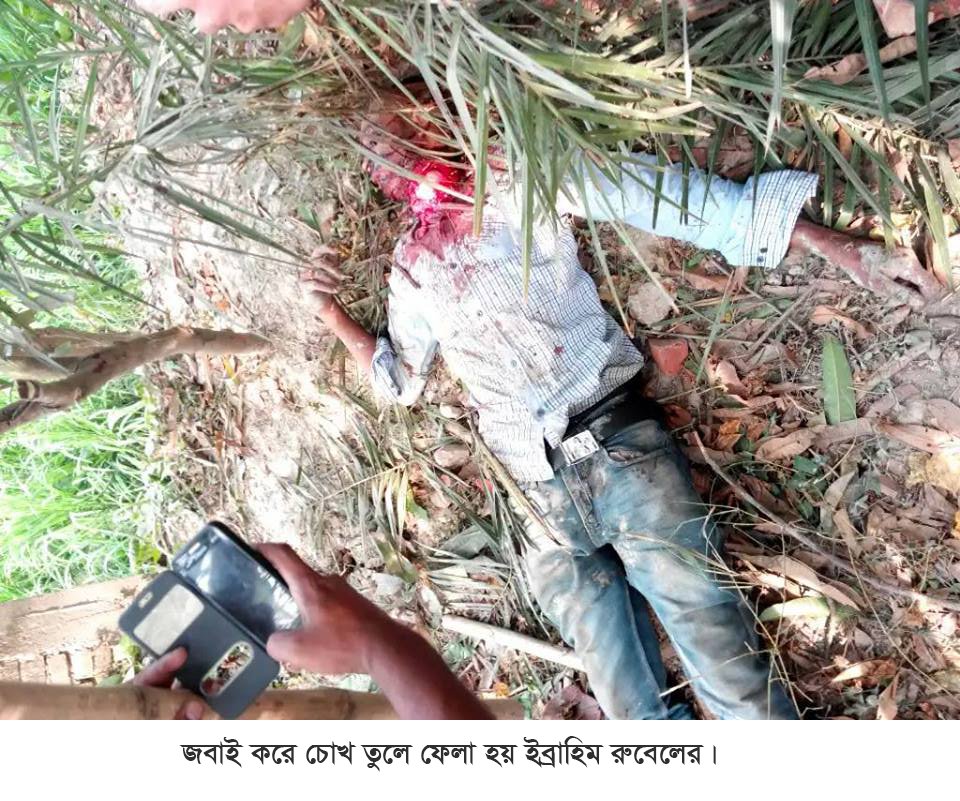
According to visual evidence from the scene, physical traces,
and eyewitness testimony, two individuals were first killed
by having their throats slit; their eyes were then gouged out,
the tendons of their hands and legs were severed, and their
bodies were subsequently burned.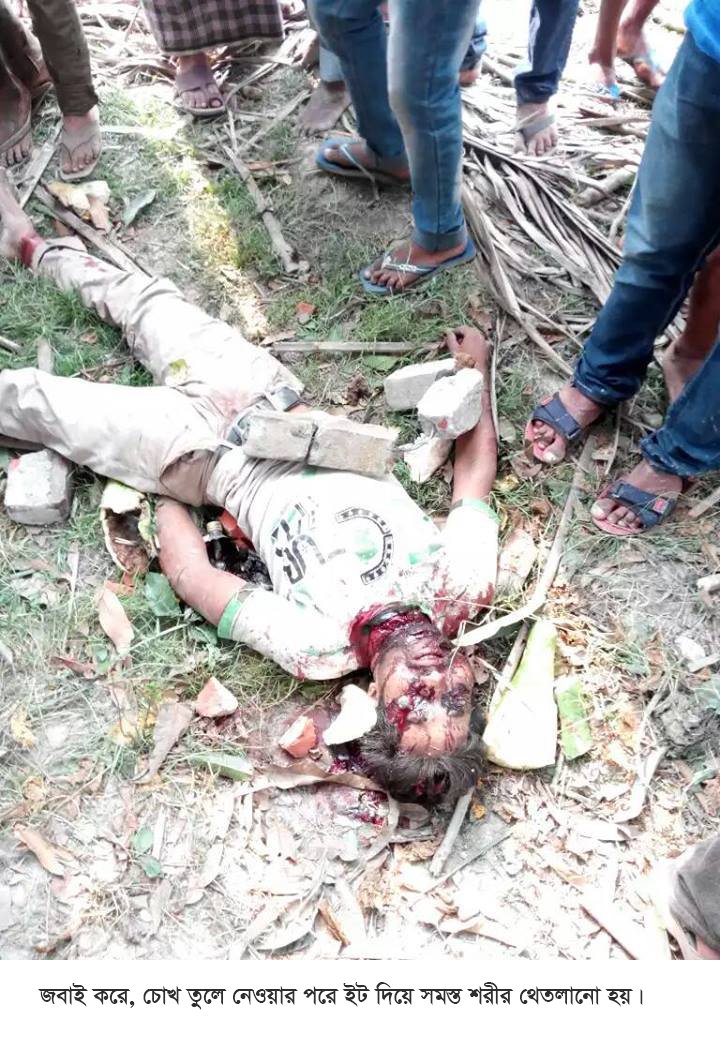
This was not merely an attack by villagers, but the work of professional
external militants. However, media reports claimed that it was a clash
between villagers and Hezbut Tawheed.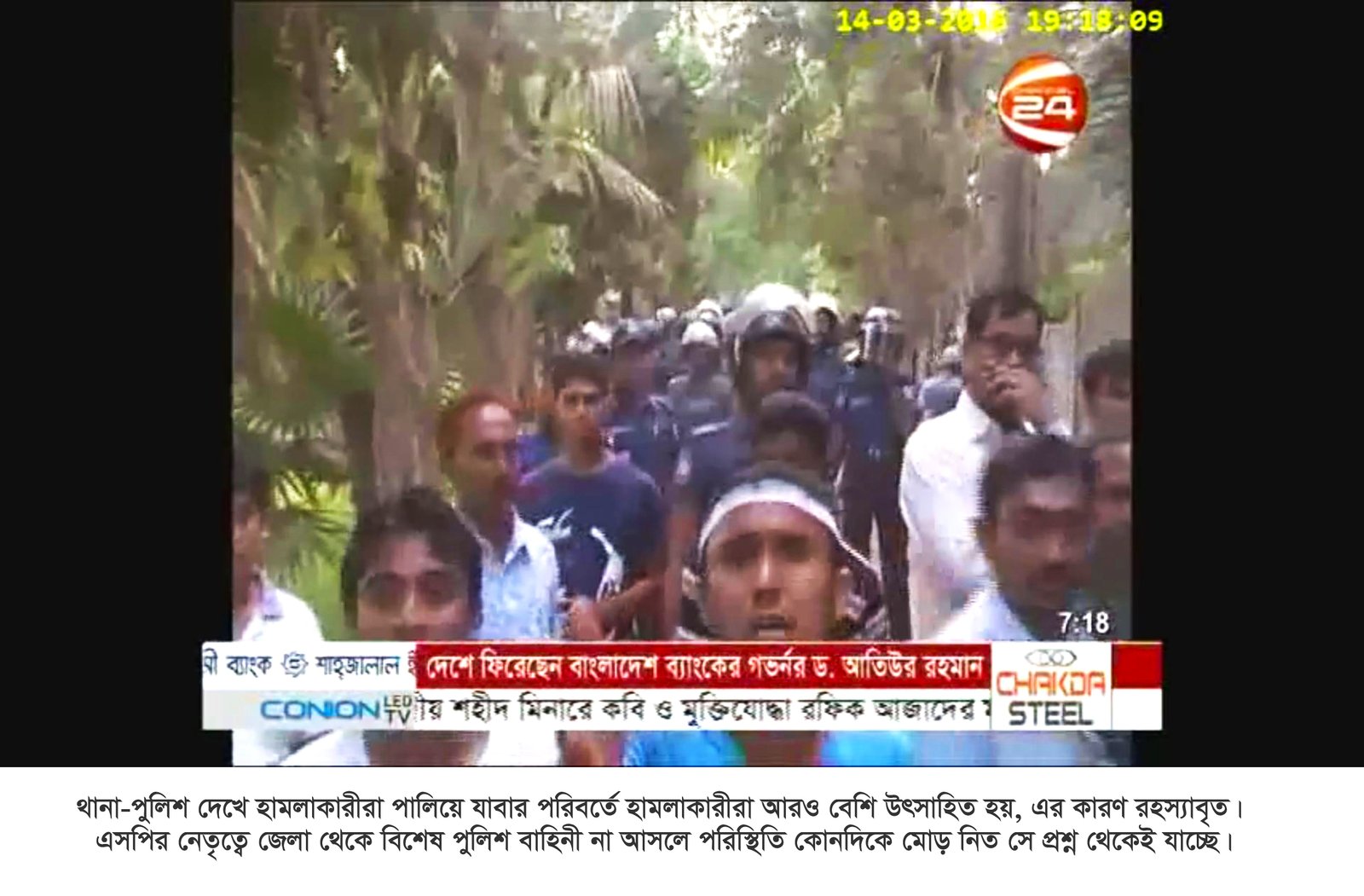
In front of the police, the agitated crowd attempted to advance toward
the house while chanting slogans. The police did not intervene.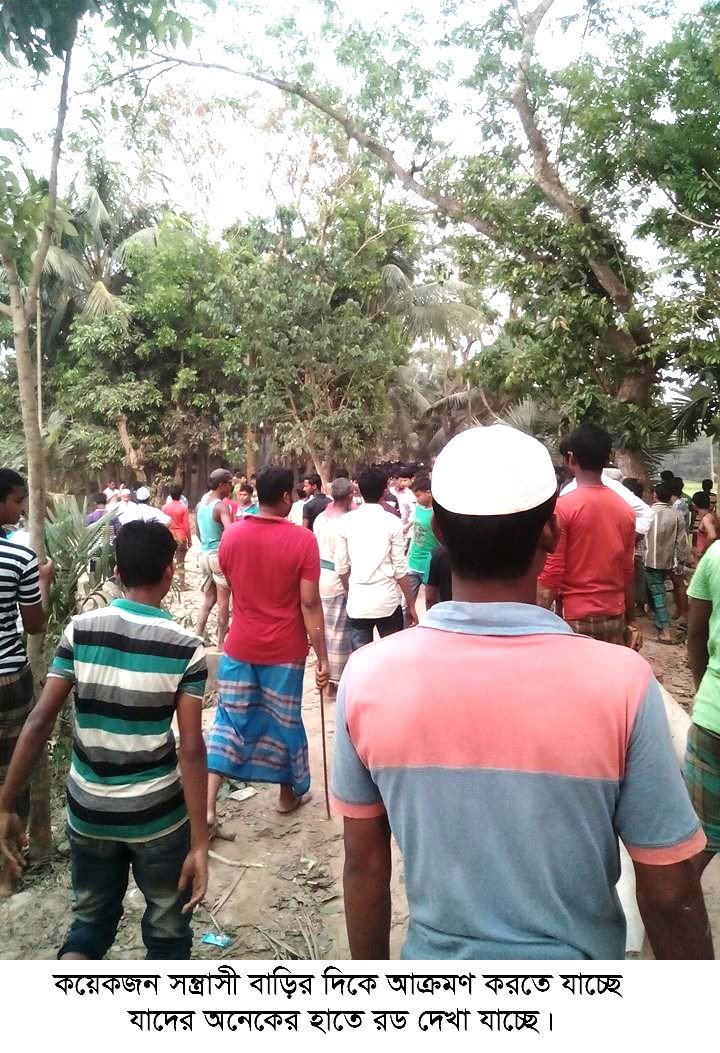
This was not a crowd of onlookers, but a group prepared for an attack. In
the image, one individual is openly moving around carrying an iron rod.
>>Evidence Archive of Attacks and Disinformation Against Hezbut Tawheed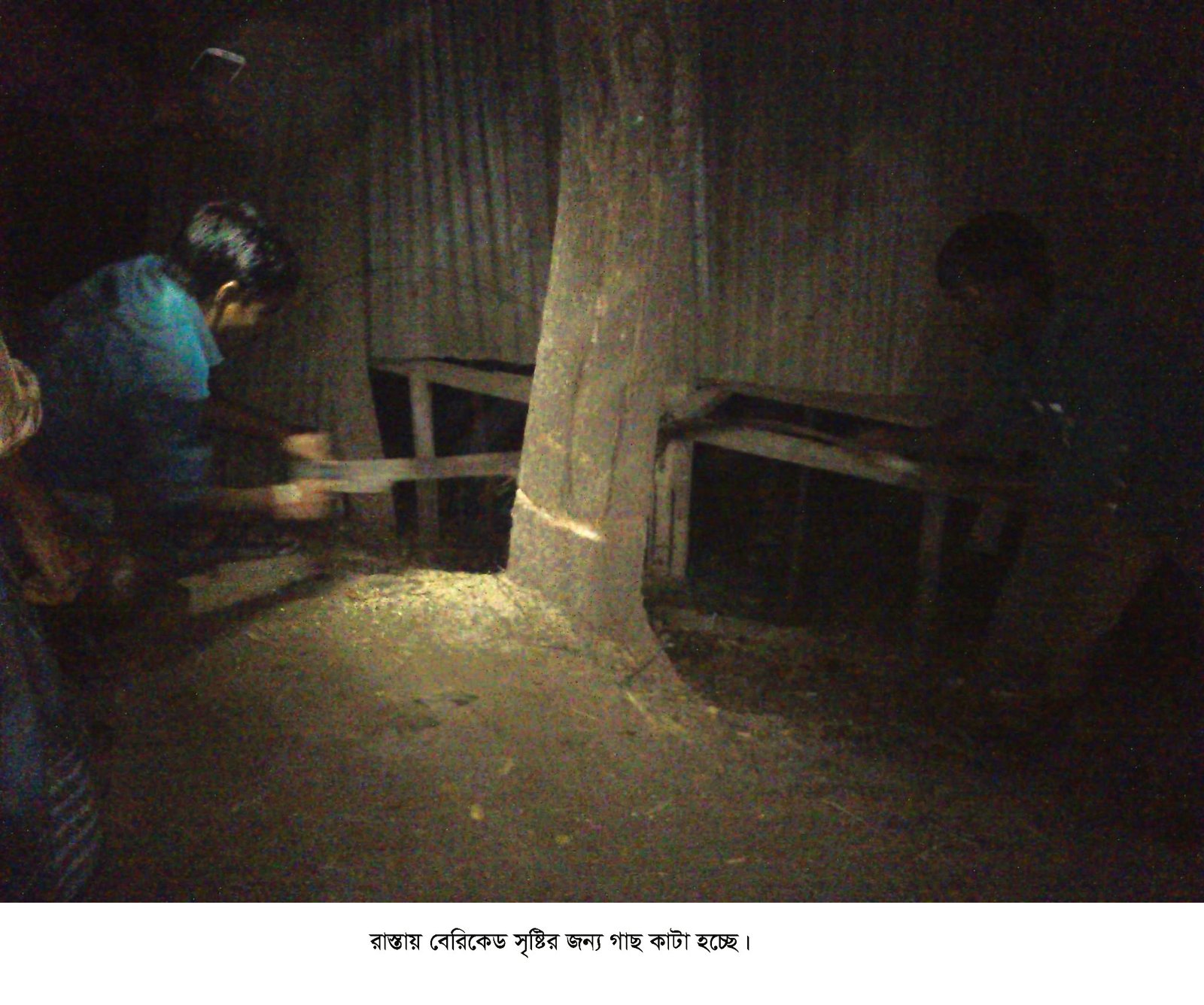
After a full day of attacks, trees were cut and placed along the roadside
to create a blockade, preventing the police from safely evacuating
Hezbut Tawheed members at night.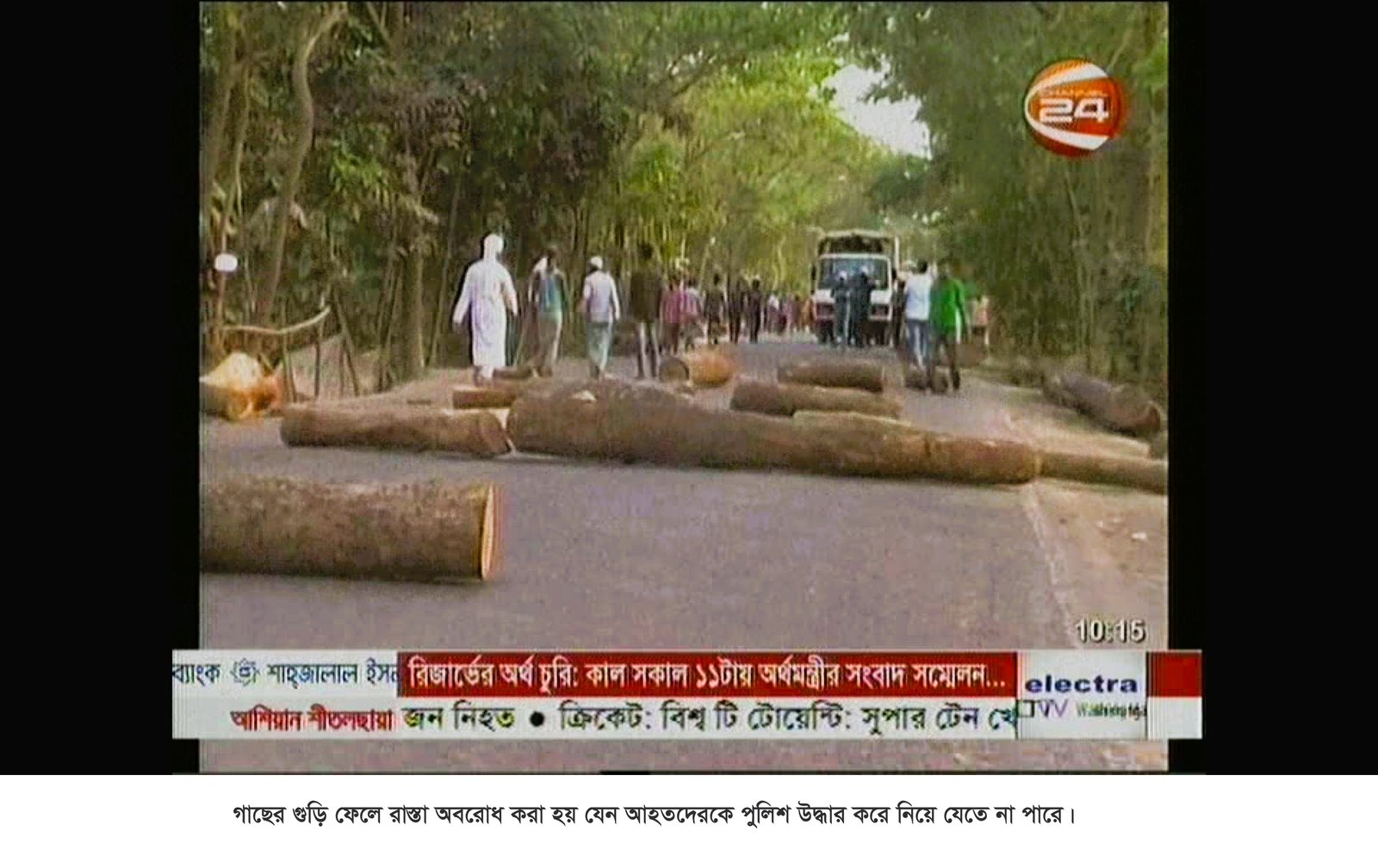
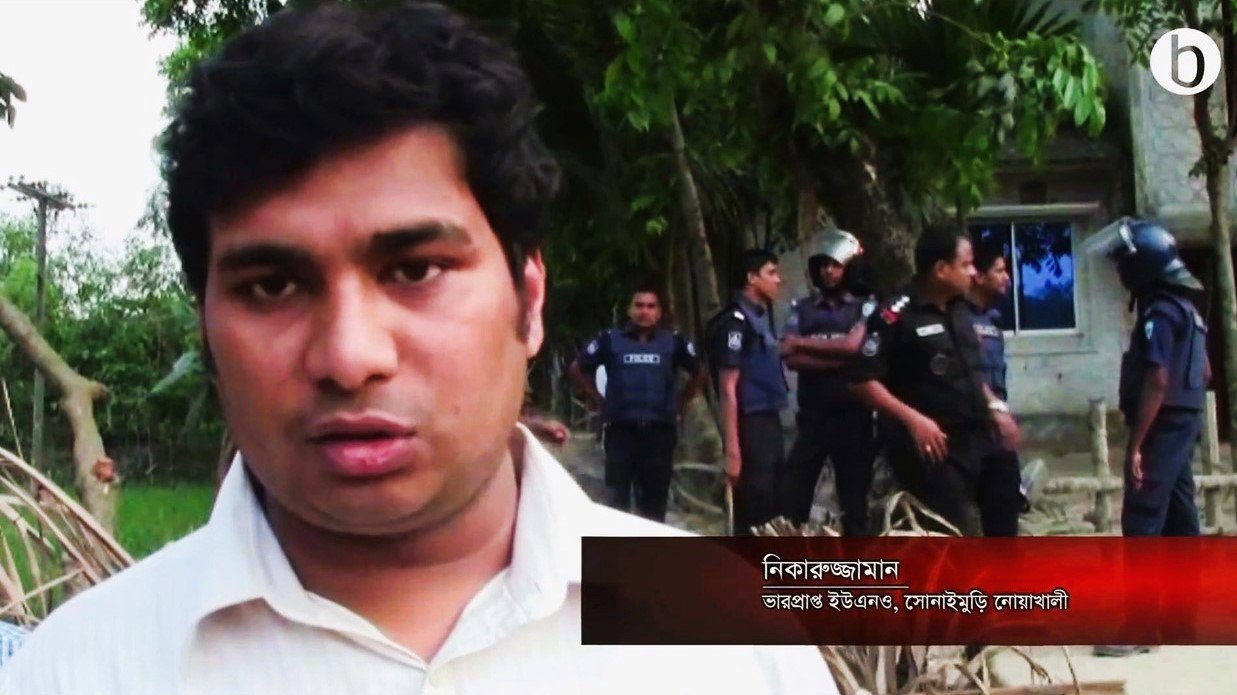
This is the acting Upazila Nirbahi Officer (UNO), Nikaruzzaman. Despite being
aware that killings were taking place since morning, he remained indifferent. He
arrived only after the killings and destruction had ended.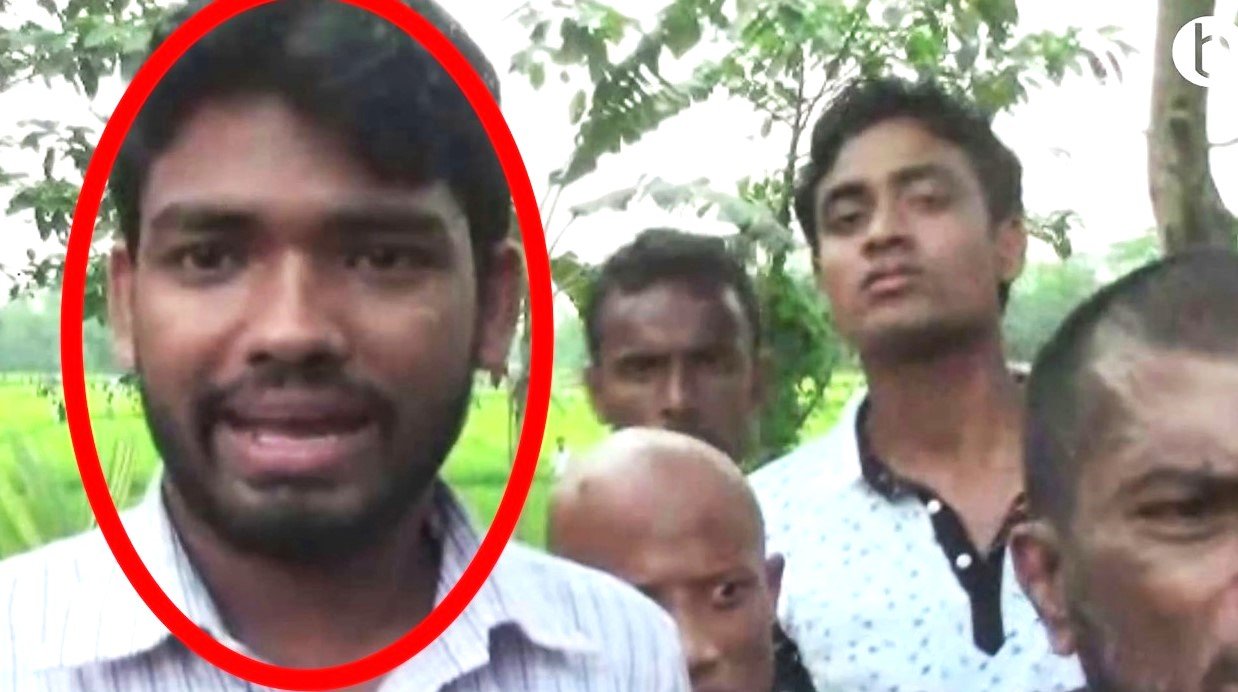
This individual was a local cadre of Islami Chhatra Shibir
in the neighboring Bipulasar area at the time. Under his
leadership, many Shibir cadres participated in the attack.
>>Evidence Archive of Attacks and Disinformation Against Hezbut Tawheed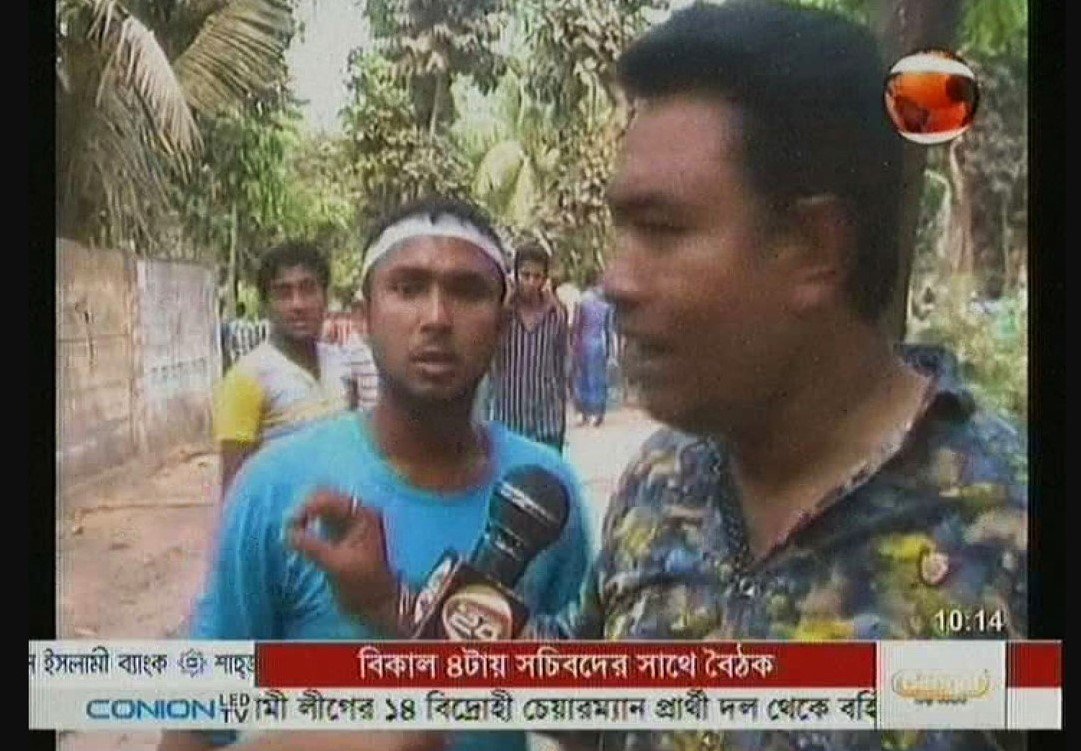
This Jubo League activist indirectly instigated the entire
incident. After the attack, he attempted to present himself
positively to the media.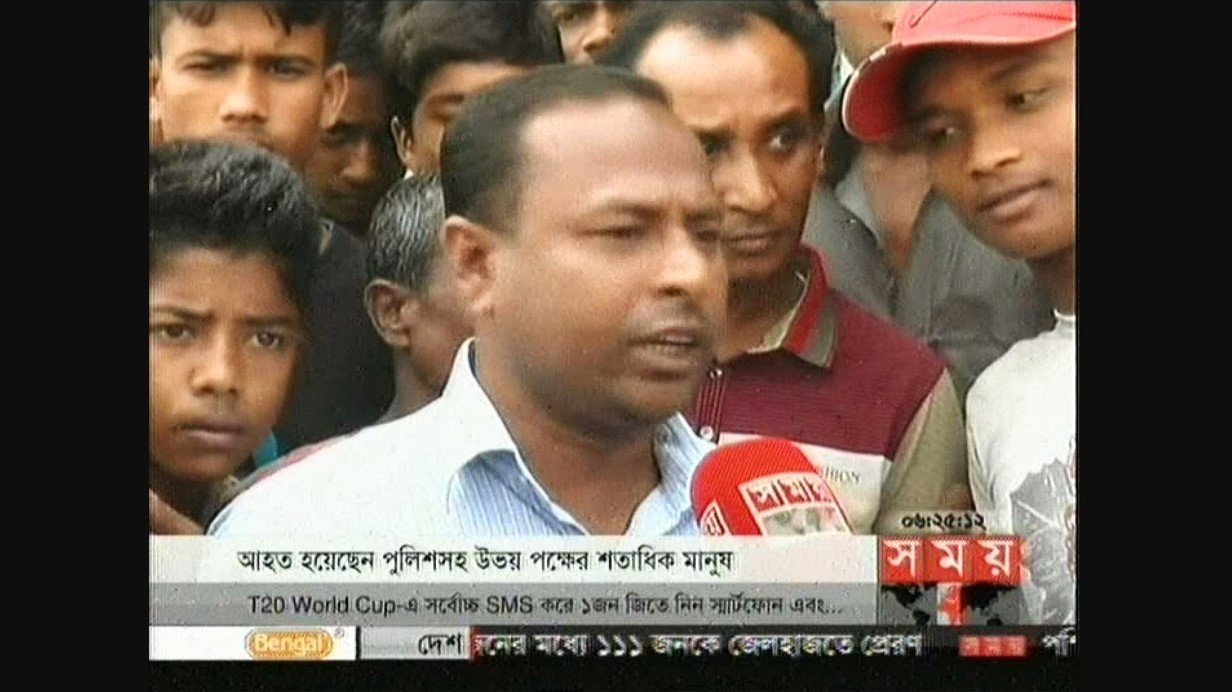
One of the principal organizers of the incident was Zahir. Under his
leadership, eight houses were set on fire in 2009. Prior to the 2016
attack, he carried out public mobilization for a week to gather people
and hired militants. He was the first to spread the rumor that the mosque
was a church. He is one of the accused in a double murder case.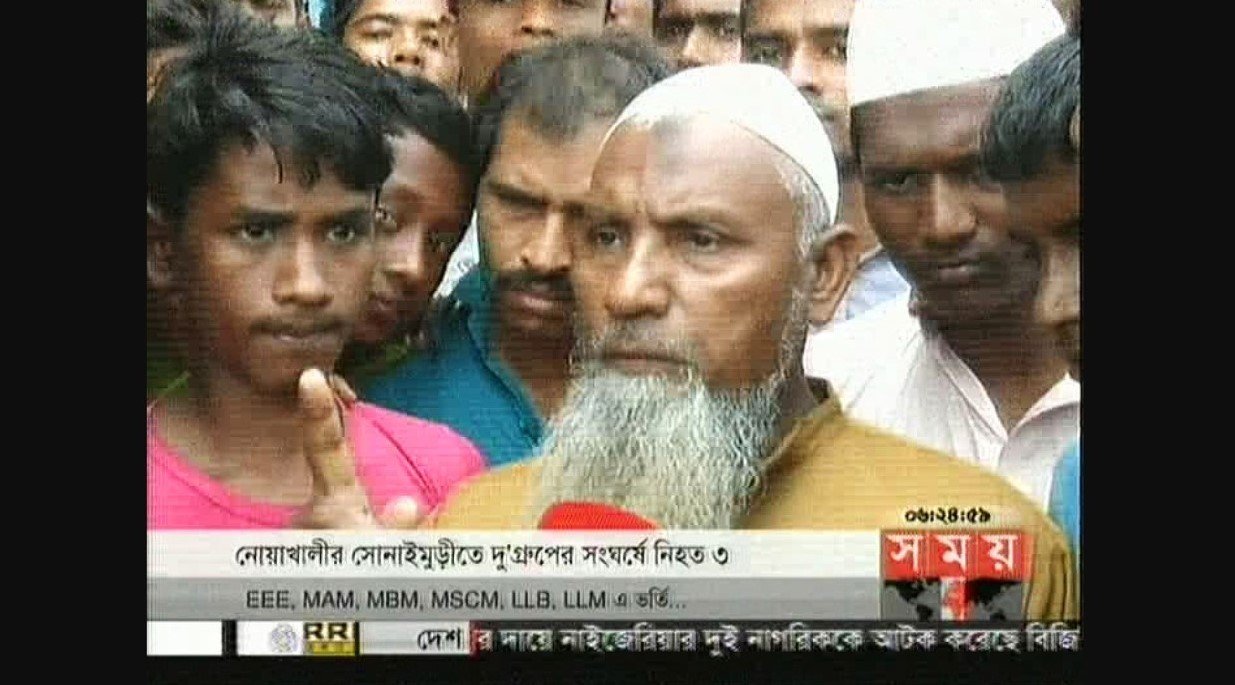
A Charmonai leader from Chashirhat Union. He incited many people
from the neighboring village of Saharpar to participate in the attack by
spreading rumors. He is one of the primary accused in the murder case.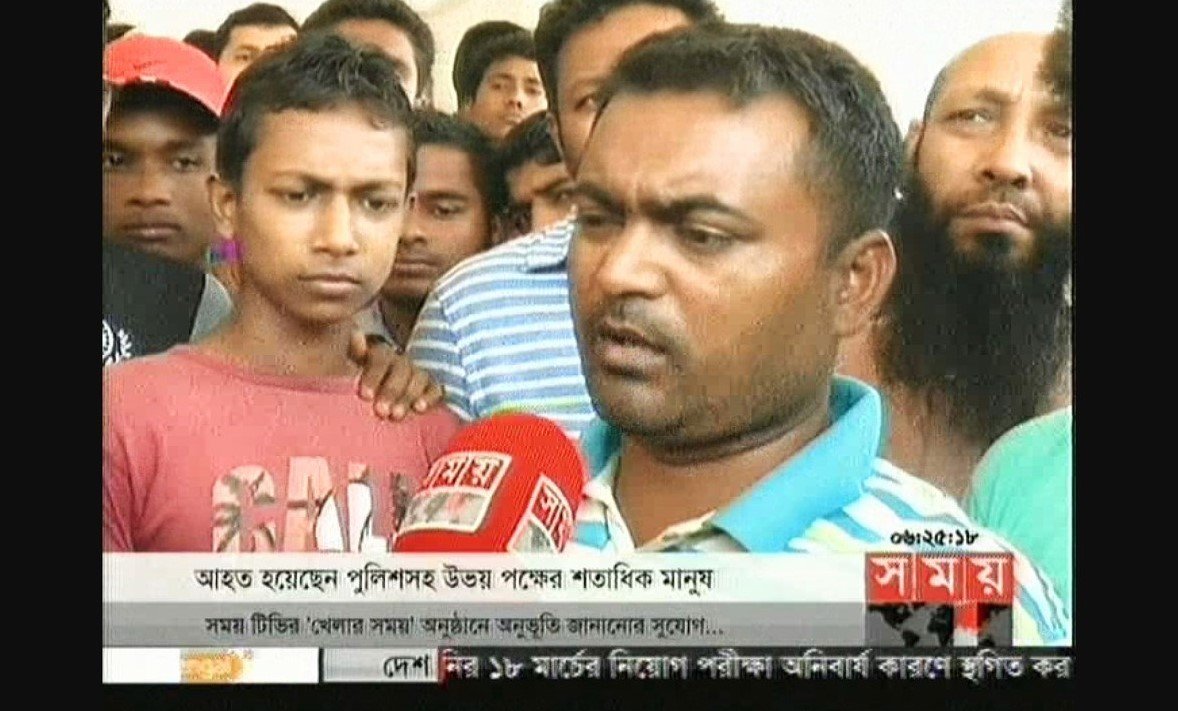
Another conspirator, Sohag, under whose leadership hundreds of people
from Khodkhasta village participated in the attack. He was directly
present at the scene and fueled the agitation. However, he later escaped
the lawsuit by identifying himself as an Awami League activist.
>>Evidence Archive of Attacks and Disinformation Against Hezbut Tawheed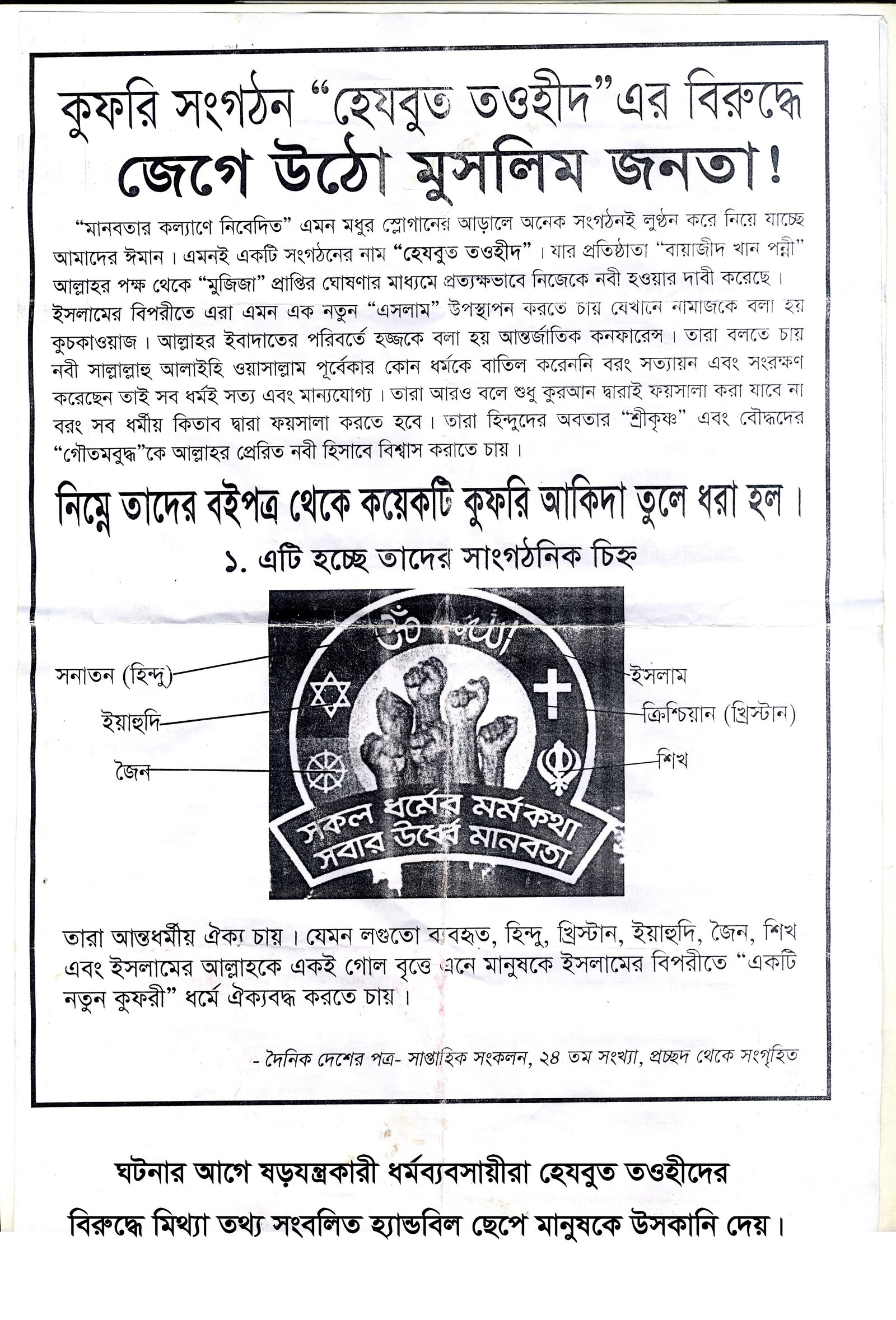
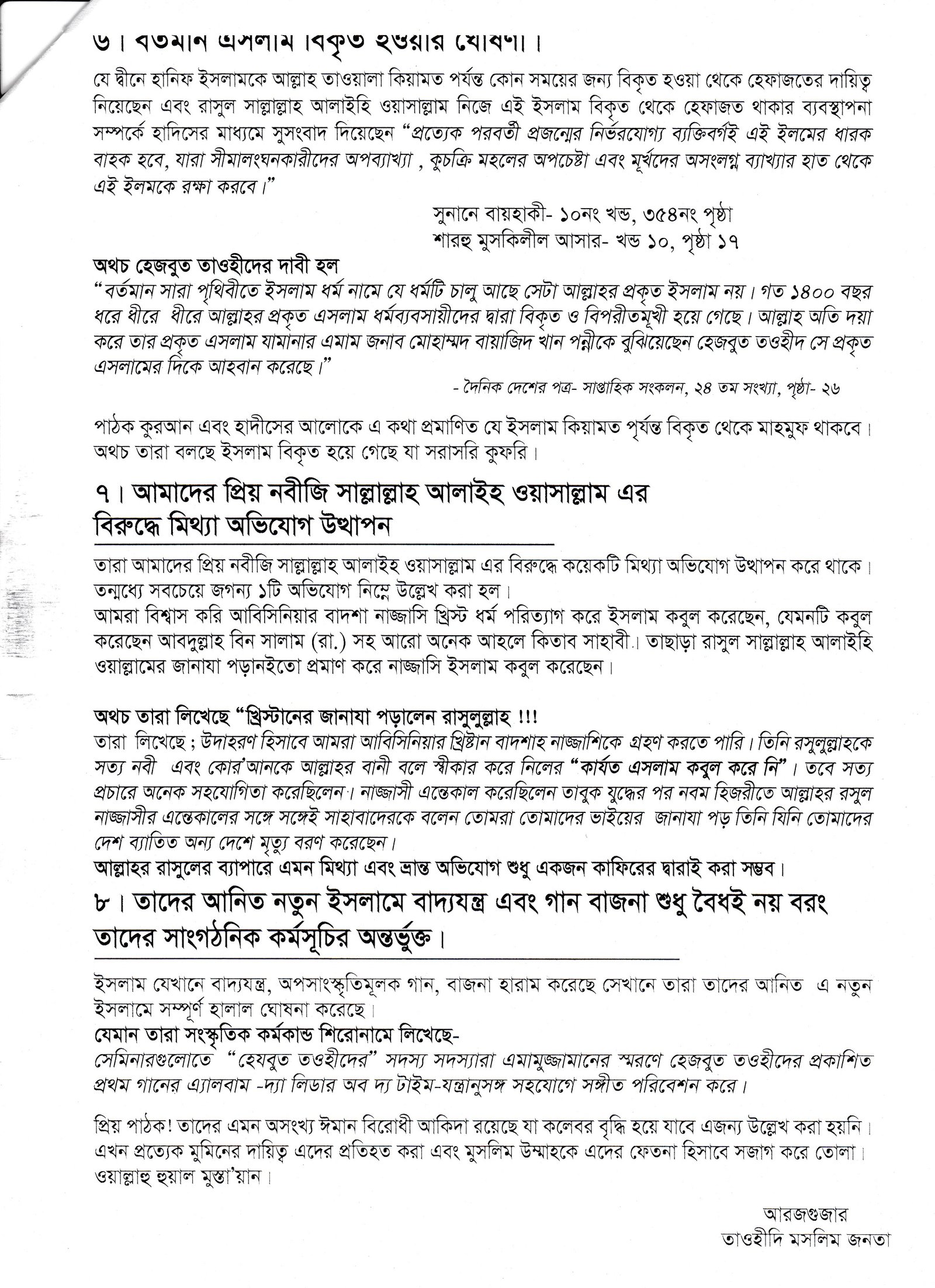
This is the false handbill without any name or address that was
distributed from mosque to mosque on Friday to create the backdrop for
the attack and to incite local residents against Hezbut Tawheed.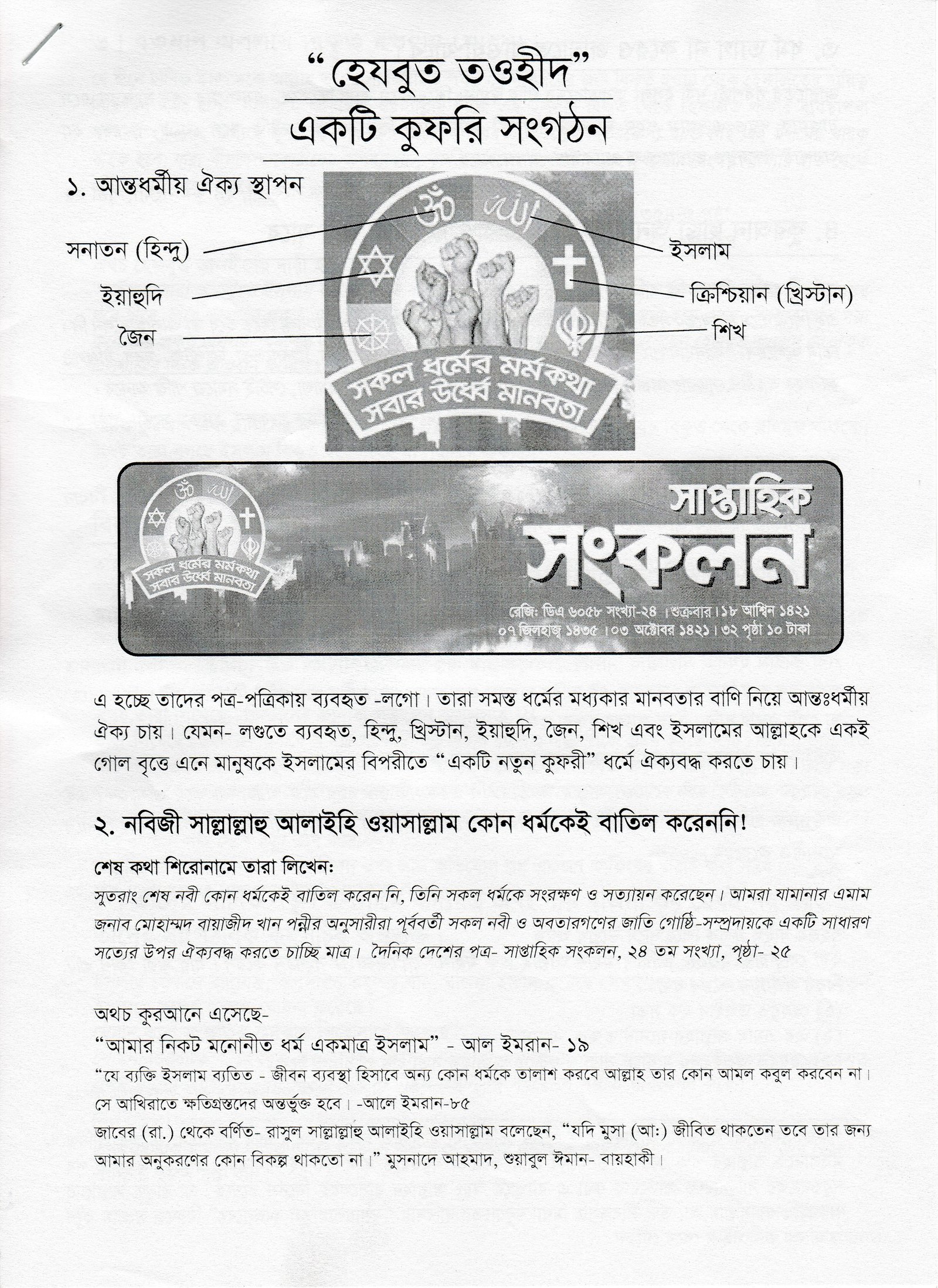
>>Evidence Archive of Attacks and Disinformation Against Hezbut Tawheed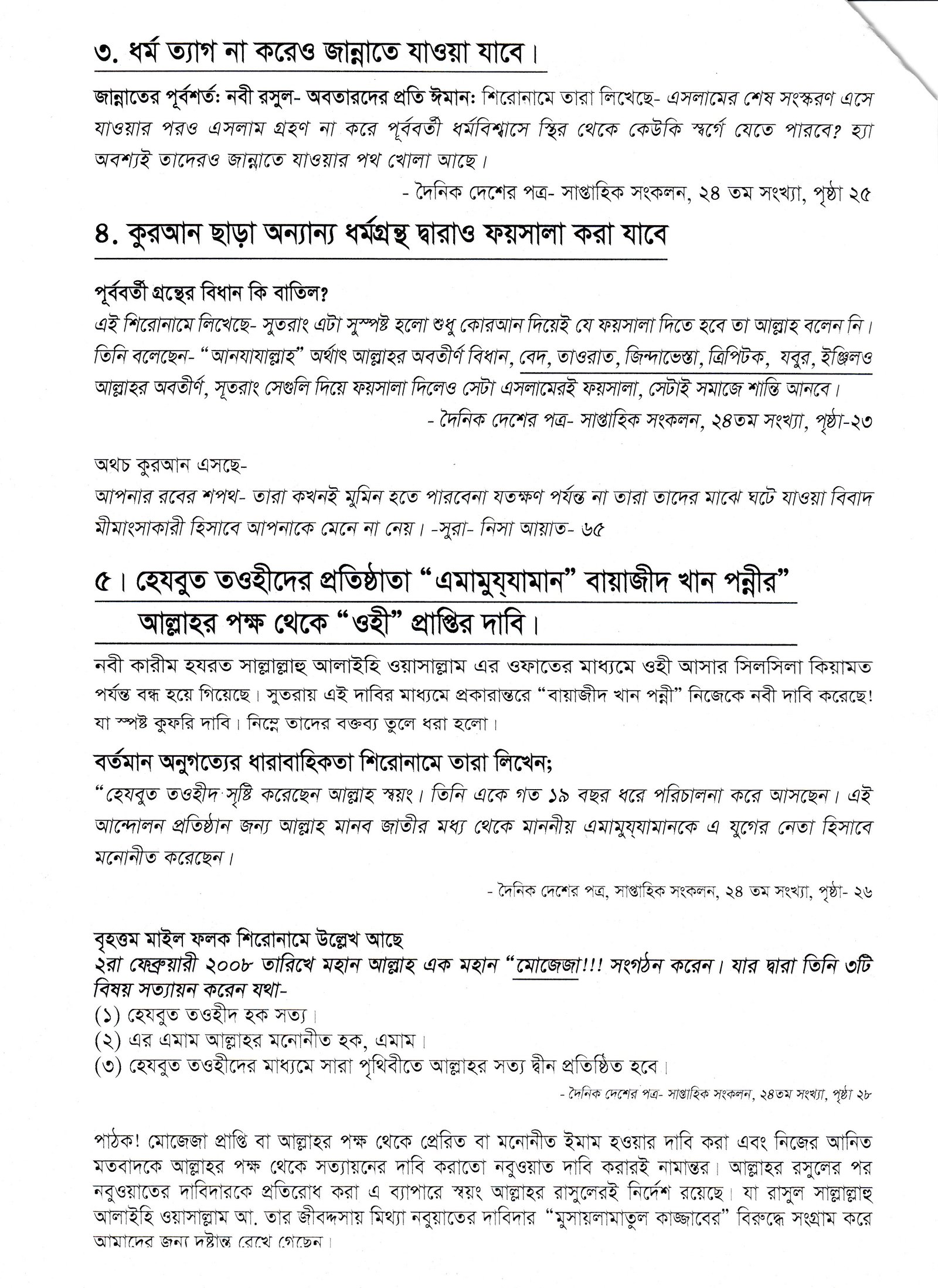
>>Evidence Archive of Attacks and Disinformation Against Hezbut Tawheed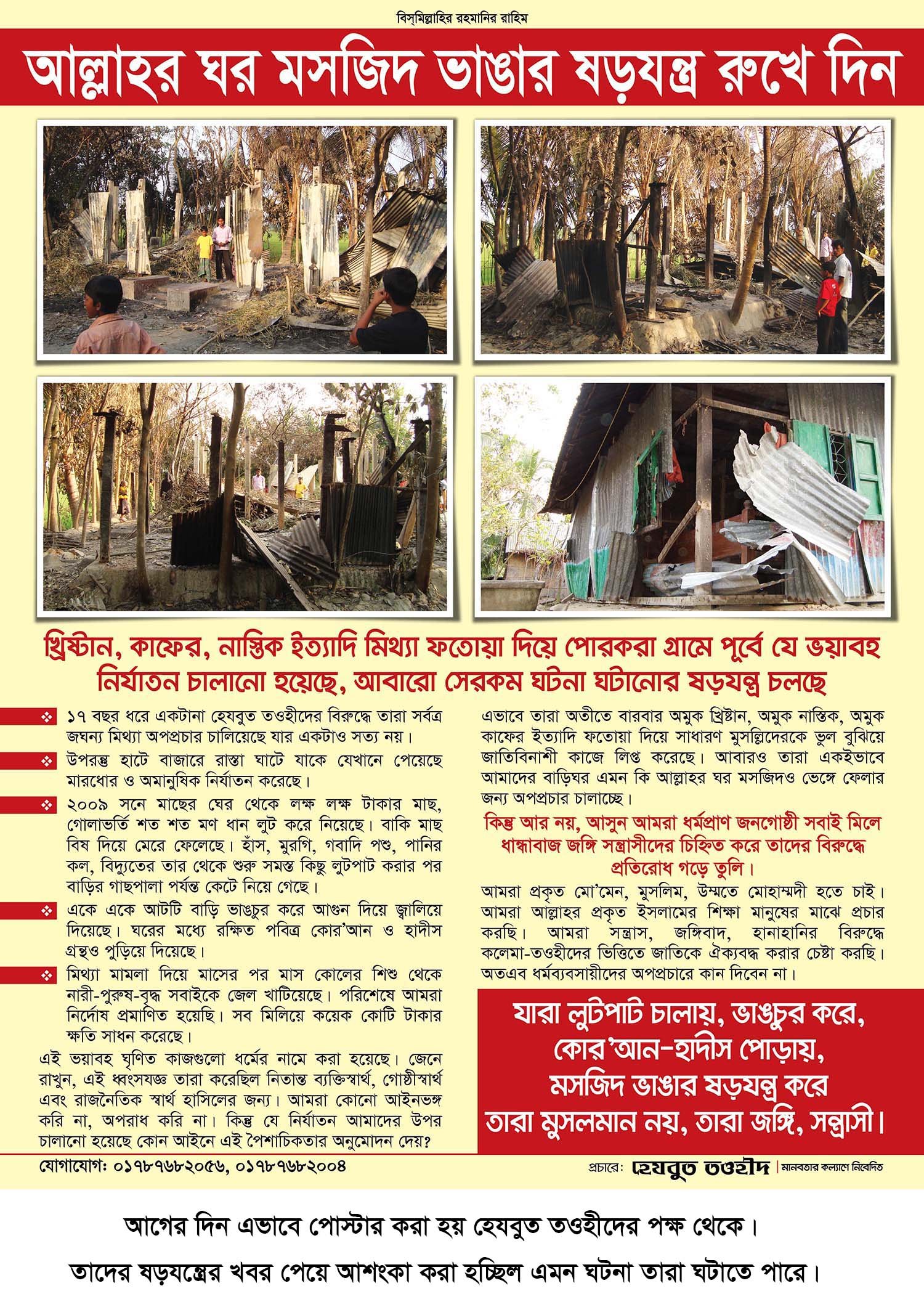
After becoming aware of it, Hezbut Tawheed locally distributed this
handbill so that terrorist activities like those of 2009 could not be
carried out again.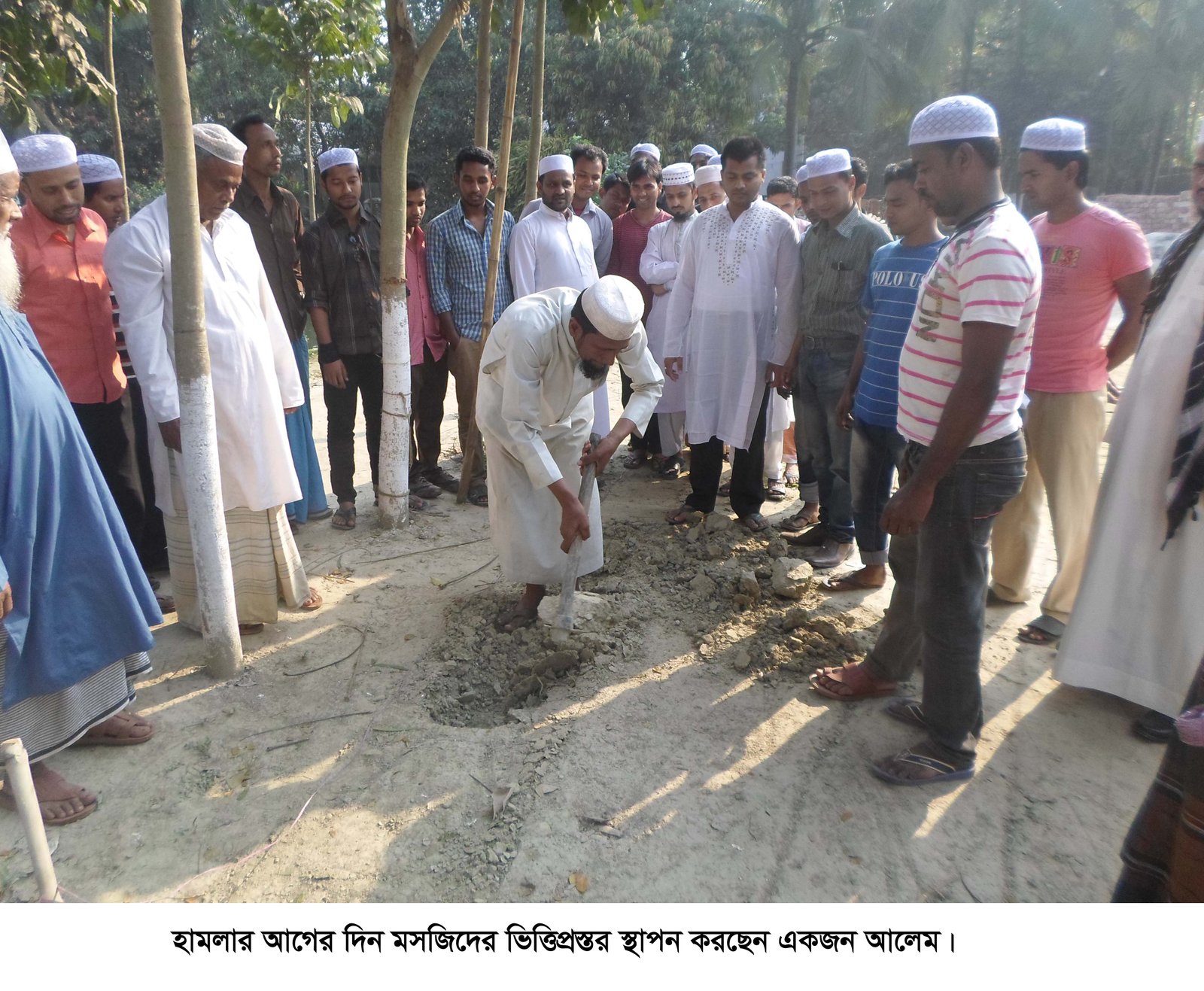
On the day before the attack, a mawlana (Islamic cleric) is laying the
foundation stone of the mosque.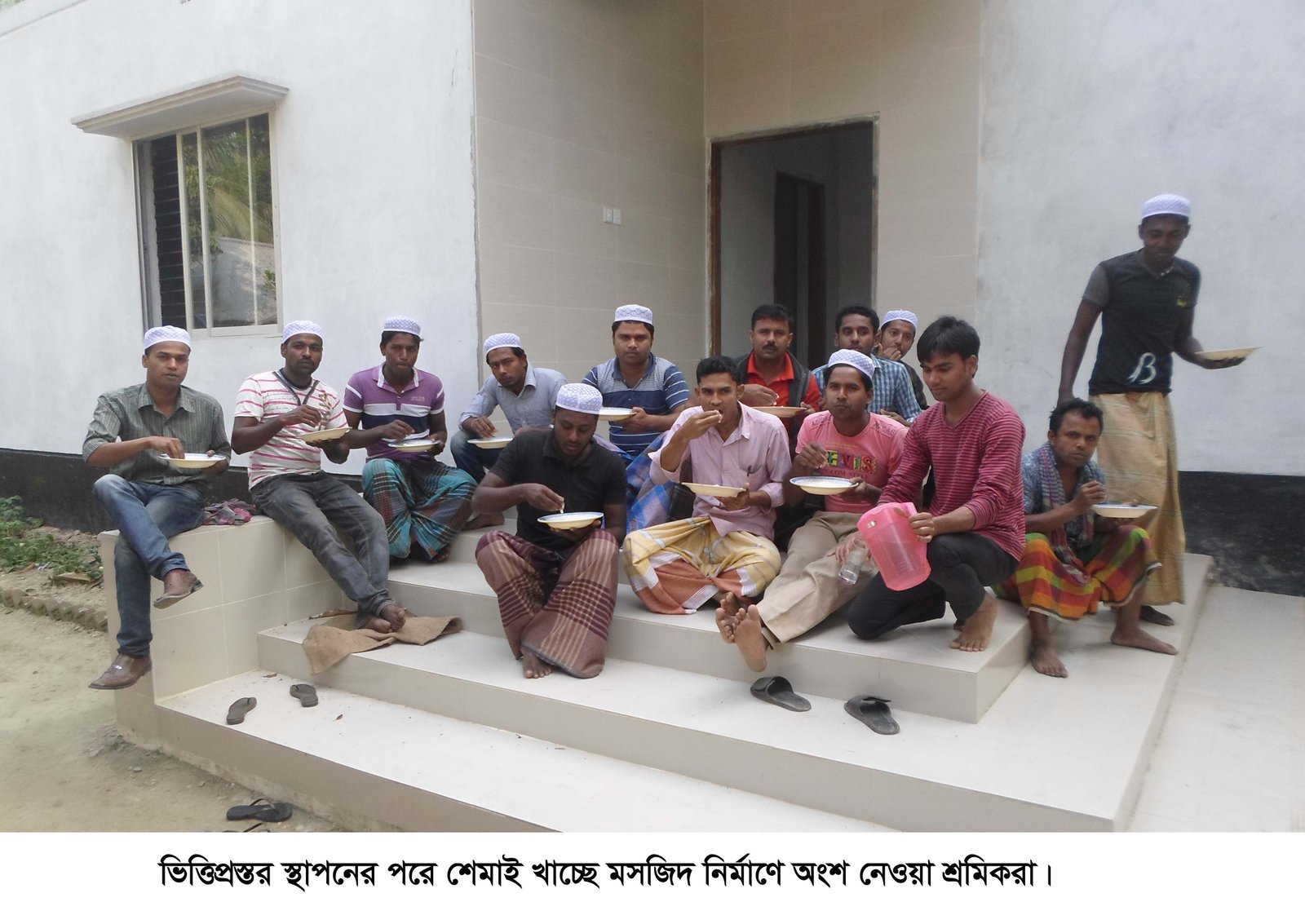
After the foundation stone is laid, the workers involved in the
construction are sharing sweets.
>>Evidence Archive of Attacks and Disinformation Against Hezbut Tawheed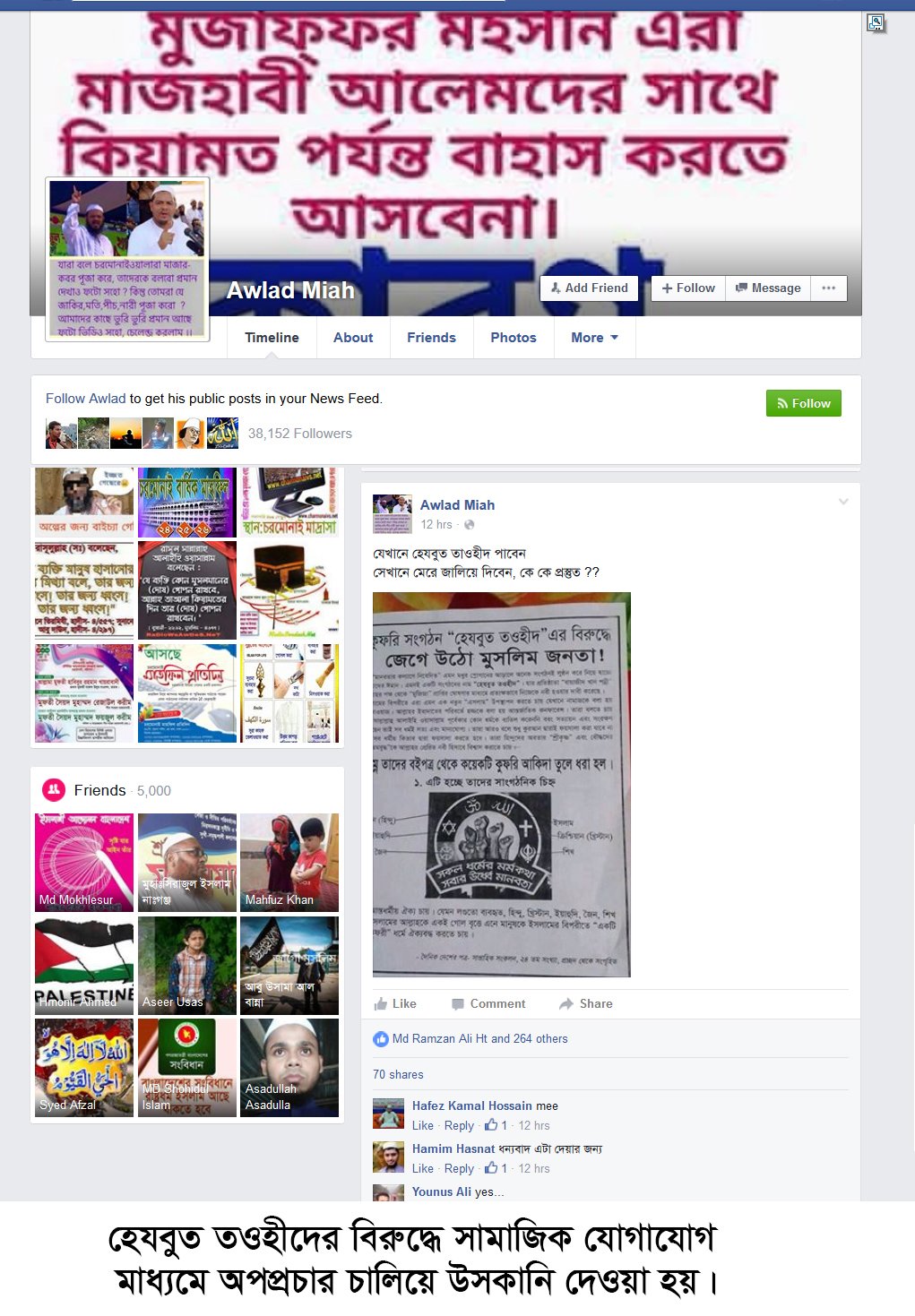
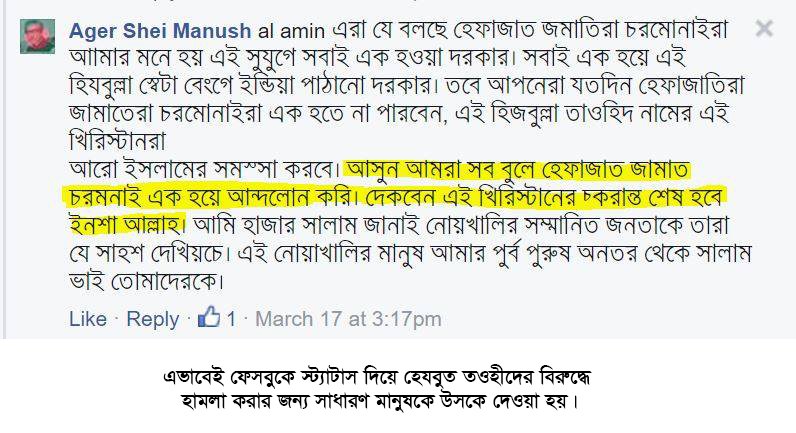
Incendiary posts and videos were uploaded from various profiles and
pages on social media.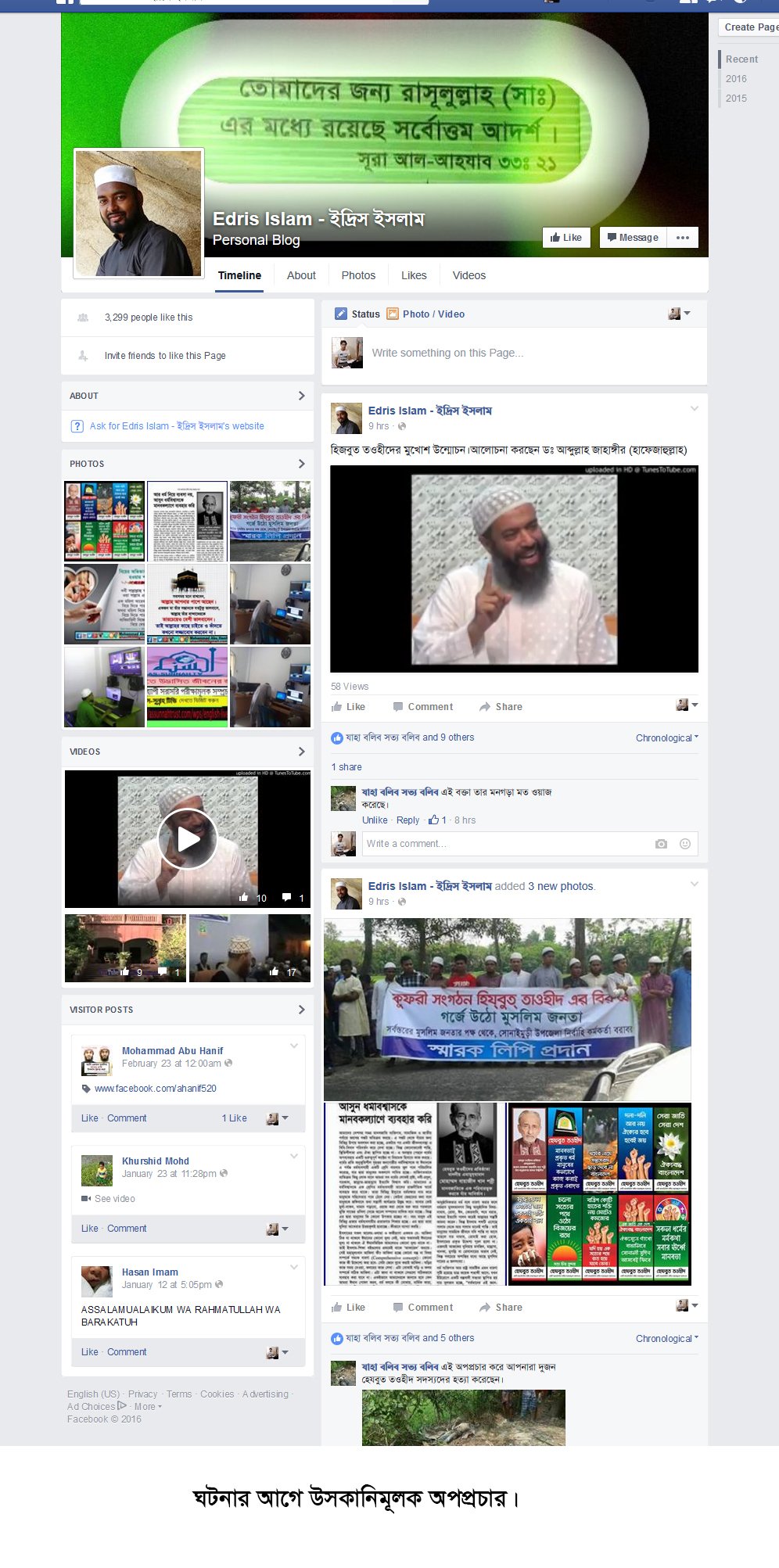
Various provocative disinformation campaigns prior to the incident.
>>Evidence Archive of Attacks and Disinformation Against Hezbut Tawheed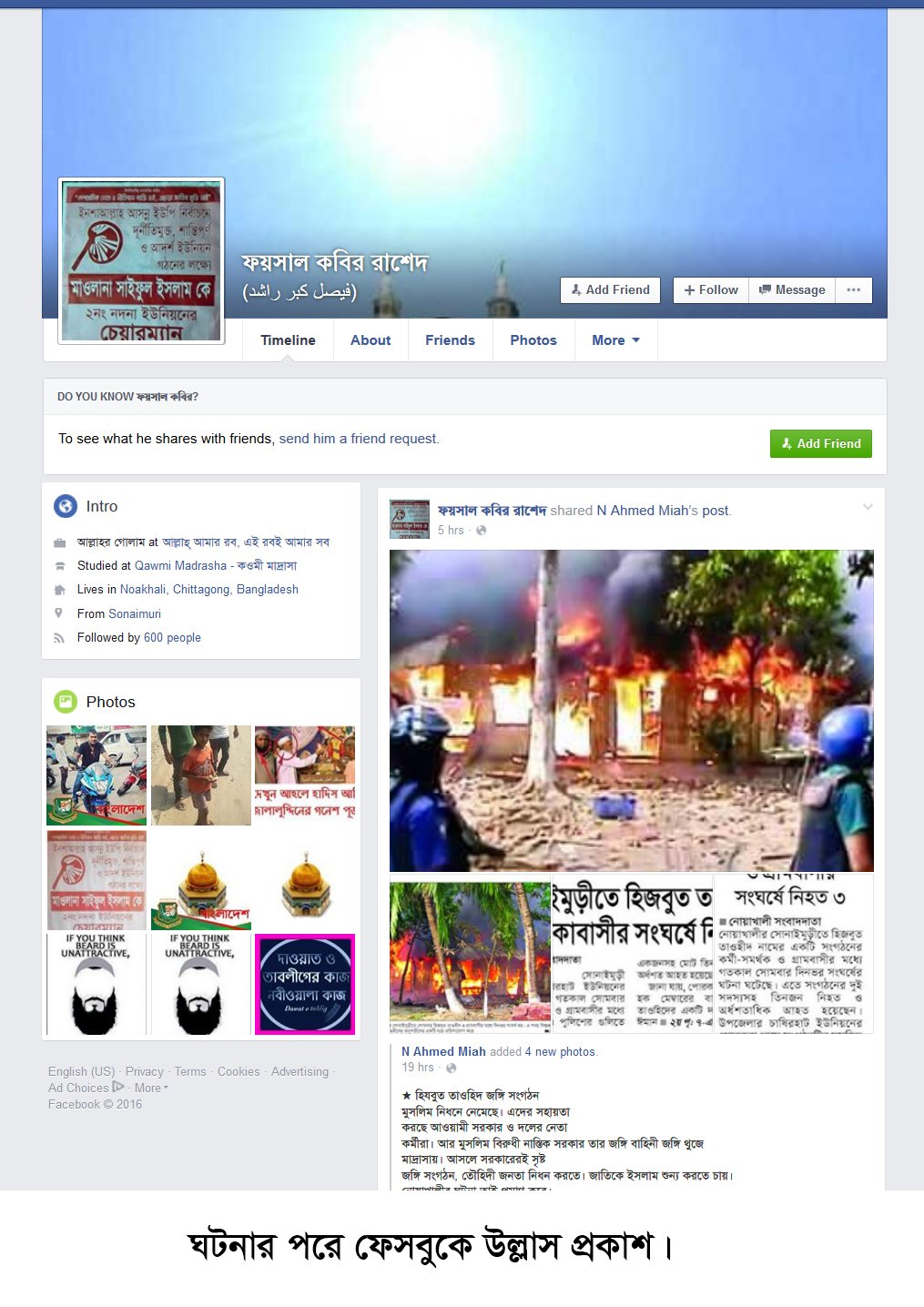
Charmonai supporters openly celebrated the attack.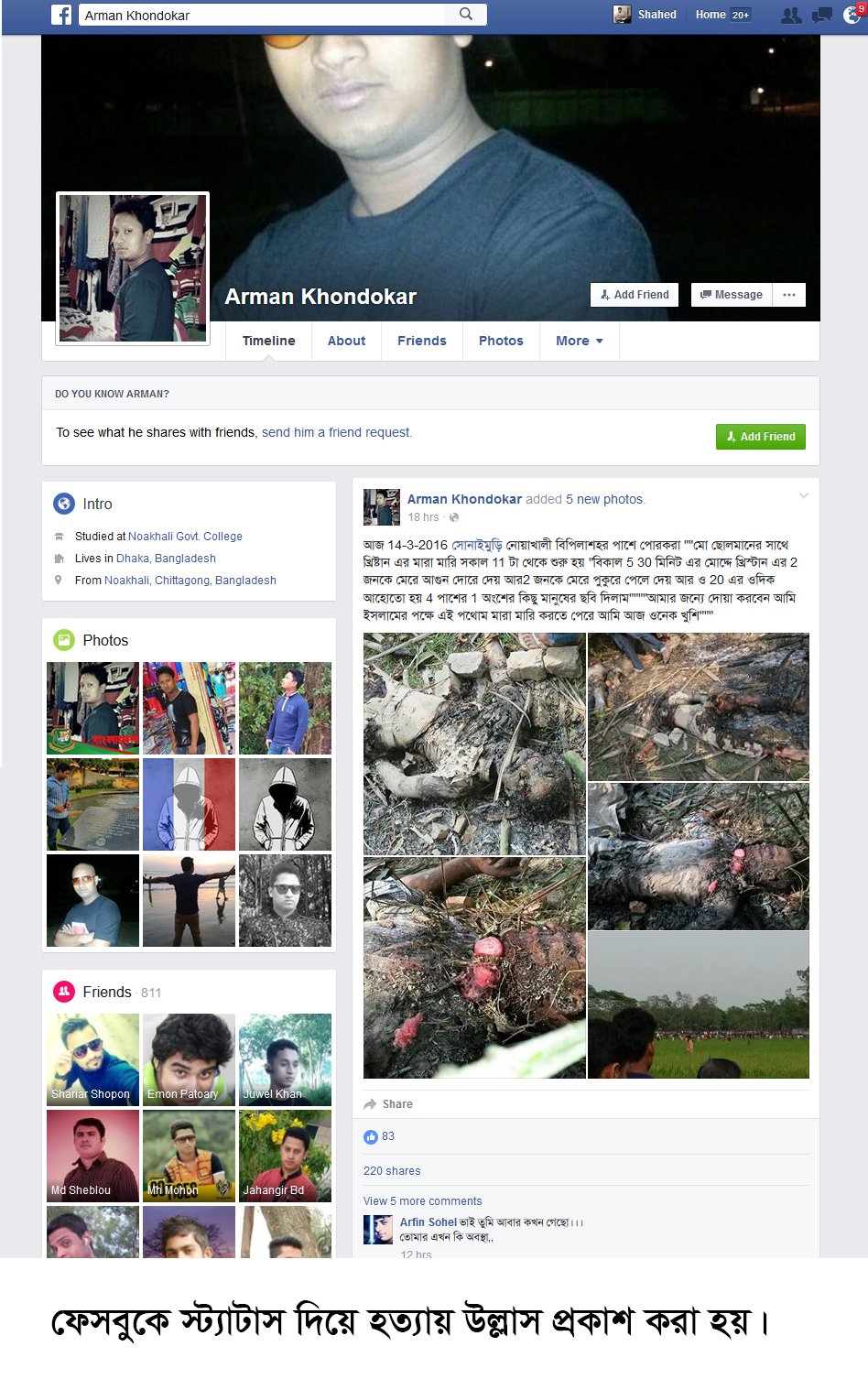
Celebration expressed on Facebook using images of the killings.
>>Evidence Archive of Attacks and Disinformation Against Hezbut Tawheed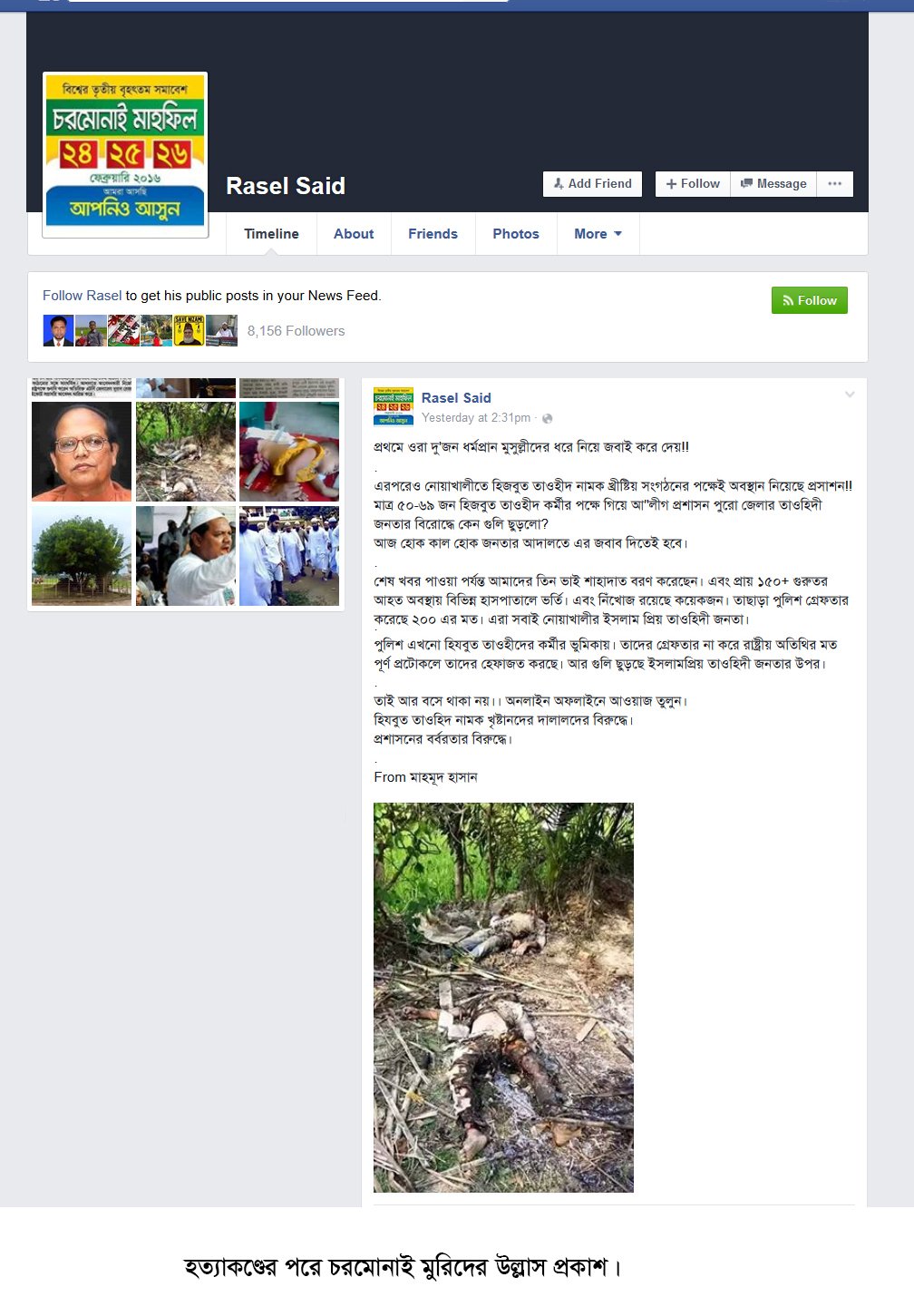
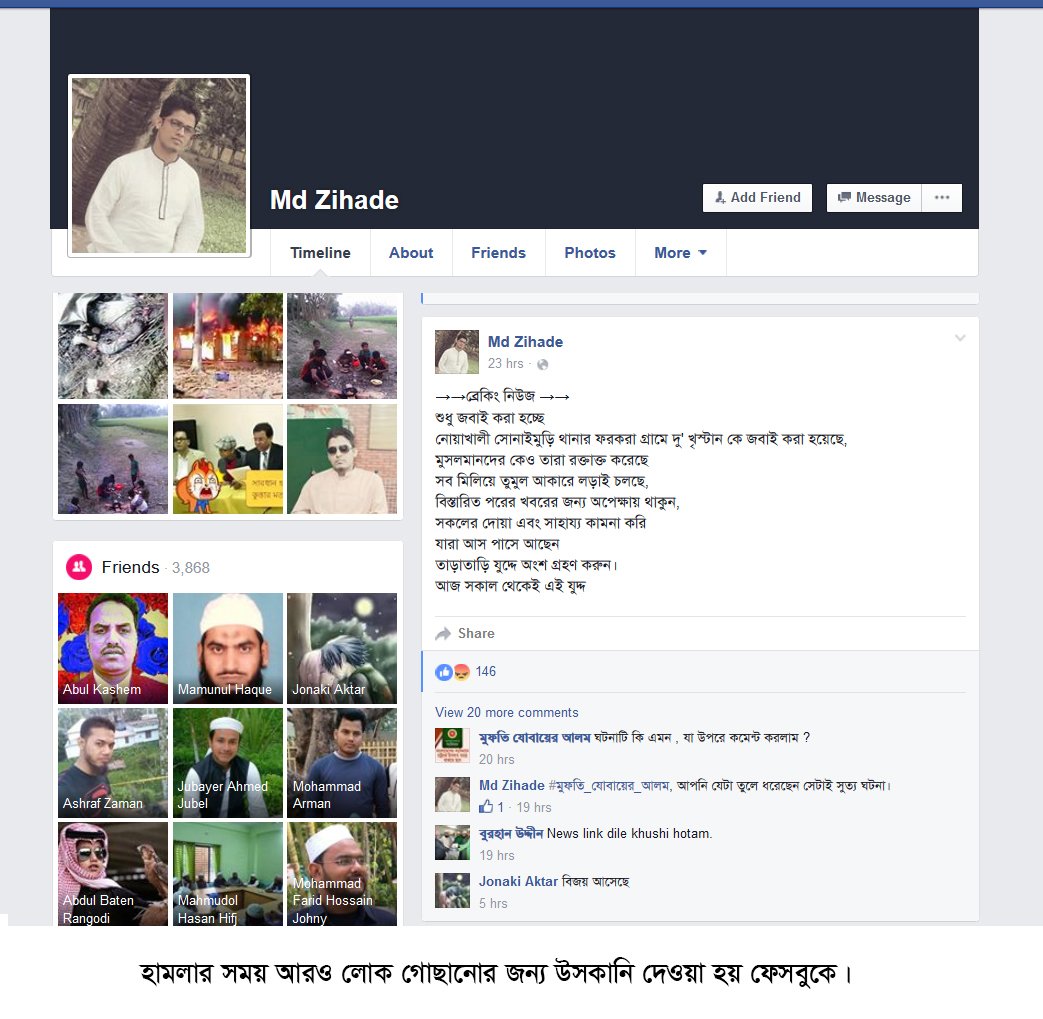
Calls were made online urging people to take part in the attack.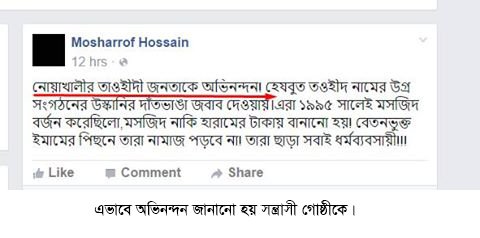
Facebook posts praising the terrorist attack.
>>Evidence Archive of Attacks and Disinformation Against Hezbut Tawheed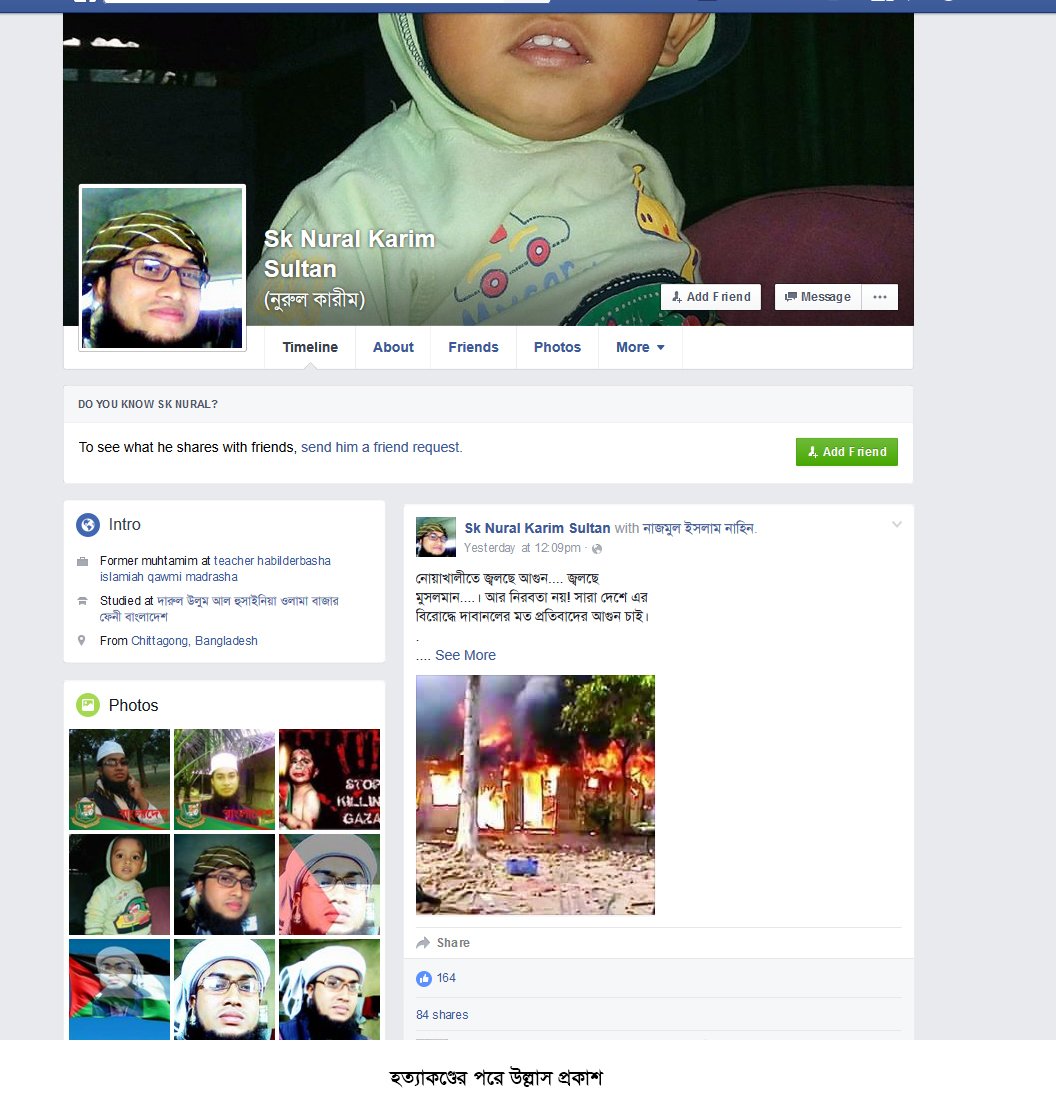
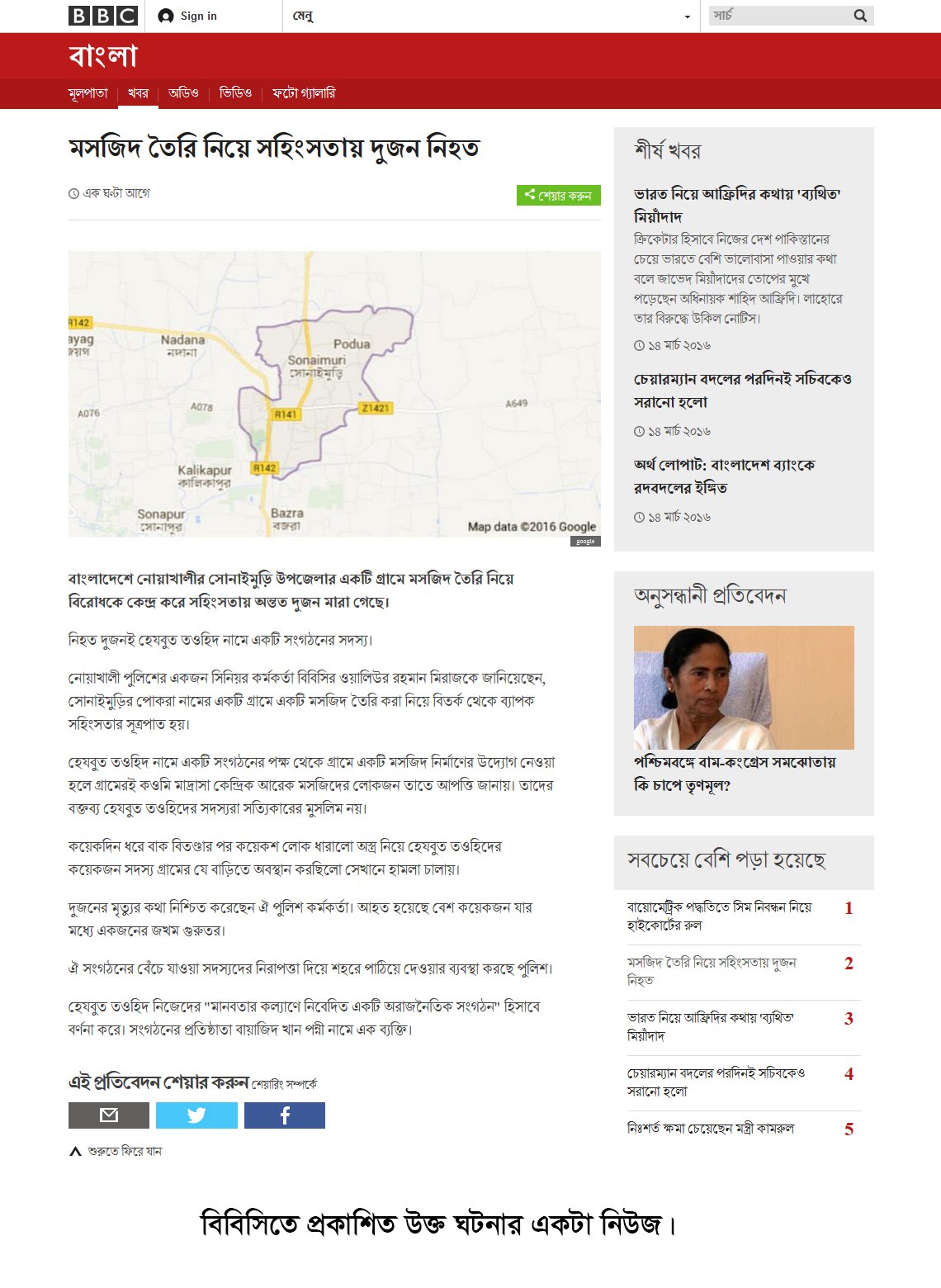
Media reports on the attack (BBC Bangla, March 15, 2016).
>>Evidence Archive of Attacks and Disinformation Against Hezbut Tawheed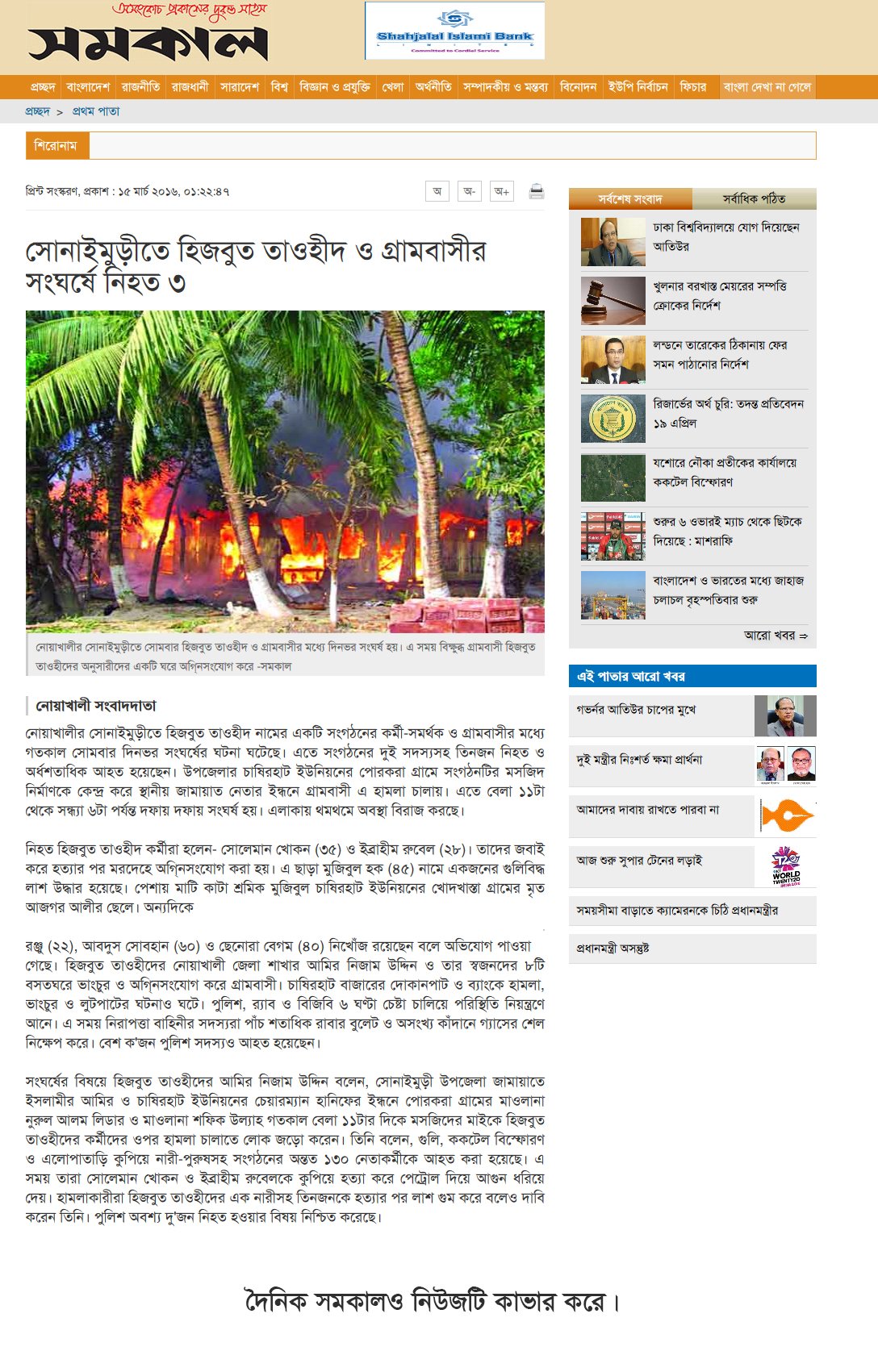
(Samakal, March 15, 2016)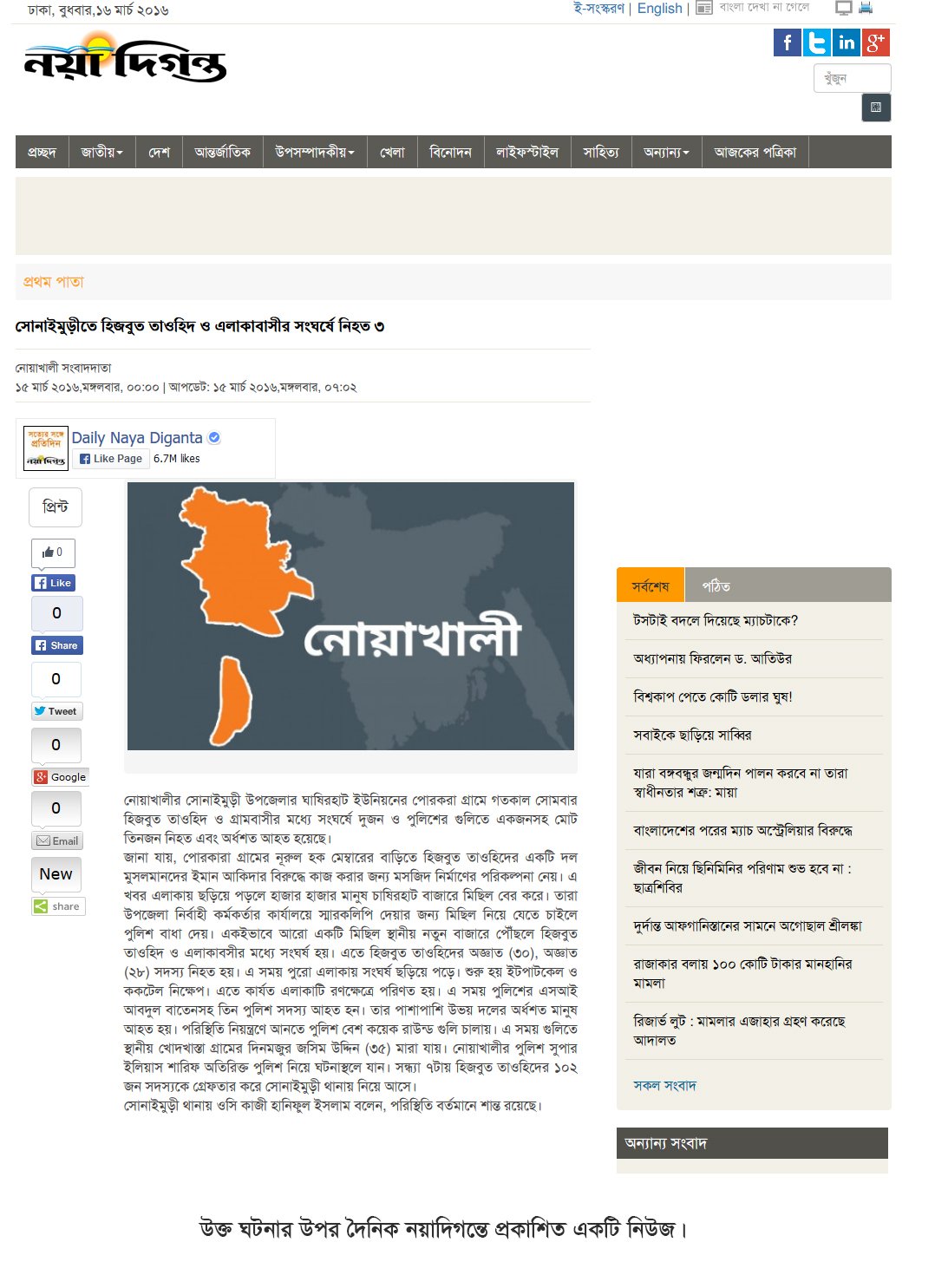
(Naya Diganta, March 15, 2016)
>>Evidence Archive of Attacks and Disinformation Against Hezbut Tawheed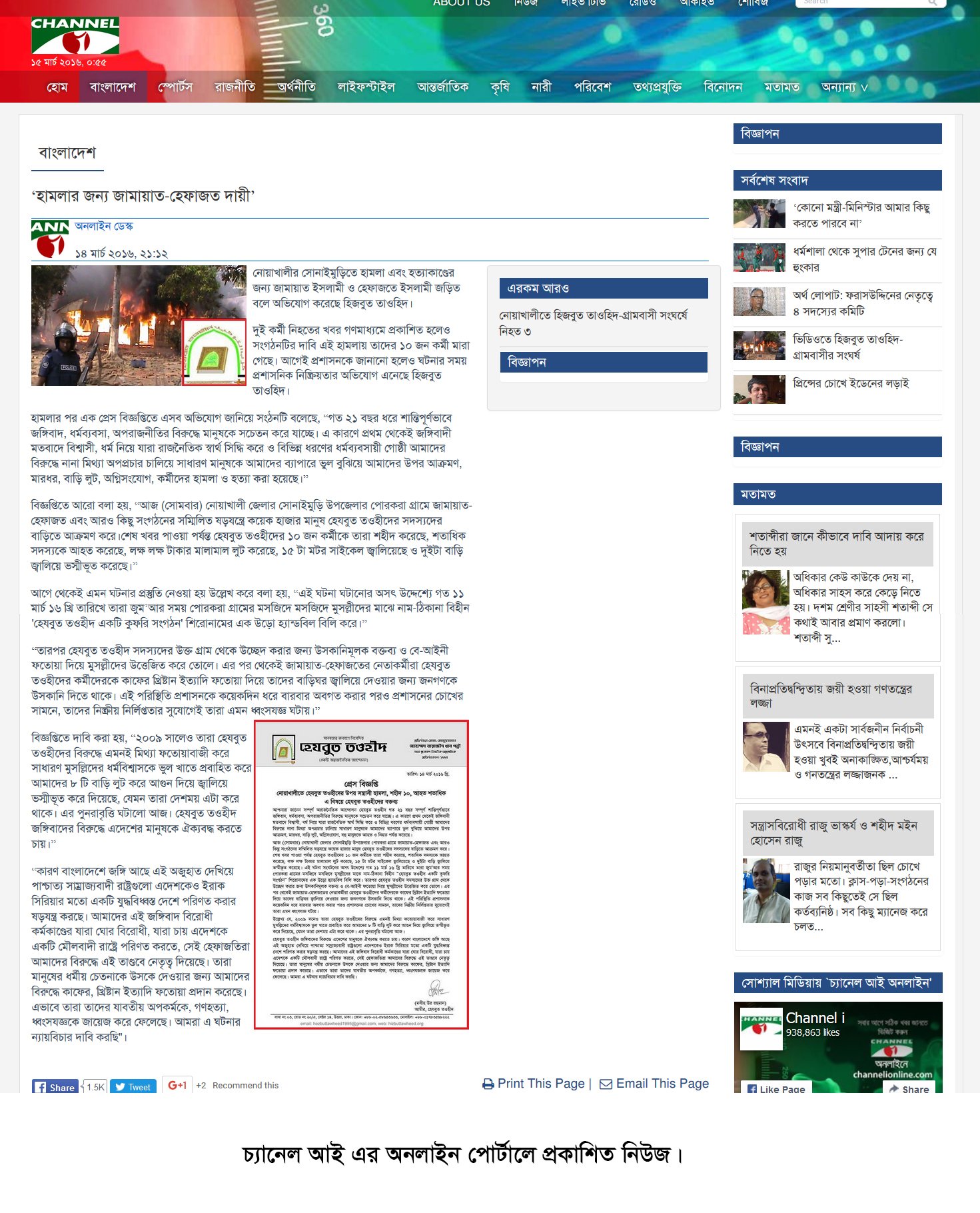
Channel i, March 14, 2016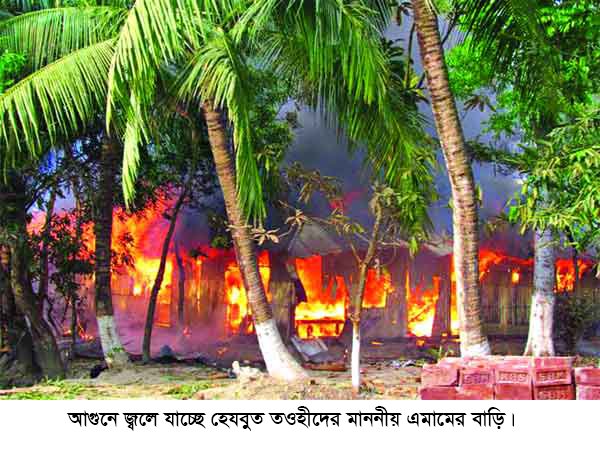
Click the video above to watch the documentary on the 2016 massacre against Hezbut Tawheed in Sonaimuri, Noakhali.
Images Related to this Post



Leave a Comment