
Contemporary Analysis: South Asia Must Become a Strong, Unified Power
-Shamima Abonti
The world is currently passing through a period in which nearly 35 countries are engaged in severe conflicts for various reasons. On February 28, more than 2,200 people have already been killed in the war between Iran and the alliance of the United States and Israel. Iran is using the Strait of Hormuz as a weapon of war, causing instability in global markets, with potential impacts even on Bangladesh’s oil market.
It appears that major powers are creating new conflict zones to sustain their war-based economies. In that continuation, South Asia is also under their watchful and potentially harmful attention. Considering the global situation and ongoing instability across South Asian countries, it is evident that the region is no longer safe from such strategic designs. Therefore, in today’s multipolar world, if South Asian countries wish to protect themselves, they must collectively strengthen the entire region. Focusing solely on individual national interests will not be enough to confront the coming crises.
Looking at the war between Ukraine and Russia, we see two neighboring nations with shared history, culture, traditions, and even similarities in language and religion, yet they are locked in devastating conflict. When war begins, all shared human values are buried under explosions and destruction. To prevent such a situation in South Asia, preparations must begin now.
Historically, this subcontinent has been home to both Hindus and Muslims living together peacefully. Followers of both religions believe in one Creator—Allah, Ishwar, Bhagwan—and in concepts such as the afterlife, heaven and hell, sin and virtue. However, current trends raise concerns that imperial powers may attempt to ignite conflict here to sustain their arms markets. War is like quicksand—once trapped, escape becomes nearly impossible, and everything is destroyed. Therefore, no opportunity should be allowed for war, conflict, or communal violence in this region.
During political transitions, especially elections in Bangladesh and India, a form of toxic politics emerges. Minority communities often feel insecure about voting. Reports have shown that Hindus in Bangladesh and Muslims in India both experience fear and pressure during elections, which can later escalate into communal tensions.
In India, certain Hindu nationalist groups make provocative statements against Pakistan and Bangladesh to secure majority votes. Similarly, in Bangladesh and Pakistan, anti-India sentiment is sometimes used as a political tool. A recent example is the tension surrounding international cricket events. Bangladeshi cricketer Mustafizur Rahman was reportedly not allowed to participate in India’s domestic league despite opportunities. Such actions reflect unhealthy rivalry.
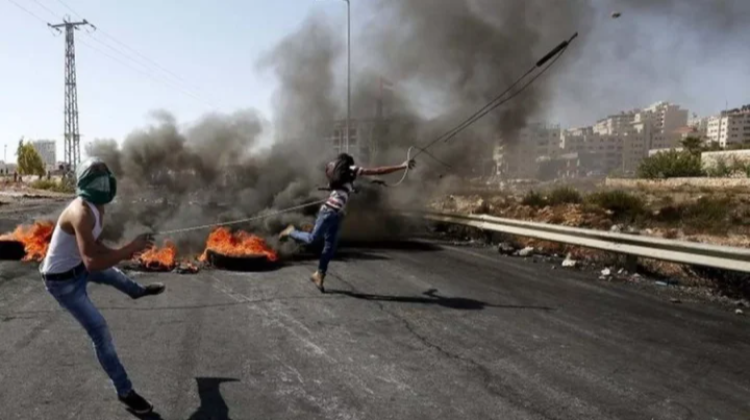
This cycle of hostility—burning effigies, attacking diplomatic missions, exchanging insults—can lead to dangerous consequences. These incidents may pave the way for larger communal conflicts and border instability.
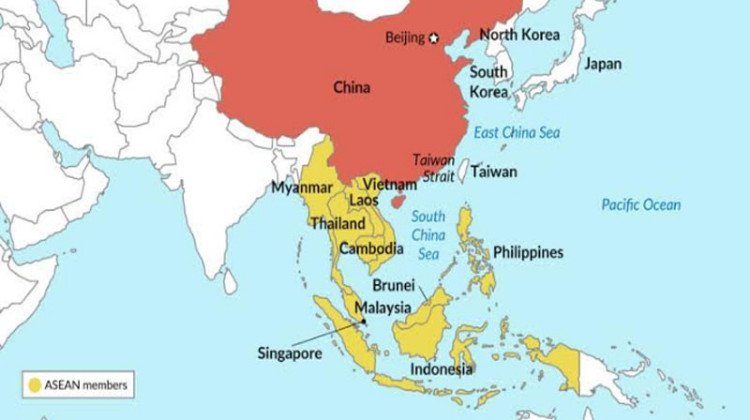
India fears that its northeastern “Seven Sisters” region could be destabilized through external influence, particularly involving China. The narrow “Chicken’s Neck” corridor (Siliguri Corridor) between Bangladesh and Nepal is strategically sensitive. Statements from certain groups in Bangladesh about disrupting this corridor have only increased tensions, complicating regional geopolitics further. Meanwhile, media in both countries continue to engage in mutual blame and propaganda.
Bangladesh, where about 90% of the population is Muslim, must remember that Islam prohibits racism, extreme nationalism, and communalism. According to the Qur'an, humanity is divided not by nationality but by belief and conduct—those who uphold truth and peace versus those who spread falsehood and conflict. Therefore, whether someone is Indian, Pakistani, or Bangladeshi is not the ultimate criterion.
History shows that blind nationalism based on geography led to World War II. Leaders like Adolf Hitler and Benito Mussolini promoted ideas of racial superiority, leading to devastating consequences. Islam does not permit such blind nationalism.
Powerful nations with imperial ambitions have long depended on arms trade. Countries like the United States, Germany, France, Britain, and Spain maintain influence partly through weapons production and sales. Reports suggest that Donald Trump once pressured Saudi Arabia into massive military purchases worth nearly a trillion dollars. Such economies require continuous conflict zones, which is why South Asia must not become a new battlefield.
Therefore, a thoughtful and strategic approach is necessary. According to Hezbut Tawheed, the foundation lies in Hidayah—divine guidance from Allah. By following this guidance, communal hatred can be eliminated, conflicts reduced, cooperation increased, and new economic opportunities created. Ultimately, South Asia can emerge as a strong and unified bloc.
A simple truth must be understood: the river known as the Ganges in India flows as the Padma in Bangladesh, and both eventually merge into the Bay of Bengal. Just as nature connects us, our relationships should reflect the same unity. We are all part of a shared civilization rooted in the Himalayas.
Unlike China, which underwent a communist revolution and sidelined religion, South Asia has retained its religious identity. Rather than abandoning religion, we must embrace its true teachings—those that promote humanity, compassion, moderation, and collective well-being.
The system proposed by Hezbut Tawheed emphasizes a collective life based on true religious values. If adopted, it could transform individuals into just and compassionate human beings who reject division based on nationality or self-interest and instead unite as one broader community under one Creator.
If this ideal is realized, people will stand firmly for justice and refuse to submit to oppression. Trade barriers and restrictions based on narrow nationalism could be removed, allowing countries like Bangladesh, India, and Pakistan to benefit collectively.
Looking at past years, it is evident how much damage such divisions and restrictions have caused. Political exploitation of historical sentiments—such as those related to 1971—has fueled unhealthy narratives. However, the reality remains that the region shares a common history, culture, and heritage. Just as we depended on each other in the past, we must maintain harmony for future collective interests.
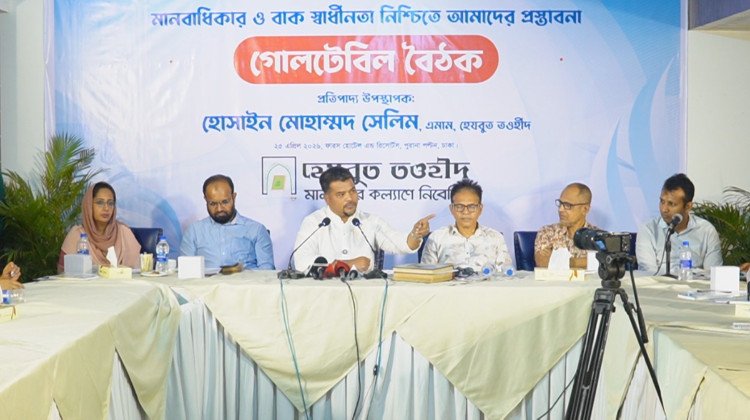
To strengthen South Asia, immediate steps are needed. Hezbut Tawheed calls for dialogue among all South Asian nations—Bangladesh, India, Pakistan, Nepal, Sri Lanka, and others. Each country must prioritize regional welfare over narrow self-interest and engage in open, constructive discussions.
If we fail to unite now—beyond differences of nation, religion, and ethnicity—we risk becoming pawns of imperial powers and facing destruction. Hezbut Tawheed expresses its willingness to initiate such a platform for unity.
It is hoped that both the people and leaders of the region will respond positively. Historically, colonial powers like Britain exploited this subcontinent, and even after their departure, forms of neo-colonialism persist. Therefore, relying on external powers for protection is not a viable solution.
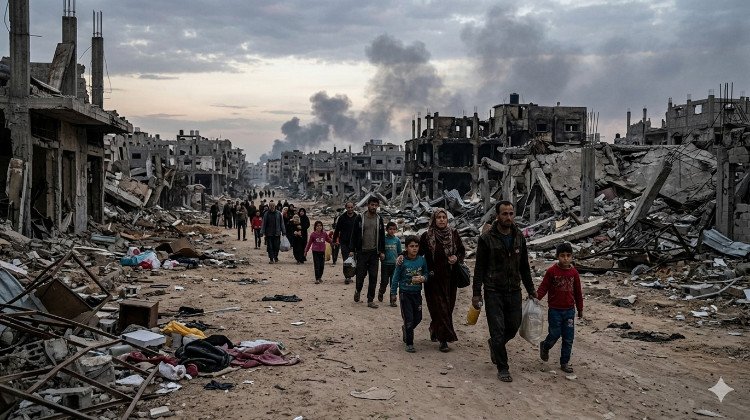
If we do not take responsibility for shaping our own future, the day is not far when South Asia could become a war zone like the Middle East. The time to act is now—to carefully consider and adopt a unified, principled approach. Only then can South Asia become a strong region capable of establishing peace, justice, and stability.
Images Related to this Post








Leave a Comment