
Sermons and Politics over Worker's Sweat

Like every year, International Workers’ Day has been observed again. With crises such as COVID-19, the Russia–Ukraine war, tensions between America and Iran, and rising inflation, the working class in our country is going through severe financial hardship. The main reason is unemployment. Therefore, the Islamic perspective on workers is more relevant now than ever.
Allah has created human beings as labor-dependent and social creatures (Surah Al-Balad 4). When humans become dependent on others instead of relying on their own labor, and self-centered instead of social, it inevitably creates negative consequences and an unnatural situation that leads to unrest and disaster. This is why laziness toward work, the devaluation of labor, and unemployment have become major problems in our society.
Many politicians in our society speak loudly about workers’ rights. Especially on May Day, they hold numerous rallies and gatherings to strengthen their leadership and power. In contrast, religious figures are rarely seen raising their voices for workers’ rights. The reasons for this indifference are as follows:
First, they interpret religion as limited to prayers, fasting, sermons, and religious gatherings. Instead of addressing social injustice and alleviating the suffering of the oppressed, they focus on counting beads and increasing their spiritual deeds, believing that this alone leads to salvation. They are more concerned with bringing workers to mosques than relieving their hardships. Due to distorted ideas about worship, religion, and the path to pleasing Allah, many scholars remain unconcerned about workers’ suffering.
Second, many religious leaders rely solely on madrasa education, learning a limited set of supplications and rulings, and use that as their livelihood. As a result, they cannot truly understand the hardship of workers. Someone who has never had to sweat for basic food cannot comprehend why a worker’s wages should be paid before their sweat dries.
Third, many scholars do not see Workers’ Day as related to Islam, since it does not originate from Islamic history or Muslim tradition. Therefore, some consider its observance as imitation of non-believers or an unnecessary innovation. Due to this narrow perspective, they fail to understand a fundamental truth: Islam was sent for all humanity. Working for the well-being of humanity is therefore part of Islam. They forget that uplifting the oppressed and granting dignity to the working class is one of Islam’s greatest achievements.
The final Messenger of Allah demonstrated this by actions such as accepting Maria al-Qibtiyya (RA) as his wife, freeing Umm Ayman and Zayd (RA) from slavery and incorporating them into his family, and elevating Bilal (RA) to a position of great honor. Therefore, striving for the liberation of the oppressed is an essential duty of the Muslim community—this itself is an act of worship.
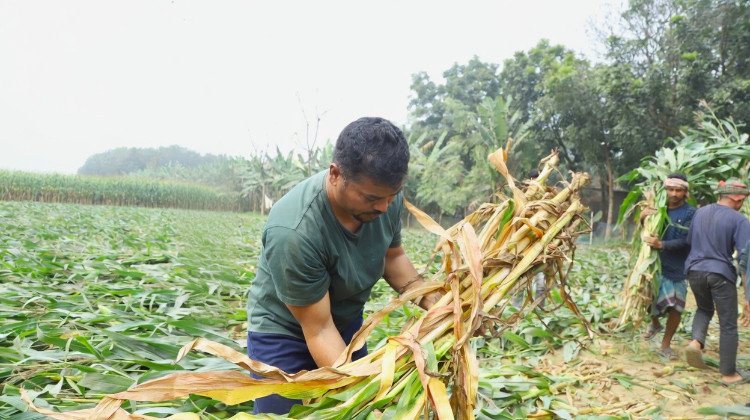
The Messenger of Allah consistently opposed dependency. He himself worked for his livelihood, herding camels and goats. During times of struggle, he participated in physical labor, such as during the construction of the Prophet’s Mosque and the digging of the trench, where he broke stones, dug soil, and carried materials. Ali (RA), known as the “gateway to knowledge,” once drew water from a well for a Jewish woman in exchange for a few dates. But how much attention do those who preach religion give to following this example?
Our forefather Adam (AS) had to cultivate barren land and work hard to survive. The Bible also mentions that humans must labor until their faces are covered with sweat and continue working until death.
Thus, the duty of Adam’s descendants is to earn through labor and support their families. Allah has forbidden taking money in exchange for religious acts such as leading prayer (Surah Al-Baqarah 174). He has instructed believers to pause trade at the call to Friday prayer and resume seeking livelihood afterward (Surah Al-Jumu’ah 9–10). Notably, Islam does not promote permanent withdrawal from work or dependence on others.
In reality, Islam—as well as other religions—encourages productive work. Both asceticism that abandons worldly responsibility and laziness are prohibited, as they disrupt social balance. True religious teachings make people industrious. No religion permits using faith as a means of business.
The Prophet taught that striving for livelihood is a human responsibility, and reliance on Allah does not mean abandoning effort. All prophets earned through their own labor, and it is better to earn through work than to become a burden on others. Begging is strongly discouraged in Islam.
Similar teachings are found in other scriptures. The Gita emphasizes the importance of work, and the Bible also describes labor as essential for human life. All religious texts promote earning a livelihood through effort. Workers often follow this universal principle, even if they are not outwardly religious. The satisfaction that comes from paying a worker their due wages promptly is something only a worker truly understands. As a result, workers typically do not exploit one another.
On the other hand, a person who follows divine guidance and ensures fair rights for workers will also refrain from exploitation. Without the combination of these two mindsets, true workers’ rights cannot be established.
Not only religious figures but also politicians form a dependent class. Therefore, their statements about workers’ rights are often deceptive. The suffering and deprivation of workers become political capital for them. Workers must understand this reality to avoid being misled.
Western materialist civilization has also historically deprived workers of their rights. When workers protested, they were often suppressed. Later, the same powers adopted May Day as part of a new political narrative. However, in reality, workers’ conditions have not significantly improved; rather, deprivation and hardship have increased—something evident in statistical data.
Images Related to this Post







Leave a Comment