
Ideological Islamic Awakening Is Needed to Counter Extremism
-Hossain Mohammad Salim
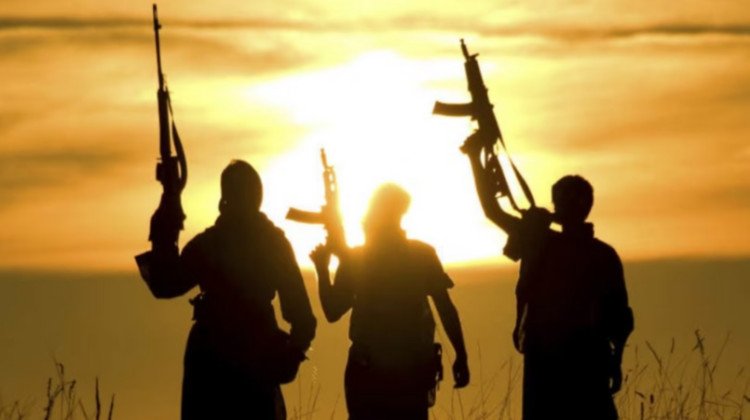
Extremism has already become a global crisis. In almost every major religion in the world, some form of extremist group can be found. Not only in the name of religion, but also under political ideologies such as democracy, socialism, and nationalism, various forms of terrorism are being carried out worldwide. Particularly, extremism in the name of Islam has expanded significantly over the past thirty-five years
.
Generally, there are psychological and political realities behind extremist ideas. When a nation or group of people is attacked by another nation, state, or power—when they suffer loss of life and property, become refugees, or are humiliated—they often engage in different forms of action for retaliation or liberation. From one perspective, such actions are considered nationalist or freedom movements; but from the opposite perspective, they are labeled as terrorism. For example, Netaji Subhas Chandra Bose and Masterda Surya Sen were seen as revolutionaries by Indians, but as terrorists by the British.
Today, in Europe and other Western societies, Muslims are frequently labeled as “extreme,” “bigoted,” “militant,” “terrorist,” or “extremist.” Groups such as Al-Qaeda, Islamic State, Taliban, Lashkar-e-Taiba, Al-Shabaab, and Boko Haram are often cited as examples. However, the political realities behind the emergence of these groups are rarely discussed.
Several centuries ago, European powers subjugated much of the Muslim world through military force, dividing regions and ruling them under the pretense of delivering a “civilized” system. Later, they themselves caused the deaths of nearly 150 million people through two world wars. Although many countries gained independence after World War II, political instability, internal conflict, weak governance, and economic fragility remained. At the same time, interference from former colonial masters and global powers continued.
After the establishment of Israel in 1948, resistance movements emerged in Palestine against occupation. Similarly, after the Soviet military intervention in Afghanistan in 1979, resistance movements began there as well. However, these movements have often been portrayed in international media as extremist or terrorist activities. As a result, those whose lives and lands were attacked have often been labeled as “terrorists.” After the 2001 Twin Tower attacks, the “War on Terror” was declared and spread globally.
Fundamental Principles of Islam
Islam came to eliminate all forms of oppression and terrorism; therefore, there is no question of Islam supporting extremism. Islam is not a religion of blind aggression, irrationality, or anti-scientific thinking. The religion of Allah provides a balanced life—combining worldly and spiritual aspects, body and soul.
It teaches compassion, honesty, trustworthiness, and restraint, while also commanding struggle (jihad) against injustice. It encourages good and forbids evil. That is why true followers of Islam are described as a “moderate nation” (Ummah Wasata).
Islam places great importance on natural human rights—such as the right to life, property, and liberty—concepts also discussed by European philosophers like Hobbes and Locke.
Another core principle of Islam is that there is no compulsion in religion. Islam does not impose its laws on individuals against their will, nor does it force conversion. The Qur’an teaches that Allah does not burden a soul beyond its capacity, and that killing one innocent person is like killing all of humanity. Collective punishment is also prohibited.
The goal of Islam is to establish a system that purifies individuals spiritually and removes injustice from society, ensuring peace and security.
Global Context and Extremism in Bangladesh
Over the past three centuries, imperialist aggression, exploitation of natural resources, and competition for global dominance have significantly contributed to the rise of extremism. In countries like Afghanistan and Iraq, resistance movements emerged against foreign intervention, often using Islamic concepts of struggle.
Extremist activities have also spread across South Asia. In 2025, attacks including suicide bombings in Kashmir’s Pahalgam and Pakistan’s Balochistan targeted school buses and police forces. Conflicts involving Tehrik-i-Taliban are intensifying along the Afghanistan-Pakistan border. In Myanmar, violence by extremist Buddhist groups and the military junta has forced over 2.2 million Rohingya Muslims to take refuge in Bangladesh.
In Palestine, violence against civilians has continued for decades. Recently, tensions in the Middle East have escalated further due to retaliatory actions involving Iran, United States, and Israel. Experts warn that such conflicts may fuel further extremism.
Although Bangladesh has historically been tolerant, global extremism has had an impact domestically. Violent incidents—including the Holey Artisan Bakery attack—have occurred, along with mob violence targeting religious sites.
The Way Forward
To combat extremism, governments have largely relied on force—policing, imprisonment, and executions. However, despite spending trillions, extremism has not been eliminated. This is because extremists often view their actions as religious duties. Increased force can sometimes strengthen their resolve.
Therefore, alongside enforcement, ideological resistance is essential. Extremists often misuse Qur’anic verses and Hadith to justify violence. These misinterpretations must be countered with authentic, evidence-based explanations.
Former UN Secretary-General Ban Ki-moon also acknowledged that excessive force has sometimes worsened extremism.
Correct Understanding of Jihad and Warfare
The Qur’an is a comprehensive guide that includes laws on prayer, fasting, justice, and warfare. However, extremist groups misinterpret verses related to jihad, qital (armed struggle), and qisas (legal retribution).
Rejecting or avoiding these topics is not a solution. Instead, their correct meanings must be explained.
Jihad refers to striving or struggling for truth through all possible means—intellectual, social, and moral efforts. Armed conflict (qital) is only one aspect and represents the highest level, to be conducted under legitimate state authority—not by individuals or groups.
Therefore, unauthorized violence, attacks on civilians, and acts of terror are strictly prohibited in Islam.
Similarly, qisas (equal retribution) is part of a legal system that must be implemented through a proper judicial process—not by individuals.
Right to Choose a Way of Life
Addressing extremism also requires ensuring fundamental human rights: self-determination, security of life and property, and the right to live in one’s homeland.
Muslim societies must address internal contradictions between religious beliefs and imposed systems. Economic systems like interest-based capitalism, which many Muslims consider prohibited, can create tensions that sometimes contribute to extremism.
At the same time, continued global injustice and humiliation of Muslim populations will keep fueling extremist reactions unless addressed through fair international policies.
Key Steps to Eliminate Extremism
- End imperialist aggression and occupation.
- Promote accurate ideological counter-narratives.
- Establish just and ethical systems in Muslim societies.
- Foster unity across the Muslim world beyond divisions.
- Increase dialogue and harmony among different religions and communities.
Conclusion
Let us unite to build a peaceful society by standing against extremism, communal violence, mob attacks, and injustice. Through collective effort, we can create a just and livable world for future generations.
Images Related to this Post






Leave a Comment