
What Changes Islam Brought to Arabia
-Mohammad Asad Ali
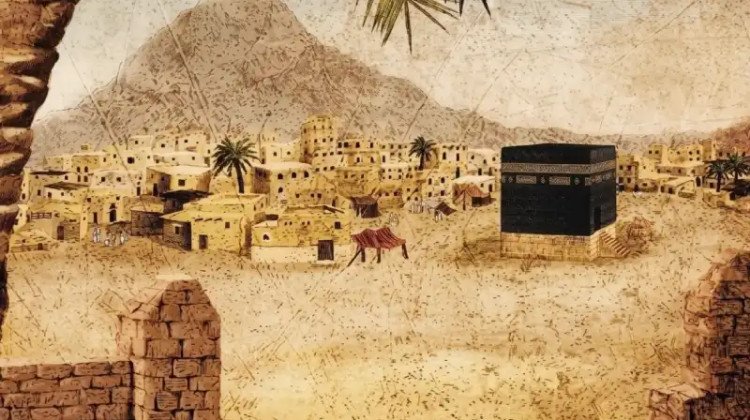
When Allah’s Messenger (peace be upon him) began preaching Islam in Arabia, the society was in an age of ignorance and darkness—known in Arabic as Ayyam al-Jahiliyyah (the Age of Ignorance). Arabs were among the most backward people of the time. The Roman and Persian rulers looked down upon them.
But with the emergence of Islam among the Arabs, history took a dramatic turn. Those neglected people awakened with new energy. A revolutionary civilization emerged among them—one that overshadowed all contemporary ideologies and systems. From what seemed like nothing (as described by historian P. K. Hitti), a عظিম “tree” grew, under whose shade half the world came.
Let us explore the transformations Islam brought:
Establishment of Unity
Islam united the divided and conflict-ridden Arabs into a strong, cohesive community. Tribal hostility and bloodshed were replaced with brotherhood.
Introduction of Discipline
Islam taught discipline to a previously chaotic society. Their personal lives, family life, clothing, food habits, cleanliness, social behavior, and even national and military affairs became organized and structured.
Acceptance of Central Leadership
Arabs were known for refusing leadership outside their tribe. Yet Islam transformed them into a people who obeyed their leader wholeheartedly. They followed the Prophet’s commands precisely—even to the point of sacrificing their lives. When given orders, they would respond: “We hear and we obey.”
Change in Moral Standards
Previously, loyalty to one’s tribe outweighed justice. Islam replaced tribal bias with justice and truth. People began to stand against wrongdoing—even if committed by their own family members.
New معيار of Honor
Islam eliminated social hierarchies based on race, lineage, wealth, or education. The only معيار of superiority became Taqwa (God-consciousness and righteousness).
Promotion of Human Dignity
In a society where slaves were not considered human, Islam elevated them. The Prophet (peace be upon him) honored Bilal (RA) by asking him to give the call to prayer from the Kaaba. Similarly, former slaves like Zayd and his son Usama were given leadership roles—showing that merit and piety define true honor.
Establishment of Freedom of Expression
Oppressed people who previously had no rights were empowered. Even ordinary individuals could question leaders. There are examples where rulers were publicly held accountable by common people.
Economic Security
Arab society lacked basic necessities like food, clothing, and shelter. Islam introduced systems that reduced poverty and ensured welfare. Within a few years, conditions improved significantly—so much so that sometimes people struggled to find recipients for charity (zakat).
Transparent Governance
Islam replaced oppressive rule with accountability and simplicity. Leaders lived modestly, remained accessible to the public, and were deeply concerned about justice—even for the weakest members of society.
Rise as a Global Power
Before Islam, Arabs saw themselves as weak compared to Rome and Persia. Islam gave them confidence and strength. They rose to challenge major powers and spread justice beyond Arabia.
Restoration of Women’s Rights
In a society where women were buried alive and denied rights, Islam restored their dignity. Women gained rights and participated in social, economic, and even military roles.
Core Message
Islam addressed real human problems—oppression, injustice, poverty, and inequality—and established justice, peace, and security. This attracted millions to Islam.
Present Reflection
However, the text laments that the original spirit of Islam is no longer fully present. Muslims, once leaders of justice and civilization, are now often divided and weakened. The unity based on Tawheed has been lost, leading to fragmentation into many sects and اختلافات.
It suggests that if Muslims could reunite upon the true principles of Islam, they could once again achieve عظیم progress and become a model for the world.
Images Related to this Post







Leave a Comment