
What is Ma‘rifah (Spiritual Realization) in Islam
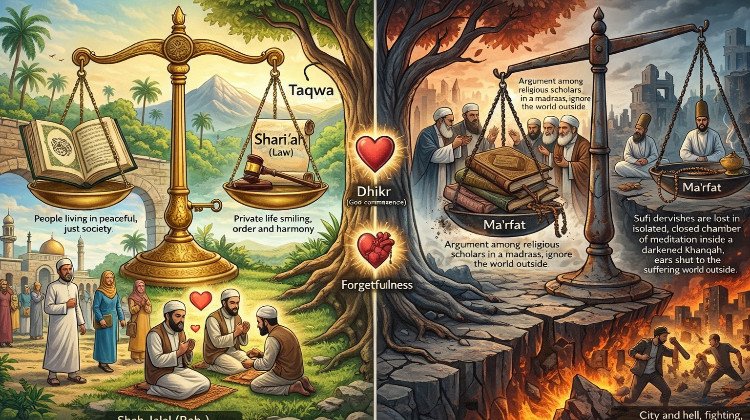
Human beings are not merely physical creatures like other animals. Just as they have a body, they also have a soul. As the body has its needs, so does the soul. A complete human being is formed by the combination of both body and soul. Therefore, the way of life that Allah sent through His final Messenger (peace be upon him) is a complete system that maintains a perfect balance between Shari‘ah (laws and regulations) and Ma‘rifah (spirituality).
The major difference between this and any man-made system is that it includes not only worldly matters such as law, economics, and justice, but also solutions to the spiritual crises of human beings.
By declaring the Kalimah of Tawheed, a person embraces within their soul, heart, and inner being the awareness of Allah’s presence and His supremacy. They accept Allah wholeheartedly as the sole Lawgiver and Deity. They dedicate all their obedience and devotion solely to Him. Then, as they begin to follow Allah’s commands one by one, the implementation of Shari‘ah begins.
The Messenger of Allah (peace be upon him) established a just and peaceful social system by combining both Shari‘ah and Ma‘rifah. As a result, the Companions became spiritually purified and, by following the Qur’an, also became socially disciplined and united. They transformed from an uneducated and harsh society into the best nation in the world. Injustice, disorder, and oppression disappeared. Their spiritual state was so elevated that even after committing punishable crimes like theft or adultery, they would feel deep remorse and voluntarily present themselves before the Prophet (peace be upon him) seeking punishment. Even in private, they refrained from wrongdoing because they constantly felt accountable before Allah. In Islam, this state is called Taqwa (God-consciousness).
However, it is unfortunate that when the Muslim Ummah became divided, the balance between Shari‘ah and Ma‘rifah was also lost. Today, we see one group focusing excessively on detailed legal aspects of Shari‘ah while ignoring the absence of Allah’s guidance in public and national life. On the other hand, another group within Sufi traditions follows various spiritual paths seeking closeness to Allah, yet pays little attention to the widespread injustice and suffering in society. This represents an imbalanced form of Sufism that spread after the conquest of Persia into other Muslim lands.
The Messenger of Allah (peace be upon him) established a balance between Shari‘ah and Ma‘rifah in the character of his Ummah. Thus, true Islamic spirituality means being constantly aware of Allah’s presence within one’s heart and recognizing Him as the sole authority in all aspects of life. The feeling that Allah is watching all actions and that one will be accountable before Him on the Day of Judgment is known as Dhikr (remembrance).
Living with this awareness—avoiding all wrongdoing while striving to establish Allah’s guidance in human life, even at the cost of one’s wealth, family, and personal attachments—is what constitutes Ma‘rifah or Islamic spirituality.
However, a group has attempted to remove struggle from Muslim life by fabricating many false hadiths, such as the claim that “the struggle against the self is the greatest jihad.” Renowned hadith scholars like Hafiz Ibn Hajar did not accept such narrations as authentic, considering them merely Arabic sayings. Furthermore, Surah Al-Furqan (25:52) states: “Do not obey the disbelievers, and strive against them with the Qur’an in a great struggle.” This indicates that the greatest struggle is against those who reject truth and commit injustice.
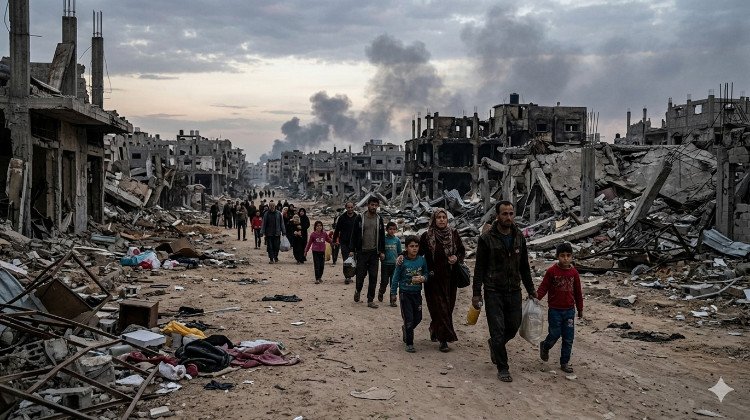
Today, humanity is in severe crisis. People, whether educated or not, often become immoral whenever they can evade the law. In such times, both true spirituality and Shari‘ah are essential. Together, they form a balanced way of life.
This balance, according to the text, is being presented by Hezbut Tawheed, which aims to develop individuals who are morally upright, spiritually purified, and sincere believers, while also making them committed and courageous in striving to establish Allah’s Deen.
Historical figures who came to Bengal centuries ago—such as Shah Jalal (rah.), Shah Paran (rah.), and Shah Makhdum (rah.)—who are known as Sufi saints, were not only spiritually accomplished but also active in struggle. This, according to the text, represents the true balance of Islam. In contrast, those who isolate themselves from societal issues and remain confined to spiritual retreats cannot truly attain closeness to Allah.
Images Related to this Post










Leave a Comment