
The Kaaba: Symbol of Ummah’s Unity, a Consciousness That Has Been Lost
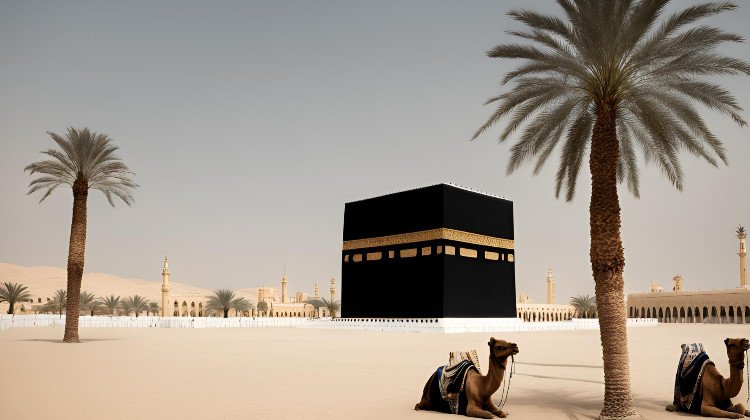
The Kaaba is the House of Allah, the sacred Baytullah Sharif. We revere this house and love it more than our own lives. Every Muslim dreams, at least once in their life, of visiting the Kaaba. We face the Kaaba during prayer, and we perform Hajj with the Kaaba as our center. The question arises: what is the true purpose of this Kaaba-centric focus? Even Islamophobes spread misconceptions, claiming that while Muslims oppose idolatry, they themselves prostrate before a physical structure—the Kaaba—like idolaters.
Allah has established the Kaaba as a symbol of unity for the Muslim Ummah. This unity represents unity of purpose. Today, approximately 2.2 billion Muslims are geographically divided across 57 countries, with countless political, sectarian, and denominational differences. But 1,400 years ago, when this Ummah was first established, such divisions did not exist. At that time, they were one nation, with one goal, and one leader. Their aim was to eliminate injustice and oppression worldwide and to establish peace, justice, and fairness through the implementation of Allah’s religion. The ideal of this religion is that just as Allah is one, the Messenger (ﷺ) is one, the Book is one, the religion is one, the Kaaba is one, so too the nation will be one, the country will be one. There will be no division, and the nation will have only one leader. This is why during prayer, there is only one Imam, while the number of followers behind him may vary.
We all share a single purpose. Our orientation is one, our destination is one, and our path is one. I turn my face devotedly toward the Being who created the heavens and the earth; I am not among the polytheists (Surah Al-An’am 6:69). I follow no political ideology; I am neither democratic nor socialist; I am not bound by geographical nationalism, nor am I Bangladeshi or Pakistani. I follow no sect or school; I am neither Hanafi nor Hanbali. I recognize only obedience to Allah; I am solely a Muslim. My prayers, my sacrifices, my life, and my death are all for Allah (Surah Al-An’am 6:162).
Allah has also ordained Hajj as an annual national gathering for Muslims. The location of Hajj is fixed in the precincts of the Kaaba, though other rituals are performed in surrounding areas such as Safa-Marwa, Mina, Arafat, and Muzdalifah.
According to Allah’s decree, Hajj will be led by the Imam of the nation—the central leader. He will address the people, just as the Prophet (ﷺ) delivered his Farewell Sermon, and later, the Caliphs followed this Sunnah. Allah’s intention is that once a year, the leading Muslims from around the world gather at the Hajj site. There, they consult with the Caliph or Imam on political, diplomatic, military, and other crucial matters, make plans, and take decisions. The Caliph then provides guidance to the Muslim community through the Hajj sermon. In this way, Hajj becomes a living and vibrant center for addressing the worldly crises of the Muslim Ummah.
What happens today at the United Nations? Leaders from around the world gather to discuss global crises and make decisions. Islam, too, was revealed for the entire world. To ensure that Muslims worldwide can gather once a year for discussion, consultation, and decision-making, Allah has ordained Hajj.
However, Hajj is not merely a conference. In every ritual and procedure, Allah has embedded an exceptional training for Muslims, both worldly and spiritual. One of the most important rituals of Hajj is Tawaf—circumambulating the Kaaba seven times. What does this Tawaf signify?
The Kaaba is a symbol of the unity of the Muslim Ummah. When representatives from across the world circumambulate the Kaaba, it instills in their minds and hearts, thoughts and consciousness, that wherever they are, whatever corner of the world they inhabit, they are one Ummah. Their Qibla is one, their goal is one, their purpose is one: to unite humanity under Allah’s commands and establish justice and fairness. Humanity will be united as one nation, the earth will become one country, and by following Allah’s divinely ordained system of life, humanity will achieve justice, fairness, and peace.
To achieve this goal, one must strive continuously. One cannot stop, become stagnant, or set any other goal aside. Just as the planets revolve around the sun, our lives must revolve around Allah, the One without partner. This is why pilgrims loudly recite the Talbiyah: “Labbaik, la sharika laka labbaik”—O Allah! I respond; You have no partner.
Today, we have reduced the Kaaba to merely the Qibla for prayer and perform Hajj rituals centered around it. But we have forgotten that the Kaaba is fundamentally a symbol of our unity. For national problem-solving, securing human rights, providing aid, resolving security crises, settling internal political or border disputes, and concluding diplomatic agreements, we rush to the UN, Delhi, Beijing, Moscow, Washington, and London. Yet, our true destination should be the precincts of the Kaaba. In this way, our Qibla has effectively changed. The Kaaba remains in its original place, but we have turned our faces toward Western powers.
If today we can understand the true purpose of the Kaaba as a symbol of our national unity, it will then be possible for us to transcend the walls of geographical, political, and sectarian division and become steadfast in the worship of Allah, orienting ourselves toward the Kaaba as a unified Ummah.
Images Related to this Post

Leave a Comment