
Iftar Mehfil & Discussion held at Supreme Court Bar Association
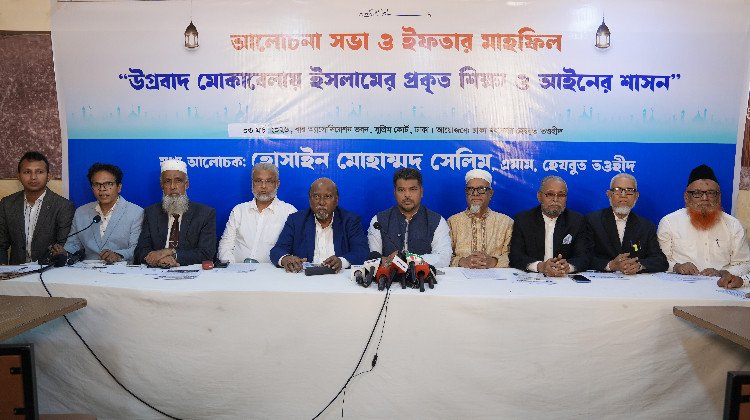
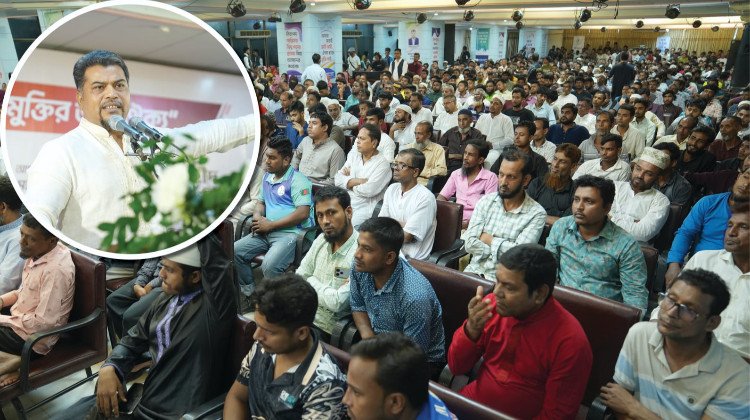
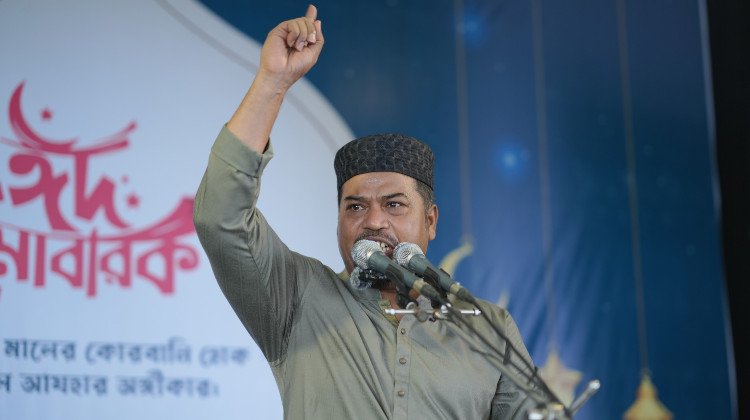
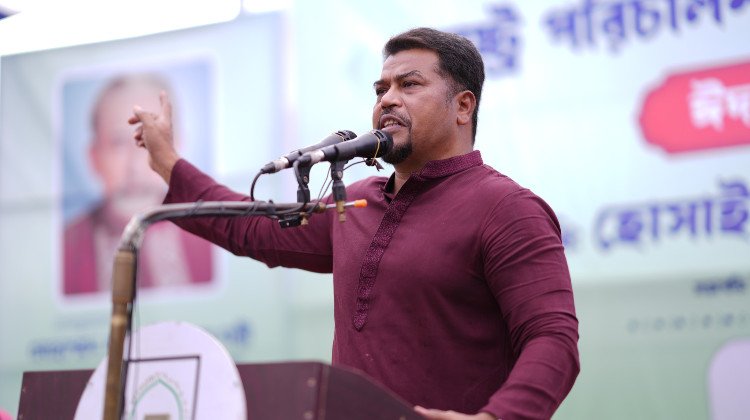
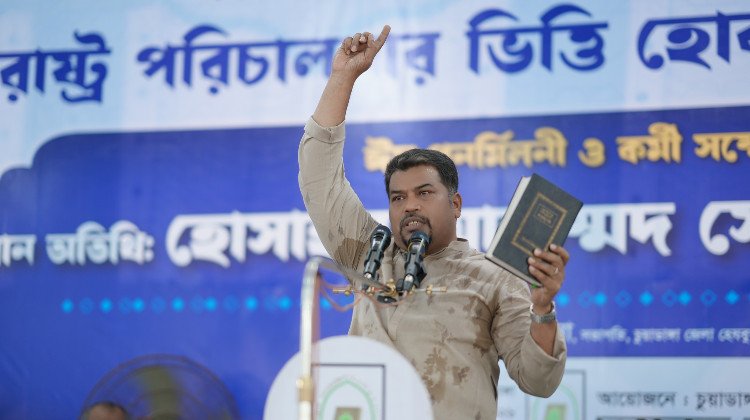
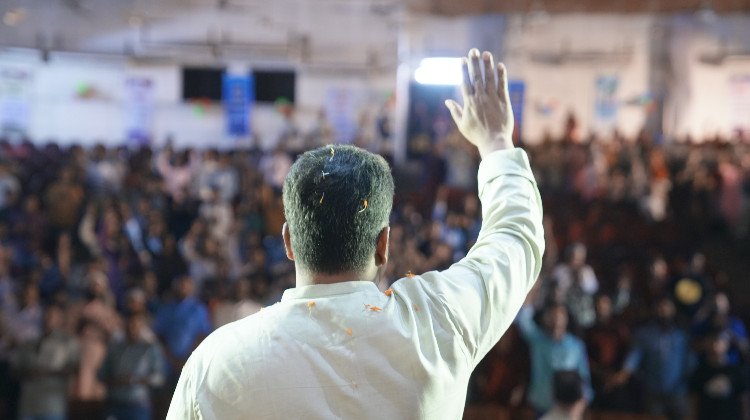
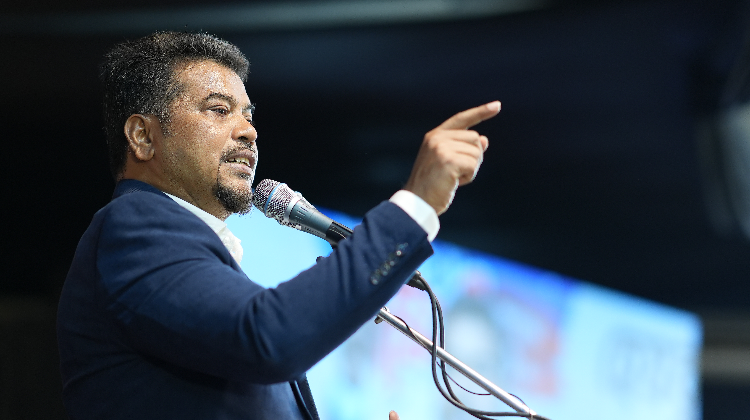
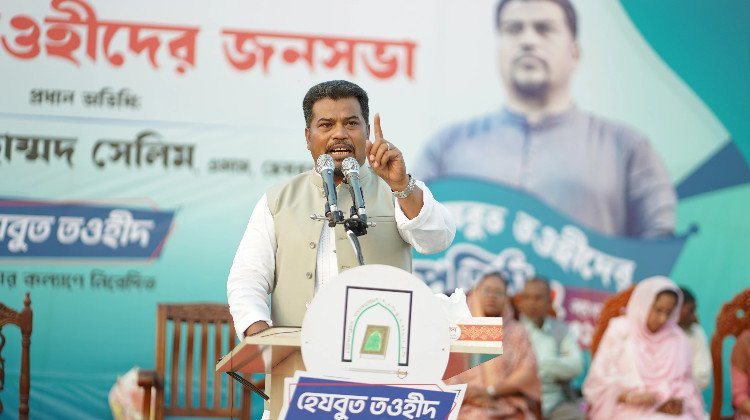
Iftar Mehfil and discussion meeting was held at the Supreme Court Bar Association with the initiative of Hezbut Tawheed. Today, Tuesday (03 March, 2026) afternoon, the program entitled 'The True Education of Islam and the Rule of Law' was organized. At this time, former judges and lawyers of the High Court and Supreme Court were present.
Below is the letter that was presented by Dr. Mahbub Alam Mahfuz, Joint Secretary General, Hezbut Tawheed at the discussion.
Distinguished Guests, Assalamu Alaikum,
You are aware that extremism is not confined to any specific religion or country; it has already evolved into a global crisis. If we examine ancient, medieval, and modern history, we will observe that within nearly every major religion existing in the world today, various extremist groups have emerged among their followers. Moreover, extremism has not only appeared in the name of religion; throughout history, political ideologies have also given rise to numerous violent extremist activities, from ancient times to the present.
Today, Europe, America, the Middle East, Asia — and even our beloved homeland Bangladesh — are affected, terrorized, and harmed by extremist attacks. Our topic of discussion today is: The True Teachings of Islam and the Rule of Law in Confronting Religious Extremism. We are witnessing that, in the name of Islam, extremism has taken a widespread form over the past thirty years — something that was not seen at this scale in earlier times.
Generally, behind extremist tendencies lies a fundamental issue: when a nation or people are attacked by another nation, state, or power; when their lives and property are harmed; when they become displaced or humiliated — they engage in various actions aimed at retaliation or liberation. These actions often assume violent forms. In many cases, such movements are considered nationalist or liberation struggles and are not labeled as extremism. However, from the opposing perspective, they are often branded as terrorism. For example, Netaji Subhas Chandra Bose and Masterda Surya Sen were viewed as revolutionaries in the eyes of Indians, but as terrorists by the British.
International Definition of Terrorism
Internationally, there is still no single universally accepted definition of terrorism. However, the United Nations Security Council and various international conventions provide functional explanations. According to these:
“Terrorism refers to violent or criminal acts, particularly against civilians, intended to create fear among the public and to compel a government or international organization to act or refrain from acting.”
Thus, terrorism has three characteristics:
- Violent or criminal acts
- Creating fear among the general population
- Pursuing political, social, or state objectives
Presenting Extremism in the Name of Islam
Today, in Europe and various Western civilizations and media outlets, our sacred religion Islam is portrayed as a source of extremism. Muslims are often labeled as extreme, bigoted, militant, terrorist, or fanatic. As examples, organizations that emerged in parts of Central Asia and the Arab region — such as Al-Qaeda, ISIS, and the Taliban — are frequently cited.
In reality, there are political realities behind these events. At one time, European powers subjugated the Muslim world through military strength, divided it into various nation-states, and governed and exploited it. Later, through two world wars, they themselves killed nearly fifteen million people.
After World War II, although various nations gained independence, political instability, internal conflict, and economic weakness persisted. At the same time, intervention by former colonial powers and superpowers continued. Resistance movements in Palestine against occupation, or resistance in Afghanistan against Soviet occupation — these events were also portrayed in distorted ways in international media. Those who lost their lives, whose countries were invaded, whose rights were violated — they were labeled terrorists.
After the 2001 Twin Tower attacks, the “War on Terror” was declared, and anti-terror campaigns spread worldwide.
Islam: A Balanced Way of Life
Fundamentally, Islam is a divinely ordained balanced way of life where there is no place for extremism. It is a moderate path. Just as it encourages resistance against injustice, oppression, and corruption, it equally teaches tolerance, equality, fraternity, unity, compassion, mercy, and justice.
Islam proposes a balanced life that harmonizes the worldly and the spiritual, this world and the hereafter, body and soul. The Muslim community is described as “Ummatan Wasata” — a balanced nation.
Human beings are born with certain natural rights. Islam recognizes these rights, and similar ideas are also found in European philosophical traditions such as those of Hobbes and Locke. Islam is not irrational, anti-scientific, or blindly extremist. It is neither isolationist nor worldly-averse, nor is it fanatic.
The system established by Prophet Muhammad (peace be upon him) was balanced. The principle of Islam is: “There is no compulsion in religion” (Qur’an 2:256). Allah states that He does not burden any soul beyond its capacity (Qur’an 2:286). The objective of Islam is to establish a system of life that morally and spiritually purifies individuals and eliminates injustice and oppression from society to ensure peace and security.
The Present Reality in Combating Extremism
Observing the last three centuries of history, it can be said without hesitation that colonialism, exploitation of natural resources, unhealthy competition for territorial domination, and aggressive wars by imperialist arms-dealing states have given birth to extremism.
The Soviet invasion of Afghanistan, the U.S. invasions of Iraq and Afghanistan, and the prolonged civil war in Syria — in these contexts, the concept of jihad has been used in nationalist and independence struggles. In support of these causes, extremist activities have spread in other Muslim countries.
To combat this, governments and the international community have primarily chosen the path of force. Through police actions, laws, crossfire, executions, and remand, attempts have been made to eradicate extremism. Yet, even after spending trillions of dollars, extremism has not been eliminated. At times, dissenters have been brutally killed; at times, horrific attacks like those on restaurants have occurred. At the same time, mob violence carried out in the name of Tawhid has also expanded.
In the past one and a half years in Bangladesh, more than six hundred mob incidents have occurred, resulting in many deaths and widespread destruction. Behind these events, direct incitement of religious extremism was present; in some cases, political extremism was also observed.
In Pakistan and various regions of South Asia, violence continues. The brutal attack in Pahalgam, Kashmir in 2025, suicide bombings targeting school buses and police forces in Balochistan, and ongoing attacks centered around Tehrik-i-Taliban along the Afghanistan–Pakistan border demonstrate that extremist violence continues to escalate.
In neighboring Myanmar, due to the brutality of the military junta and extremist Buddhist Rakhine groups, 2.2 million Rohingya Muslims have taken refuge at the Bangladesh border. They were collectively attacked and driven from their homeland; hundreds of thousands were victims of genocide; women were raped; many drowned at sea. In this context of brutality, resistance movements have emerged among the Rohingya seeking to return to their homeland, some organized under religious extremist motivations.
The Need for an Ideological Solution
Therefore, extremism is both a global and national crisis. Extremists misinterpret the Qur’an and Hadith, mislead people, and issue false fatwas to attack minorities and dissenters. To counter these distortions, a correct ideology and a strong counter-narrative are necessary.
Bangladesh has historically been a tolerant state where people of different religions have coexisted peacefully. Nevertheless, in recent times, attacks have occurred on various establishments and shrines in the name of religion.
Extremists are easily motivated due to a lack of correct understanding of jihad. If force, bullets, or executions are used against them, their faith-based zeal increases; they become more strategic and reckless. Yet they do not abandon extremism because they consider it religious duty.
We believe that creating proper awareness among the public can reduce the waste of state resources and effectively resist extremism. With this objective, Hezbut Tawheed is organizing assemblies, dialogue meetings, and roundtable discussions across the country at its own expense to educate millions about the true interpretation of Islam and to raise awareness against extremism. Dialogue continues with various professional and religious communities.
Religion and Politics: The Present Context
Currently, in Bangladesh and South Asia, religion has become the “number one issue” in politics. Just as religion is used politically in neighboring states, it has also become an important factor in electoral politics in Bangladesh. As a result, religious sentiment among ordinary people is being directed toward violent paths instead of harmony.
Religion cannot be ignored; nor should it be exploited for political interests. Our objective is to present the true creed, ideals, and concepts of Islam correctly before religious people. That is the primary goal of our dialogue.
Global Situation and the Problems of Muslims
The current world is extremely volatile and risky. Over the past several decades, Muslim states have faced repeated military interventions by Western powers. In Palestine, Israeli occupation, genocide, and human rights violations — especially the killing of innocent women and children since 1948 — along with international silence, have expanded extremist activities and resistance conflicts.
Similarly, in Syria, Libya, Iraq, Afghanistan, and Myanmar, millions of Muslims have been displaced. When they fight to protect their rights, international propaganda labels them terrorists.
Hatred and extremism cannot be stopped by force alone or by counter-ideology alone; strong international agreements and policies are also necessary. People must be guaranteed their birthrights and natural rights, political self-determination, the right to livelihood and property protection, and the right to reside in their homeland. Until these rights are ensured, extremism cannot be eliminated.
The Muslim world must clearly articulate this position. This is not only about raising awareness against extremism, but also about governing states and societies according to the true teachings of Islam and the core objectives of the Qur’an.
The existing Western life system conflicts with the consciousness of many religious believers. What Allah has declared forbidden has often been institutionalized — such as interest-based capitalism, leading to economic inequality, syndicates, and inflation. Religious Muslims consider interest forbidden and detest it. The same applies to existing legal, judicial, and political frameworks that contradict divine injunctions. Opposition to such systems sometimes turns into extremism.
Moreover, if Muslims continue to be humiliated and oppressed internationally, no amount of force will prevent the rise of extremism. Regional states must reach understanding and take collective effective measures.
Hezbut Tawheed presents this roadmap before the government, responsible citizens, and the general public as a way out of the ongoing crisis.
Ways to Eliminate Extremism
1. End occupation and imperialist aggression
2. Present correct ideological counter-narratives against misguided extremist doctrines
3. Establish the divinely prescribed system of life in the Muslim world.
4. Overcome political, geographical, and sectarian divisions among Muslims to preserve collective existence.
5. Increase dialogue with different religions and communities to establish mutual empathy and harmony
With thanks,
Dr. Mahbub Alam Mahfuz
Joint Secretary General, Hezbut Tawheed
President, Dhaka Metropolitan, Hezbut Tawheed
Contact: 01711-005025 | 01617-329392
Images Related to this Post




Leave a Comment